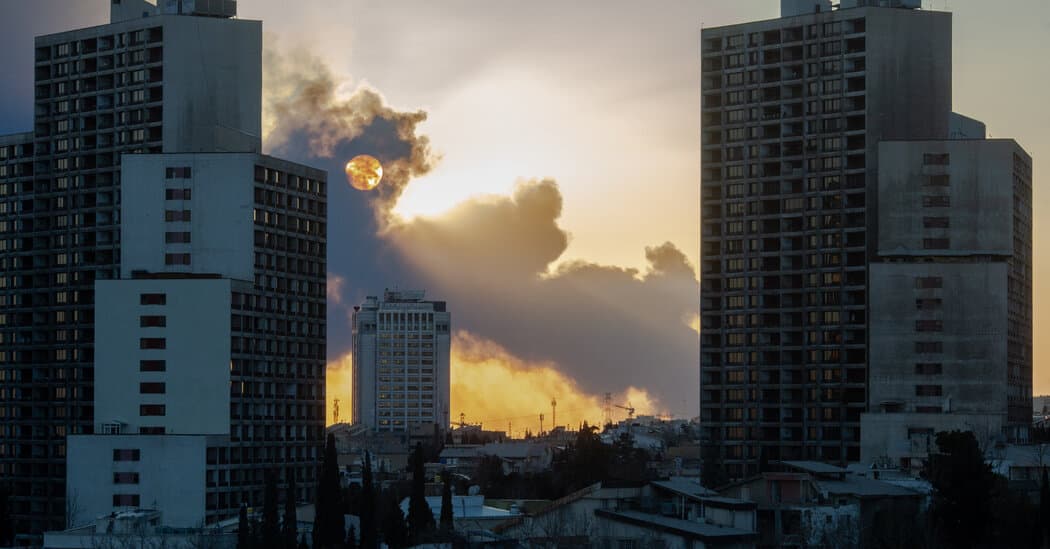
Israel and U.S. Coordinate 4,000-5,000 Daily Calls, Divvy Targets as They Wage War on Iran
Key Takeaways
- U.S. and Israeli military officials communicate 4,000–5,000 times daily.
- Officials divvy up targets across Iran.
- Joint combat coordination is routine for the U.S. but novel for Israel.
Close U.S.-Israel partnership
U.S. and Israeli forces have developed an unusually close operational partnership in their joint campaign against Iran, with U.S. officials framing the cooperation as both familiar for American military practice and novel for Israel.
“War in theMiddle East Advertisement Supported by U”
The New York Times reports that “For the U.S. military, going into combat alongside allies is nothing new. For Israel, it’s a novelty,” and that four days into the fighting Defense Secretary Pete Hegseth described Israel’s military as “an equal partner in the air assault on Iran.”
Hegseth praised the arrangement as “Fighting shoulder to shoulder with such a capable ally is a true force multiplier and a breath of fresh air,” signaling an unusually public endorsement of integrated operations.
Casualties and regional spillover
The strikes have produced significant Iranian casualties and prompted reciprocal attacks across the region, with the Times noting that “Hundreds of people in Iran have been killed in the U.S.-Israeli strikes.”
Iranian leaders have publicly vowed resistance, saying they “will not bow to the bombing campaign,”
while Persian Gulf countries—many U.S. partners—have reported that Iran has carried out multiple attacks on their territories, underlining the conflict’s regional spillover.
Carved-up airspace
Operationally, the U.S. and Israel have divided the Iranian airspace and targets between them, with officials saying “Israel and the United States have carved up the airspace over Iran, officials from both countries say, with Israel attacking targets in western and central Iran and the United States attacking in the south.”
“War in theMiddle East Advertisement Supported by U”
This geographic split suggests coordinated target allocation intended to avoid overlap and to apply pressure across different Iranian regions simultaneously.
U.S. troop roles in Israel
The U.S. military presence supporting the campaign includes hundreds of troops in Israel who perform a range of combat support and logistical tasks;
the Times details that “Hundreds of U.S. troops are stationed in Israel, including the aircrews of dozens of fighter jets, soldiers operating air-defense weapons like the THAAD missile-defense system and soldiers managing logistics, jet fuel and ammunition, according to U.S. and Israeli officials.”
Their roles extend beyond direct combat to air defence and sustainment functions that enable sustained operations.
Overall assessment
Taken together, the Times portrays the operation as a tightly coordinated bilateral campaign that combines U.S. military experience with Israeli operational involvement, framed by senior U.S. officials as both effective and cooperative.
“War in theMiddle East Advertisement Supported by U”
The public language from Pentagon leadership—especially Hegseth’s comments—highlights a deliberate message that the two militaries are integrated in targeting and execution, even as the conflict has produced substantial casualties inside Iran and wider regional reverberations.
More on Iran
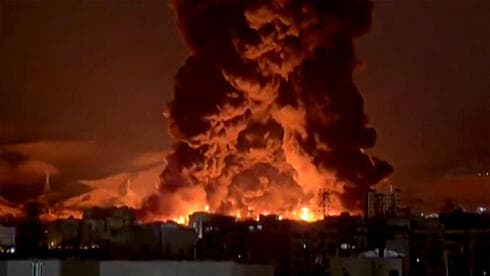
US obliterates military targets on Iran’s Kharg Island, Trump warns
13 sources compared
US Deploys About 2,500 Marines to Middle East After Iran Attacks Gulf Shipping
33 sources compared
FBI Warns of Iranian Drone Plot Based on Unverified Tip; California Says No Credible Threat
10 sources compared

White House Demands ABC Retract Report Claiming Iran Sought To Launch Drone Attacks On California
11 sources compared