
Israel Announces Limited, Highly Controlled Rafah Crossing Reopening Between Gaza And Egypt
Key Takeaways
- Rafah crossing reopened partially for Gaza-Egypt traffic.
- Movement limited to people under strict, controlled conditions.
- Reopening described as limited and highly controlled by Israeli authorities.
Rafah reopens, tightly controlled
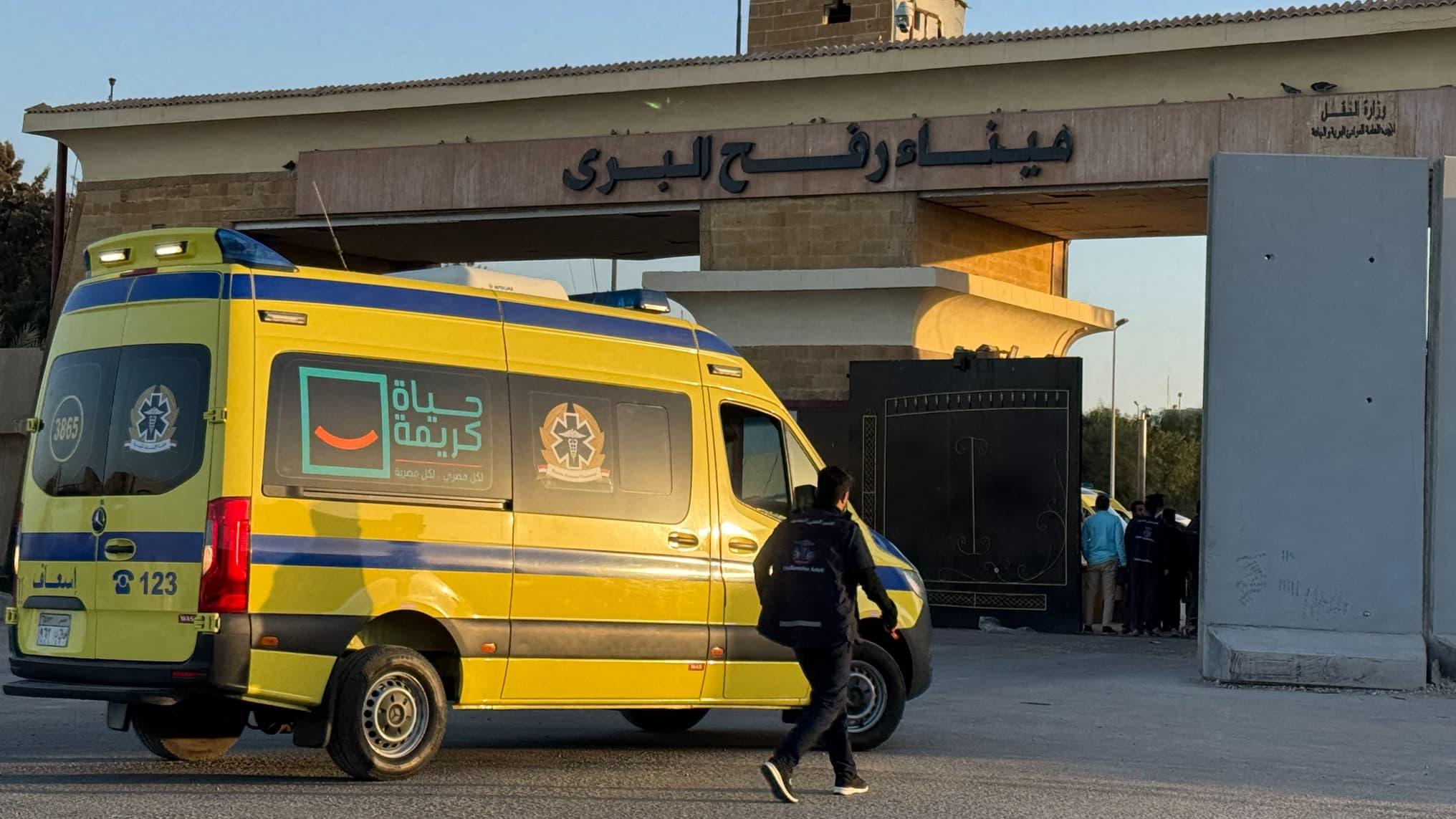
Israel announced a limited and highly controlled reopening of the Rafah border crossing between the Gaza Strip and Egypt, with COGAT stating that “the Rafah crossing will open this Sunday [February 1], in both directions, for a movement of people limited to only.”
“Video duration: 24 minutes 45 seconds”
Le Monde reports that the Israeli Defense Ministry body overseeing civilian affairs in the occupied Palestinian territories said exits and entries would be authorized “in coordination with Egypt, after prior security clearance of individuals by Israel, and under the supervision of the EU mission.”

The same COGAT communiqué specified that “The return of Palestinians living in Egypt to the Gaza Strip will be authorized only for those 'who left Gaza during the war,'” and Le Monde adds that an additional process would occur “in a dedicated corridor under the supervision of the Israeli security apparatus 'in a zone under army control.'”
Le Monde also frames Rafah as “the only entry and exit point between the Gaza Strip and the outside world that does not pass through Israel,” while noting it is located in the part of the enclave held by the Israeli army since its withdrawal at the start of the ceasefire that came into effect on October 10.
In the same report, Le Monde says the Israeli government had announced on Monday its consent to a limited reopening of Rafah for pedestrians only once the body of the last Israeli hostage in Gaza, Ran Gvili, had been brought back to Israel, but “had not set a date.”
The remains of Gvili, a police officer, were exhumed earlier this week by the Israeli army in a cemetery north of Gaza and buried in Israel on Wednesday, according to Le Monde.
On the humanitarian front, Le Monde quotes ICRC president Mirjana Spoljaric Egger urging the international community to “urgently improve the dramatic humanitarian situation in Gaza,” and to “seize every opportunity to intensify its efforts to relieve the suffering in Gaza.”
Ceasefire phase and hostages
The Rafah reopening is presented in Le Monde as part of the post-ceasefire framework that began when the ceasefire went into effect on October 10 and ended with the release of the final surviving hostages on October 13, as described in the Britannica explainer.
Britannica says the comprehensive arrangement proposed by Donald Trump on September 29, 2025 included “the release of all hostages within 72 hours, an immediate end to the war and full resumption of aid,” and it adds that the ceasefire agreement between Israel and Hamas in October 2025 was intended to bring an end to the war.
Le Monde, meanwhile, reports that Hamas had made a request for an immediate transition to the second phase, quoting the Palestinian Islamist movement: “We are asking (…) for an immediate transition to the second phase [of the US-sponsored truce] which provides for the opening of the Rafah crossing in both directions and the authorization for the Palestinian National Committee for the Administration of Gaza, set up under the American plan, to operate in the Gaza Strip.”
Le Monde also says the Israeli government had linked its consent to a limited reopening of Rafah for pedestrians only to the return of Ran Gvili, and it notes that the remains were exhumed by the Israeli army in a cemetery north of Gaza and buried in Israel on Wednesday.
In the same report, Le Monde quotes ICRC president Mirjana Spoljaric Egger recalling that “During the last fifteen weeks, the ICRC has cooperated with Israel, Hamas and mediators to repatriate hostages, detainees and the remains of the deceased to their families, in accordance with the first phase of the ceasefire.”
Egger’s statement in Le Monde also emphasizes that “Many people in Gaza still live under the rubble, deprived of basic services,” and that “Hospitals, housing, schools and drinking water networks must be repaired, and unexploded ordnance must be cleared.”
Britannica’s background section adds that the war began on October 7, 2023 when Hamas launched a coordinated land, sea, and air assault on Israel from the Gaza Strip, and that more than 1,200 people were killed during the October 7 attack, primarily Israeli citizens.
Post-war governance and force
Britannica describes a proposed post-war architecture that would be overseen by a “Board of Peace,” an international body “chaired by U.S. Pres.Donald Trump,” created to oversee the October 2025 ceasefire in the Israel-Hamas War.
“Our editors will review what you’ve submitted and determine whether to revise the article”
The explainer says the Board of Peace was “proposed in October 2025 and endorsed by the United Nations Security Council the following month,” and it would supervise a transitional Palestinian technocratic government in the Gaza Strip called the National Committee for the Administration of Gaza (NCAG).
Britannica adds that the NCAG would be “headed by Ali Shaath, a former Palestinian Authority(PA) official who was born in the Gaza Strip,” and it states that the Board of Peace would also work toward “disarming Hamas and deploying the International Stabilization Force (ISF).”
Britannica defines the ISF as “a peacekeeping mission made up of international armed personnel and charged with training a new Palestinian police force.”
The explainer also says that after months of discussions the formation of the board was announced in January in advance of the annual World Economic Forum (WEF) in Davos, during which the board’s first meeting was set to be held.
In Le Monde’s Gaza reporting, the Hamas request for the second phase explicitly ties Rafah opening to “the authorization for the Palestinian National Committee for the Administration of Gaza, set up under the American plan, to operate in the Gaza Strip,” echoing the NCAG role described by Britannica.
Le Monde also reports that Hamas calls on mediators and guarantor states to pressure Israeli Prime Minister Benjamin Netanyahu to “prevent him from hindering the agreement,” and it names the guarantor states as “Egypt, the United States, Qatar and Turkey.”
Diplomacy versus continuing friction
While the Rafah crossing is being reopened in limited form, the sources describe ongoing disputes over ceasefire implementation and the broader regional escalation.
Le Monde says “The Palestinian Islamist movement and Israel accuse each other of daily violations of the terms of the truce,” and it adds that “About ten countries, including France, Canada and the United Kingdom, urged on Wednesday Israel to allow humanitarian aid into Gaza 'without hindrance.'”

The same Le Monde report quotes Hamas calling on “mediators and the guarantor states of the ceasefire agreement (Egypt, the United States, Qatar and Turkey) to assume their responsibilities” and to exert “serious pressure” on Benjamin Netanyahu to “prevent him from hindering the agreement.”
Britannica’s explainer provides a longer arc, stating that “Hostilities resumed after negotiations for a second phase of the ceasefire failed,” and that the ceasefire agreement in October 2025 was meant to bring an end to the war.
In parallel, Radio France frames the wider escalation by stating “Since February 28, Israel and the United States have been bombing Iran,” and it says that “After 25 days, Iran strikes back: the Strait of Hormuz blocked, missiles reaching the Indian Ocean.”
Radio France also reports that “Trump talks of a negotiation, Tehran denies,” and it includes an account that “Washington handed Tehran, via Pakistan, a 15-point peace plan – five of which are devoted to the nuclear dossier, and one point demanding that the Strait of Hormuz remain open to navigation.”
The Radio France segment adds that “The United States proposes a one-month ceasefire,” while “Iranian authorities study the American demands,” even as “bombs continue to fall.”
Post-war planning and the Gaza front
Beyond immediate border logistics, the sources point to Israel’s post-war planning for Gaza and to the political calculations around the Gaza front.
“Closed since the start of the Israeli-American bombardments against Iran on February 28, the Rafah crossing will reopen to traffic in both directions starting next Wednesday, March 18, but only for limited movement of people, according to a statement from COGAT, the Israeli Defense Ministry agency responsible for civilian affairs”
Sky News Arabia describes “Israel's post-war plans,” saying Israeli media revealed that Tel Aviv is studying “the establishment of a humanitarian zone in the southern Gaza Strip,” with its scope extending between “the Morag and Philadelphia axes.”
Sky News Arabia dates that development to “July 6, 2025,” and it presents the segment as reflecting “the contours of Israel's vision for the post-war phase in Gaza.”
In the same broader context, Al Jazeera Net discusses “Why is Netanyahu signaling the reopening of the Gaza front?” and says the program “Behind the News” examined “the context and timing of intensified Israeli security and political consultations over what Tel Aviv calls a 'stalemate' in the Gaza Strip.”
Al Jazeera Net’s description says the episode looked at “the background to the escalation of Israeli airstrikes and assassinations despite the ceasefire,” and it also examined “to what extent U.S. President Donald Trump allows Israeli Prime Minister Benjamin Netanyahu to return to the military option.”
The Al Jazeera Net entry specifies that the episode was “Published on May 3, 2026,” and it names participants including “Israeli affairs expert Mohannad Mustafa,” “writer and political analyst Iyad Al-Qara,” and “former U.S. State Department official Thomas Warick,” with the program presented by “Hassan Jamoul.”
Britannica’s explainer, meanwhile, ties the post-war transition to the Board of Peace and to the “International Stabilization Force (ISF),” which is “charged with training a new Palestinian police force,” and it says the Board of Peace would work toward “disarming Hamas.”
More on Gaza Genocide

Itamar Ben-Gvir Marks 50th Birthday With Golden Noose Cake for Palestinian Death Penalty
11 sources compared

Palestinian Journalists Syndicate Says Israel Killed 262 Journalists Since October 2023
11 sources compared
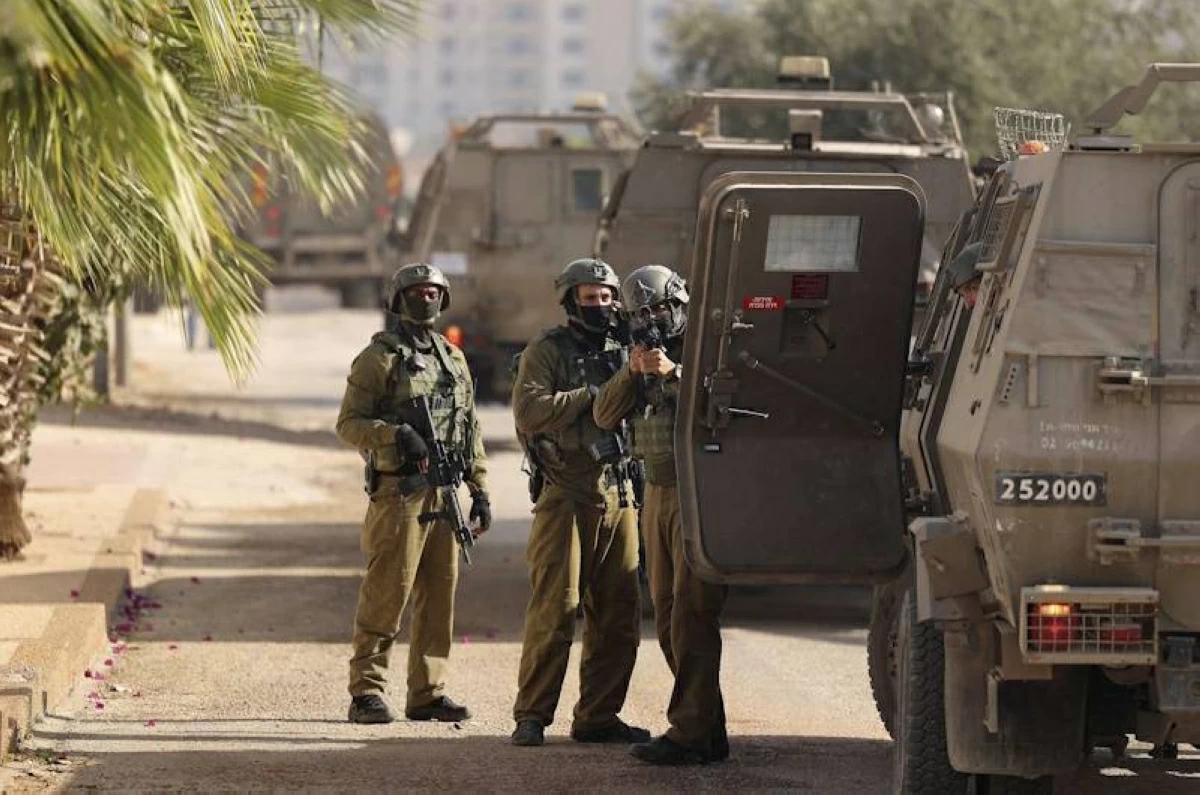
Israeli Forces Kill Nayef Feras Ziad Samaro, 26, During Raid in Nablus
15 sources compared
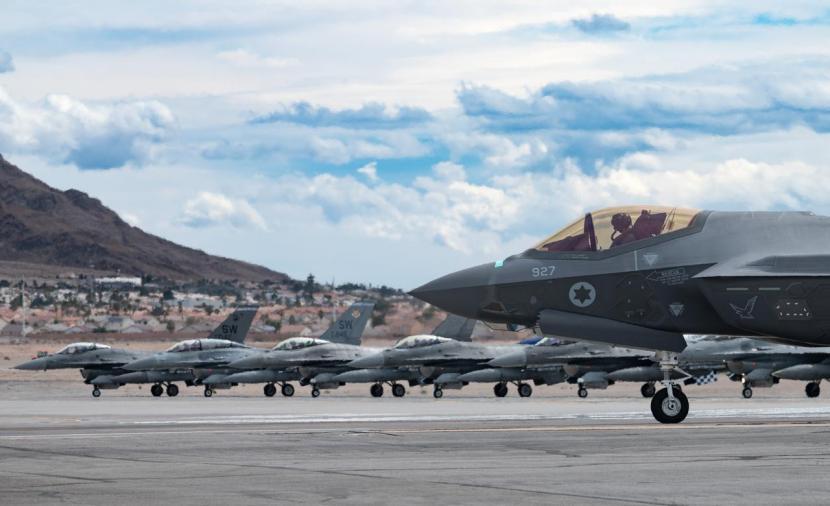
Israel’s Defense Ministry Approves F-35 And F-15I Deal With The United States
15 sources compared