Full Analysis Summary
Rafah reconstruction oversight
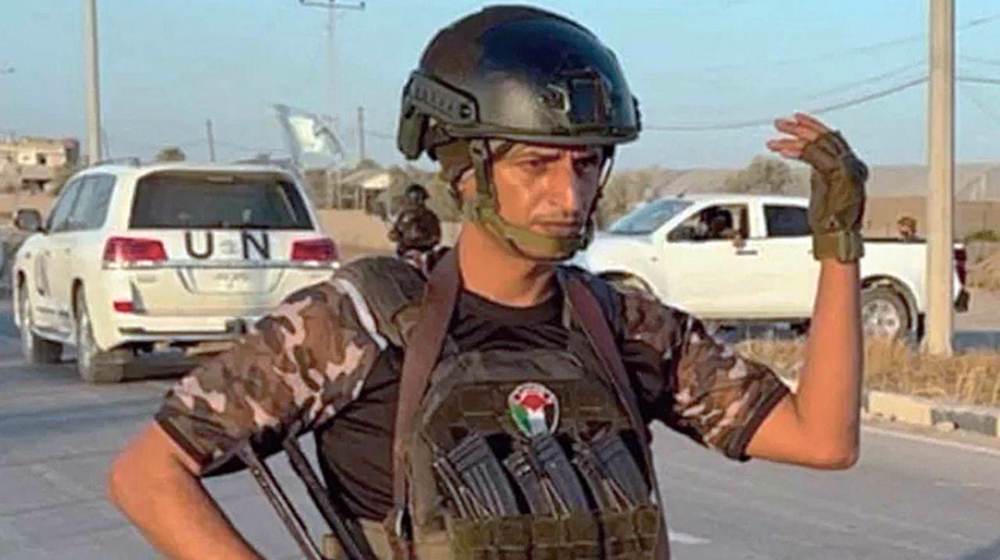
PressTV reports that Israeli media say Israel has authorized the Popular Forces militia, led by Yasser Abu Shabab, to oversee reconstruction or "rehabilitation" in Rafah in southern Gaza.
According to PressTV, the group is being positioned to manage rebuilding while the Israeli military continues operations in Gaza, and the appointment is framed as part of efforts to shape post-operation governance in areas formerly controlled by Hamas.
PressTV adds these developments come amid ongoing debate over who will run Gaza's reconstruction and how Israeli military and political aims will influence that process.
Coverage Differences
Tone and emphasis
PressTV (West Asian) presents the appointment as an assertion of Israeli influence and a strategic move to shape governance in Rafah by empowering a militia; it frames the story as Israel authorizing a militia to oversee reconstruction. PressTV also reports the appointment as embedded within Israeli media coverage rather than presenting it as an unquestioned fact. Other named actors inside PressTV’s reporting — Israeli media, the UN, al-Hadath, and the US State Department — are reported as offering differing claims or denials, which PressTV relays rather than endorsing as its own independent verification.
Source framing vs. direct claim
PressTV explicitly reports claims made by Israeli media and other outlets (for example, that Israel authorized the militia), instead of presenting those claims as independently confirmed. PressTV distinguishes between what Israeli media report and what the US State Department called false, showing internal contradictions in public narratives about the militia’s authorization and external meetings.
Allegations of aid diversion
PressTV reports allegations that the Popular Forces militia has been systematically looting and redirecting humanitarian aid in Gaza.
The article cites an internal 2024 UN report identifying the militia as a key actor behind "massive looting of convoys" and says areas under the militia’s control receive privileged access to supplies.
PressTV presents these claims within wider concerns about the fate of humanitarian assistance and who controls distribution on the ground in Gaza.
Coverage Differences
Narrative emphasis
PressTV emphasizes allegations of systematic looting and diversion of aid and cites an internal UN report as identifying the militia as a key actor behind large-scale looting. Within PressTV’s account, these claims are used to argue that the militia is not simply a reconstruction manager but a force that privileges certain areas and diverts humanitarian supplies. That framing contrasts with the reported denials or absence of corroboration from the US State Department regarding other linked claims (e.g., Kushner meeting), which PressTV notes separately.
Reliance on reported documents vs. denials
PressTV cites an internal UN document to substantiate allegations of looting, while also reporting denials or contradictions from other actors (the US State Department’s rebuttal of the Kushner meeting). This illustrates PressTV’s use of both reported documents and public statements to build its narrative, rather than relying on a single type of evidence.
Militia backing allegations in Gaza
PressTV reports the militia receives logistical and operational backing from Israeli forces and is being used to undermine Hamas’s governance in Gaza.
The piece cites Israeli media and frames the arrangement as part of a broader strategy to weaken Hamas’s administrative control by placing a pro-Israel-aligned militia into positions of authority during reconstruction.
PressTV also reports that Saudi outlet al-Hadath said Abu Shabab met Jared Kushner to discuss arrangements, although the US State Department denied that meeting occurred.
Coverage Differences
Contradiction
PressTV conveys a contradiction it reports between Saudi outlet al-Hadath’s claim that Abu Shabab met Jared Kushner and the US State Department’s description of that meeting as “false.” PressTV reports both claims, leaving the reader to note the dispute between outlets and officials over whether the US government or its intermediaries arranged or discussed the militia’s role.
Narrative focus
PressTV focuses on allegations of Israeli operational backing and the undermining of Hamas governance; it reports these as serious claims substantiated by an internal UN report and media reports. Because PressTV is West Asian in orientation, its tone emphasizes the implications for Palestinian governance and humanitarian access, whereas the US State Department’s denial of the Kushner meeting (as reported) represents a contrasting official pushback within the same narrative as presented by PressTV.
Hamas disarmament debate
PressTV reports that Jared Kushner urged finding ways for Hamas fighters to leave as part of a broader disarmament approach.
The Ezzedine al-Qassam Brigades, Hamas's armed wing, have rejected laying down weapons or any arrangement they see as serving Israeli occupation aims.
PressTV frames the militia appointment and alleged Israeli backing as a tactic to displace Hamas's authority.
The outlet also reports Hamas's categorical refusal to accept arrangements it views as imposed by Israel or its allies.
Coverage Differences
Policy vs. rejection
PressTV reports Kushner’s push for arrangements enabling Hamas fighters to leave and contrasts that with the Ezzedine al-Qassam Brigades’ rejection of disarmament or withdrawals. This presents a clear policy-versus-resistance narrative: actors proposing mediated withdrawal or disarmament (reported via Kushner) and actors rejecting such arrangements (reported via Hamas’s armed wing).
Ambiguity in verification
PressTV relays competing claims (Kushner’s advocacy for withdrawal routes; al-Hadath’s reporting of a Kushner meeting; the US State Department’s denial) and an internal UN report alleging looting. PressTV therefore highlights significant but partially conflicting claims; because PressTV is reporting multiple actors and claims, verification of some allegations (for example, a Kushner meeting) is left unresolved in the reporting.