Iran18 March, 20262 min read
Israel assassinated Ali Larijani, secretary of Iran's Supreme National Security Council
This article is an automated aggregation of coverage from news outlets. Our editorials offer in-depth analysis curated by the NewsCord team.
Ali Larijani, Iran's top security official, reportedly killed in Israeli airstrike in Tehran. Influential Iranian politician, close adviser to Khamenei, key architect of Iran's security policy.

Assassination Confirmed
Ali Larijani, secretary of Iran's Supreme National Security Council and one of the regime's central security coordinators, was killed in an Israeli airstrike on Tehran on March 17, 2026. The precision strike occurred in the Pardis area on the eastern outskirts of Tehran during the night of March 16-17. The attack also claimed the lives of Larijani's son Morteza Larijani and his chief of office Alireza Bayat.
Israel's Defence Minister Israel Katz publicly confirmed the Israeli strike. Analysts describe this as a pivotal shift in Iran's power dynamics at a moment of acute crisis.
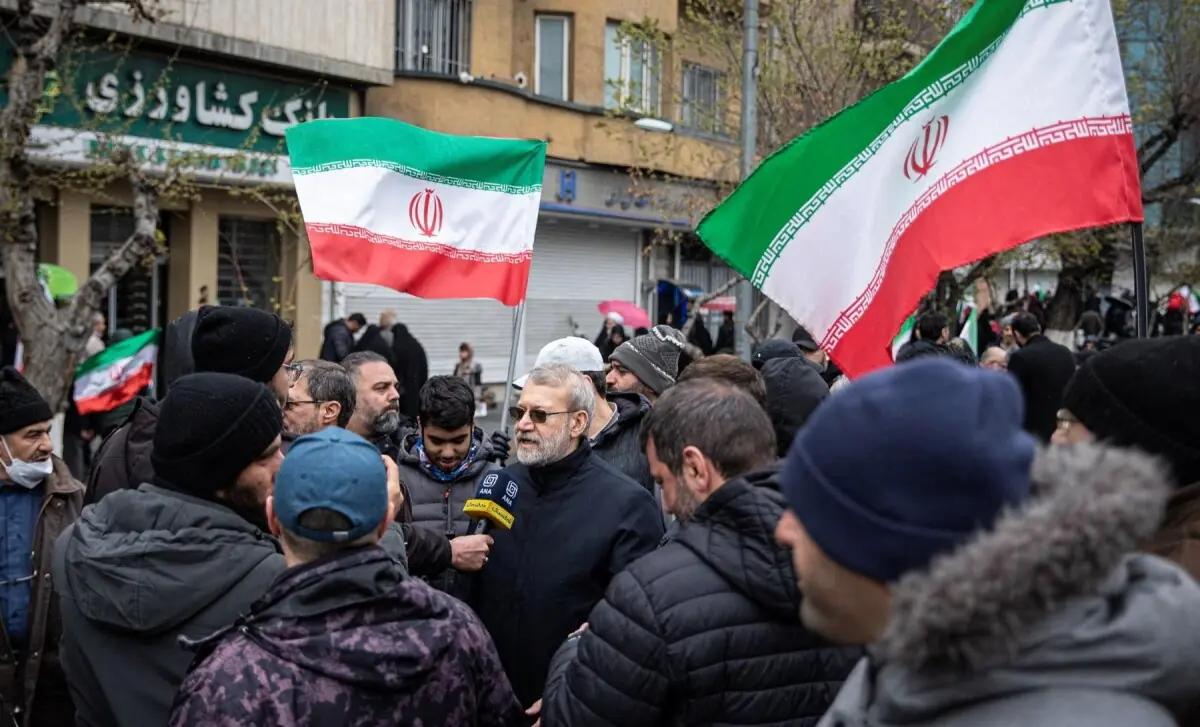
Background and Rise
Larijani was a veteran politician and security architect whose career spanned decades of Iranian politics. He began his career as a Revolutionary Guard Corps commander during the Iran-Iraq War in the 1980s where he rose to brigadier general. He later served as head of Iran's state broadcaster IRIB (1994-2004), Speaker of Parliament (2008-2020), and head of the Supreme National Security Council.
He was considered one of the most powerful figures in the Islamic Republic and a close adviser to Ayatollah Khamenei. Despite his commitment to Khamenei's absolute rule, Larijani was considered relatively moderate compared to other hardline figures. He played a central role in the violent repression of mass protests in January 2026 that killed thousands.

Power Vacuum Crisis
Larijani's death has created a catastrophic power vacuum in Iran, leaving the regime effectively leaderless. This occurred at the height of an existential conflict that began with the February 28 assassination of Supreme Leader Ali Khamenei. For the past three weeks, Larijani had served as the de facto steward of the Iranian state.
He was attempting to coordinate a fragmented military response while contending with deteriorating domestic conditions. The regime's hierarchy has suffered near-total erosion since Operation Epic Fury began on February 28.
The simultaneous loss of Basij commander Gholamreza Soleimani has created hazardous conditions. Regional proxies and military units now lack clear directives, raising risks of erratic escalations.
Regional Implications
The assassination has significant regional and international implications. Global energy markets strained by Strait of Hormuz disruption brace for further volatility. International analysts warn that absent centralized authority complicates diplomatic off-ramps.
Local military commanders may feel compelled to act independently to prove loyalty. The precision strike underscores catastrophic failure in Iranian intelligence and defense.
Larijani was regarded as capable of bridging internal factions and maintaining moderate channels. His removal is seen as a setback for diplomatic efforts and negotiation prospects.
Historical Context
Historical context shows Larijani's death recalls the 2020 killing of Qassem Soleimani. Both represented precise removals of figures linking diplomacy, intelligence, and military power. Soleimani's death weakened Iran's ability to calibrate risk, leaving a gap no successor filled.
Coordination frayed and responses became less predictable after Soleimani's killing. Larijani followed a similar path from battlefield to bureaucracy.

As head of state broadcaster, he worked with intelligence services to shape narratives. The 1996 Hoviyyat series branded intellectuals as traitors to reinforce regime loyalty.