Full Analysis Summary
Gaza aid and destruction
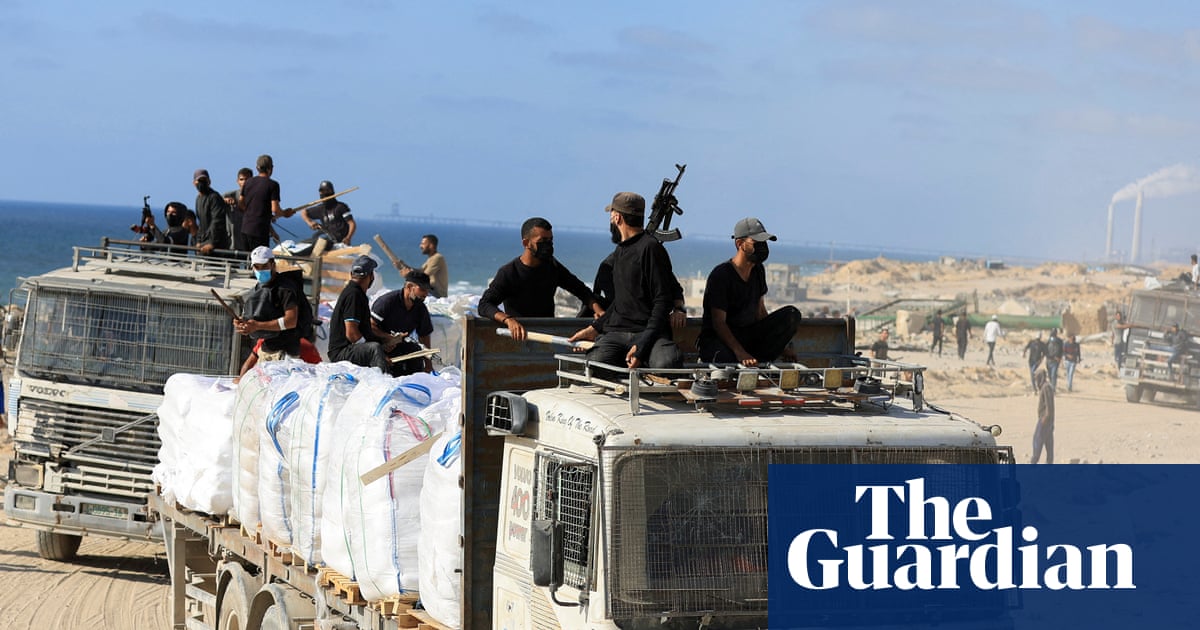
French historian Jean-Pierre Filiu reports that during his month-long stay in Gaza’s al-Mawasi humanitarian zone he witnessed what he describes as evidence that Israeli forces enabled looting of aid convoys.
He describes an episode in which a 66-truck UN convoy was attacked while guarded by local notables recruited by Hamas, saying Israeli quadcopters supported the attackers, two guards were killed and about 20 trucks were robbed.
Filiu says Israeli strikes disabled an alternative World Food Programme route meant to avoid looting and situates these incidents within a wider breakdown of law and order after Israeli strikes on Gaza police, citing an internal UN memo that described Israel’s approach as "passive, if not active benevolence" toward some gangs.
He also documents the mass destruction in Gaza after the 7 October Hamas attack and the subsequent Israeli offensive, reporting nearly 70,000 deaths and vast ruin across Gaza.
Coverage Differences
Missing other-source perspectives
Only The Guardian (Western Mainstream) is available in the provided material. The Guardian reports Filiu’s direct observations and cites UN concerns; it also reports Israel’s denials and Netanyahu’s acknowledgment of backing the Popular Forces militia. Because no other source texts are provided, I cannot contrast these claims with alternative or regional outlets, independent investigations, or Israeli military statements beyond the brief denials reported by The Guardian. I therefore present Filiu’s allegations and the Israeli denials as reported by The Guardian without asserting which version is independently verified.
Allegations of Israeli actions
Filiu's account, as reported in The Guardian, alleges Israeli facilitation of attackers, including quadcopter support and strikes that cut off alternate aid routes.
He interprets those strikes as enabling gangs to seize supplies.
The reporting quotes an internal UN memo warning that law and order had collapsed and describing Israel's role toward some gangs as 'passive, if not active benevolence'.
These are presented as Filiu's allegations and UN concerns, and The Guardian also records that Israel categorically denies the allegations.
Israel says the strikes hit armed operatives planning to seize aid and stresses its efforts to facilitate humanitarian transfers.
Coverage Differences
Tone and attribution
The Guardian frames Filiu’s narrative as first-person reporting from Gaza and explicitly notes his interpretation of events (allegations of Israeli facilitation), while also including the Israeli denial and Netanyahu’s admission of supporting a militia. Without other sources, I cannot show how other outlets might prioritize the Israeli denial, the UN memo, or independent forensic evidence; the Guardian’s tone emphasizes Filiu’s eyewitness claims and the UN’s alarm.
Contested claims on looting
The Guardian reports that Israeli political leaders acknowledged more direct involvement with local armed groups.
Prime Minister Benjamin Netanyahu admitted Israeli support for the Popular Forces militia.
The Guardian also notes that some recruits in that militia included looters.
Hamas denies any systematic theft of aid.
Observers such as Filiu and the UN describe a collapse of order and allege that Israel enabled looting.
Israel counters that its forces targeted armed operatives and tried to facilitate aid, while Hamas disputes accusations of organized theft.
Coverage Differences
Contradiction and contested claims
Within The Guardian’s single-source reporting, there is a clear contradiction among claims: Filiu and the UN memo allege Israeli facilitation of looting; Benjamin Netanyahu is reported to have acknowledged support for a militia (Popular Forces) that included looters; Israel officially denies wrongdoing, claiming strikes targeted armed operatives; Hamas denies systematic looting. Without other sources, I can only report these contradictory claims as presented by The Guardian, not adjudicate their accuracy.
Gaza attack and aftermath
Filiu places these allegations in a broader account of devastation, writing that after the 7 October Hamas attack — about 1,200 killed in Israel and 250 taken hostage — and the subsequent Israeli offensive he observed mass destruction and reports nearly 70,000 people killed in Gaza and widespread ruin.
He argues that Israel did not pursue any 'hearts and minds' strategy and warns the situation is a universal tragedy.
The Guardian therefore links the aid-convoy episode to the larger humanitarian catastrophe Filiu describes.
Coverage Differences
Narrative emphasis and severity
The Guardian emphasizes Filiu’s depiction of scale and destruction—reporting the figure of nearly 70,000 killed—and presents his judgment that Israel lacked a political strategy to win hearts and minds. Without other outlets, I cannot compare whether other sources would characterize the scale as ‘genocide’ or use different casualty figures or legal framings; the Guardian presents Filiu’s severe appraisal and casualty estimate.
Gaza security and disorder
The Guardian’s piece records institutional alarm.
UN agencies warned of lawlessness after Israel targeted Gaza police, and an internal UN memo accused Israel’s approach of enabling gangs.
The reporting frames attacks on aid convoys and subsequent looting as part of a collapse of public order exacerbated by Israeli operations against security structures.
It treats Filiu’s eyewitness testimony as a central source while also recording official Israeli denials.
Coverage Differences
Emphasis on institutional reporting versus official denial
The Guardian relays UN agencies’ warnings and an internal memo that criticizes Israel’s conduct, juxtaposed with Israel’s denial and explanation. This creates a tension in the narrative: institutional actors (UN) alarmed by breakdown in law and order versus Israeli official claims of targeting armed operatives and seeking to facilitate humanitarian transfers. Without other sources, I cannot show if regional or alternative outlets would amplify UN criticism or Israeli denials differently; the Guardian gives weight to the UN memo and Filiu’s testimony.
Limitations and competing claims
The material provided is a single-source report summarizing Filiu’s book and related UN concerns, plus Israel’s denials as reported by The Guardian.
I cannot independently verify the claims, compare forensic evidence, or show how West Asian or Western alternative outlets frame the events because no other source texts were provided.
According to The Guardian’s reporting, Filiu alleges Israeli facilitation of looting and UN agencies warned of a collapse of law and order after Israeli actions that targeted Gaza police.
Israel denies wrongdoing and says it targeted armed operatives.
These competing claims remain unresolved in the provided material.
Coverage Differences
Missing corroboration and alternative narratives
Because only The Guardian is available, we cannot identify contradictions or corroborations from other outlets nor examine differing legal or moral framings (for example, whether other sources would use the term ‘genocide’). The Guardian provides Filiu’s testimony, UN alarm, Israeli denials, and Hamas’ denial of systematic theft, but does not settle which version is accurate; that ambiguity must be acknowledged.