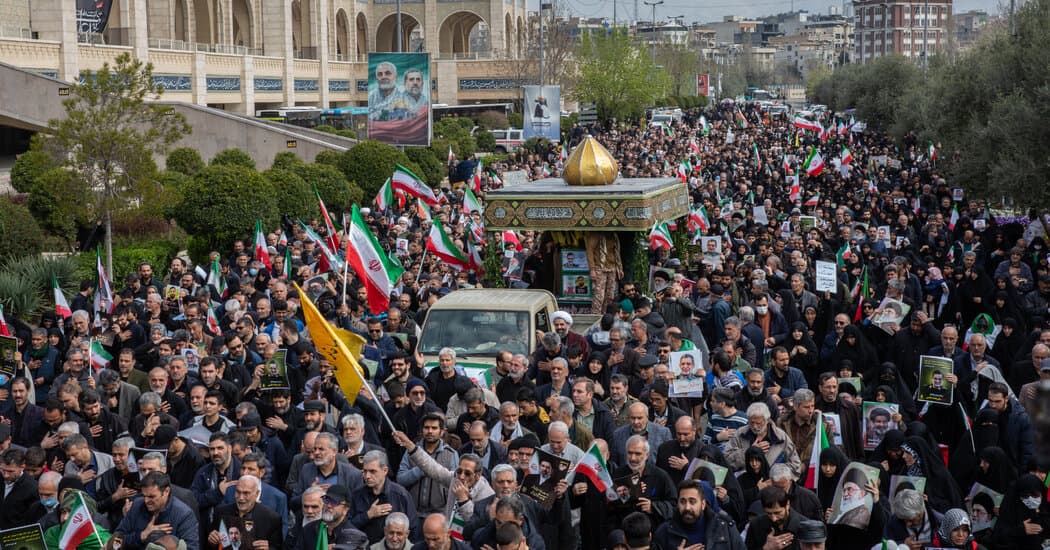
Israel Attacks Iran's Nuclear Sites in New Wave of Strikes
Key Takeaways
- Israel's strikes escalate the broader Iran-Israel confrontation.
- Lebanon's conflict intensifies with Israeli actions and Hezbollah involvement.
- U.S. considers deployment of Marines and broader regional force to secure Hormuz.
Israeli Strike Escalation
Israel launched a new wave of airstrikes against Iran overnight from Thursday to Friday, targeting nuclear and missile sites, military leaders, and nuclear-science researchers in a significant escalation of regional tensions.
“In retaliation for the war started by the United States and Israel against Iran, the Lebanese armed group Hezbollah, allied with Tehran, launched attacks against the Jewish state, precipitating a new Israeli invasion of Lebanon and ongoing bombings of the country since then”
The Israeli military denied responsibility for strikes on the Natanz nuclear facility, despite Iranian state media reporting damage and the International Atomic Energy Agency confirming Tehran's claims about the attack.

These strikes represent the latest phase in an ongoing conflict that has seen both U.S.-Israeli forces target Iran's nuclear infrastructure multiple times, with satellite imagery previously showing destruction of underground centrifuge facilities.
The attacks come amid heightened regional tensions and signals what Israeli Defense Minister Israel Katz described would be an 'escalate significantly' in military operations this week.
Historical Context
The conflict between Israel and Iran stems from decades of ideological animosity dating back to the 1979 Iranian Revolution, which established the Islamic Republic and its refusal to recognize the State of Israel.
According to experts, Iran has supported armed groups opposed to Israel, including Hamas and Hezbollah, for 46 years, creating a fundamental geopolitical rift between the two nations.

This long-standing enmorphism has been compounded by Israel's perception of Iran as an existential threat due to its nuclear ambitions.
Iranian Foreign Minister Abbas Araghchi characterized the current conflict as 'illegal and unprovoked,' while Israeli officials have consistently told the public to prepare for a protracted battle with Iran, reflecting the deep-rooted nature of this geopolitical confrontation.
Nuclear Program Concerns
Iran's nuclear program has been at the center of international concerns, with the country enriching uranium to 60% purity, a level close to the 90% needed to manufacture atomic bombs.
“Campbell, a senior fellow on defense and security issues at the Middle East Institute in Washington, said U”
Despite Iran's consistent denial of seeking nuclear weapons, its recent announcement of significantly increased uranium production and plans to build new enrichment sites have intensified tensions.
Expert analysis indicates that while Iran was 'a few days away from having enough highly enriched uranium to manufacture a nuclear bomb,' there remained significant technical hurdles including weaponization.
The International Atomic Energy Agency has confirmed that Iran is the only state without nuclear weapons that enriches uranium to such high levels, making its nuclear facilities prime targets for Israeli and U.S. military strikes.
Regional Military Impact
The military escalation has had significant regional impacts, with Israeli warplanes striking southern suburbs of Beirut after the military issued warnings to residents in seven neighborhoods.
The attacks targeted Hezbollah military infrastructure 'with increasing intensity,' showing the conflict's widening scope beyond Iranian soil to include proxy warfare in Lebanon.
Meanwhile, a drone crashed at the headquarters of the Iraqi National Intelligence Service in Baghdad, indicating the conflict's potential to destabilize neighboring countries.
Israeli military operations have been accompanied by missile launches from Iran toward Israel, creating a dangerous cycle of retaliation.
The U.S.-Israeli military coordination has been evident throughout, with both nations conducting airstrikes on Iranian targets and maintaining pressure on Tehran's nuclear and military capabilities.
Policy Shifts
President Trump's shifting approach to the conflict signals a potential recalibration of U.S. objectives amid growing domestic concerns.
“In retaliation for the war started by the United States and Israel against Iran, the Lebanese armed group Hezbollah, allied with Tehran, launched attacks against the Jewish state, precipitating a new Israeli invasion of Lebanon and ongoing bombings of the country since then”
While initially aiming for regime change in Tehran and complete removal of Iran's nuclear fuel stockpile, Trump announced on social media that he was considering 'winding down' military operations in Iran.
This retreat from more ambitious goals comes as Americans face gasoline prices around $4 per gallon and Republicans express concern about the Pentagon's request for $200 billion to replace expended ammunition.
Trump's recent statement focuses on weakening Iran's military capabilities while protecting American allies in the region, effectively turning the policing of the Strait of Hormuz over to countries that use it.
This shift suggests the administration recognizes the economic and political costs of prolonged conflict, even as Israeli officials continue to prepare their citizens for extended military engagement.
More on Lebanon

Israel's Defense Minister Orders Intensified Demolitions of Bridges and Houses in Southern Lebanon.
16 sources compared

Israel Destroys Bridges Over Litani River, Steps Up Border Demolitions Near Lebanon
19 sources compared
Israel Strikes Hezbollah Targets in Beirut After Evacuation Warnings
13 sources compared
UAE Dismantles Terrorist Network Linked to Iran and Hezbollah, Arrests 109
19 sources compared