Israel Blocks Fuel Deliveries, Forces Al-Awda Hospital in Gaza to Suspend Most Services

Israel Blocks Fuel Deliveries, Forces Al-Awda Hospital in Gaza to Suspend Most Services

26 December, 20256 sources compared
War on Gaza

Key Points from 6 News Sources

  1. 1

    Israel blocked fuel deliveries, causing critical diesel shortages across Gaza medical facilities.

  2. 2

    Al-Awda Hospital in Nuseirat suspended most medical services due to a fuel cutoff.

  3. 3

    Al-Awda treats about 60 inpatients and nearly 1,000 daily outpatient visitors.

Full Analysis Summary

Nuseirat hospital fuel crisis

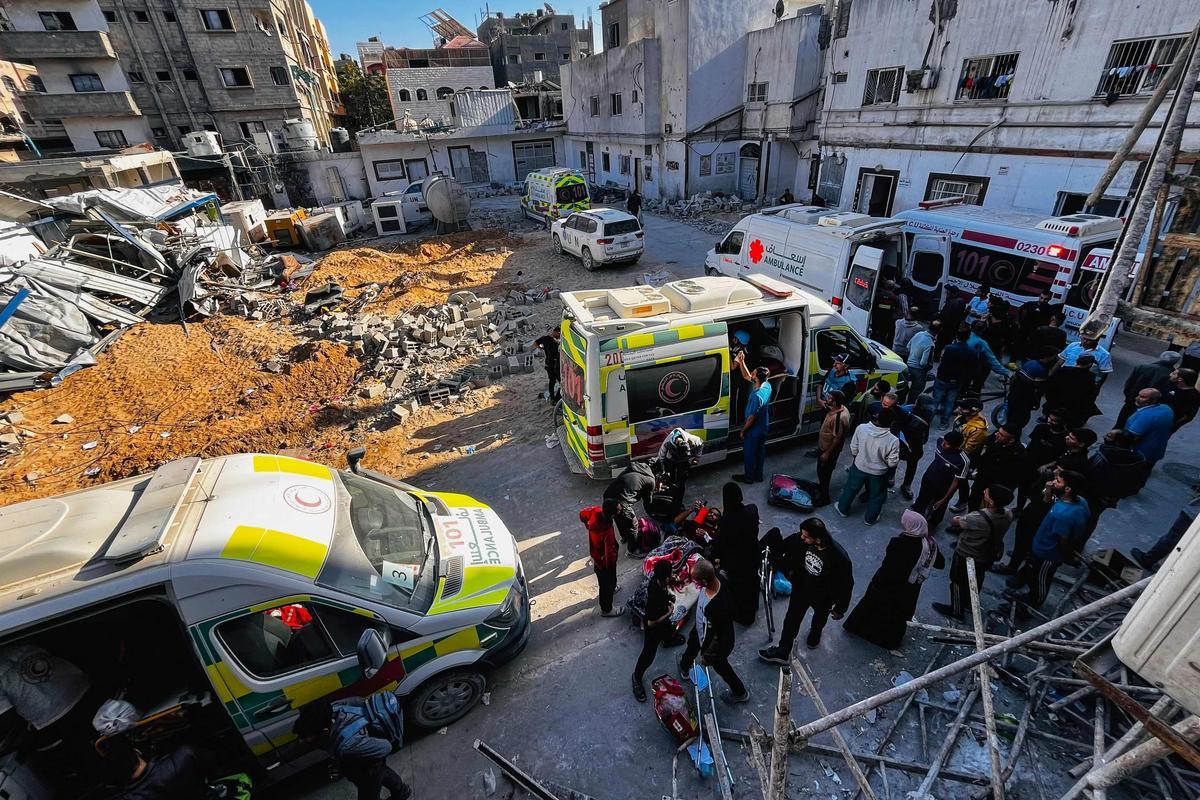
Al-Awda Hospital in Nuseirat has suspended most services because of a critical fuel shortage.

Only the emergency, maternity and pediatric departments remain operational, with staff running those units on a rented generator.

Hospital officials say the facility normally needs 1,000 to 1,200 litres of diesel per day but currently has about 800 litres on hand.

Managers warned that a prolonged fuel shortfall would endanger basic care.

Displaced patients report being denied X-rays and told to take painkillers or seek other hospitals.

Coverage Differences

Detail emphasis / operational reporting

tag24 (Western Tabloid) focuses on immediate operational details — exact diesel needs, generator rental and a patient being denied an X‑ray — while Naharnet (West Asian) repeats the operational figures and quotes hospital officials calling for restored supplies. The Hindu (Asian) also records a named hospital official and a displaced patient’s account, providing a similar operational and human-detail emphasis. These sources report frontline conditions rather than attributing responsibility for shortages to a particular actor.

Patient testimony vs. general report

The Hindu and tag24 include direct patient testimony about being denied an X‑ray (The Hindu names Khitam Ayada), whereas Naharnet summarizes hospital warnings without the same named patient quote; The Straits Times also cites a displaced woman to highlight access problems. The Hindu and tag24 thus foreground individual harm, while Naharnet emphasizes institutional warnings and appeals.

Gaza aid and health

Sources place the Al-Awda suspension within a broader humanitarian breakdown.

A fragile truce since Oct. 10 allowed up to 600 aid trucks daily, but only 100-300 humanitarian trucks are actually entering Gaza.

Many convoys are carrying commercial goods that are inaccessible to large parts of the 2.2 million population, which severely limits fuel, medical supplies and food reaching hospitals and clinics.

International charities and nongovernmental organisations now run much of Gaza's remaining health capacity.

Doctors Without Borders operates about one-third of the territory's roughly 2,300 hospital beds, and NGOs support all five child malnutrition stabilisation centres.

Coverage Differences

Scope and context

The Hindu (Asian) and Naharnet (West Asian) explicitly connect the hospital’s fuel crisis to the wider aid shortfall — quoting the allowed 600 trucks versus the 100–300 actually entering — and emphasise how commercial cargoes limit access for most Gazans. The Straits Times (Asian) similarly documents the damage to health infrastructure and NGO management of beds but adds reported Israeli claims about Hamas using hospitals, which introduces a competing narrative about justification for strikes. tag24 (Western Tabloid) focuses more narrowly on hospital operations and patient impacts and does not elaborate on the aid-truck numbers in its snippet.

Narrative insertion of military justification

The Straits Times (Asian) reports Israeli military claims that Hamas used some hospitals as command centres (which Hamas denies); this inserts a justification narrative for strikes that other sources either do not mention (tag24, Naharnet) or present as part of the general history of hospital strikes (The Hindu). The Straits Times frames the health-sector damage with explicit attribution to Israeli strikes and the Israeli claim about Hamas usage, while Naharnet and The Hindu emphasise damage and NGO responses without foregrounding the Israeli justification.

Hospital crisis amid Gaza war

The snippets place the hospital crisis within the wider war that began with Hamas's Oct. 7 attack and the ensuing Israeli military campaign.

They report casualty figures cited by Gaza authorities and other agencies, stating the Oct. 7 Hamas attack killed 1,221 people in Israel.

Gaza's health ministry reports that Israel's campaign has killed at least 70,942 people, figures the United Nations regards as reliable, according to The Hindu, Naharnet and The Straits Times.

Coverage Differences

Casualty reporting and source attribution

The Hindu (Asian), Naharnet (West Asian) and The Straits Times (Asian) all report the same broad casualty numbers and explicitly attribute the higher Gaza death toll to Israel’s campaign, noting UN regard for the figures’ reliability. tag24 (Western Tabloid) does not include casualty figures in its snippet; therefore it focuses coverage on hospital operations rather than the full casualty scale.

Framing of responsibility

The three outlets that report casualty numbers frame those deaths as resulting from Israel’s campaign (The Hindu explicitly says "Israel’s campaign in Gaza has killed at least 70,942 people"). They report the figures as cited by Gaza authorities and considered reliable by the UN, rather than presenting them as unverified claims. This is a direct attribution of civilian deaths to Israeli military operations in those sources.

Hospital fuel and aid crisis

Hospital managers and officials are explicitly calling for fuel and aid to be restored.

Naharnet and The Hindu quote hospital officials asking local and international groups to secure steady fuel supplies and warn that continued shortages will endanger basic care.

Tag24 highlights the immediate operational risk that without sufficient diesel the hospital cannot run X-rays and other services.

The Straits Times documents how international NGOs now shoulder much of Gaza's health provision.

These sources converge on urgent appeals but differ in tone.

Tag24 stresses immediate patient-level failures, The Hindu and Naharnet emphasize institutional appeals and the role of aid, and The Straits Times frames the appeal within repeated strikes on hospitals.

Coverage Differences

Appeal focus

Naharnet (West Asian) and The Hindu (Asian) quote hospital officials calling for local and international groups to restore or secure fuel supplies; tag24 (Western Tabloid) foregrounds the operational consequences for patients; The Straits Times (Asian) places the appeals within a history of hospital strikes and NGO substitution of services.

Tone: immediacy vs. systemic context

tag24’s tone is immediate and concrete (denied X‑ray, exact litres of fuel), The Hindu and Naharnet are more institutional and call for organized aid responses, while The Straits Times frames these calls amid allegations of Israeli strikes on health facilities, producing a more accusatory tone about causes and consequences.

Fuel shortages and attribution

Sources document that Al-Awda’s suspension stems from critical fuel shortages.

They also report that far fewer humanitarian trucks are entering Gaza than the truce allowed.

None of the provided snippets explicitly state which actor is directly blocking or withholding fuel deliveries to Al-Awda.

Outlets report the factual consequence — hospitals cannot operate essential services without diesel.

Some reports attribute deaths and damage to Israel’s campaign when casualty figures are cited.

The sources do not uniformly provide a direct chain of evidence that an actor intentionally blocked the hospital’s fuel, and this lack of explicit attribution is important and unresolved in these accounts.
Coverage Differences

Attribution clarity

Naharnet, The Hindu and The Straits Times all describe the reduction in aid trucks entering Gaza and link it to shortages, while tag24 focuses narrowly on hospital-level shortages without discussing aid-truck numbers. None of the four snippets explicitly says "Israel blocked these specific fuel deliveries" in their provided text; several outlets attribute large-scale deaths to Israel’s campaign but stop short of proving intent behind specific supply restrictions. This is an ambiguity the sources leave open.

Direct responsibility vs. systemic effect

The Straits Times and The Hindu attribute the broader death toll to Israel’s military campaign, quoting casualty figures that place responsibility for mass deaths on Israeli operations, but they do not provide direct sourcing in these snippets that Israel intentionally blocked the hospital’s diesel. Readers must distinguish between reported casualty attribution and the narrower, unresolved question of who specifically prevented fuel from reaching Al-Awda.

All 6 Sources Compared

Al-Jazeera Net

A person was killed by occupation gunfire in Jabalia, and Al-Awda Hospital suspends its services.

Read Original

Macau Business

Fuel shortage forces Gaza hospital to suspend most services

Read Original

Naharnet

Fuel shortage forces Gaza hospital to suspend most services

Read Original

tag24

Gaza hospital forced to suspend most services due to fuel shortage as Israel continues to block crucial aid

Read Original

The Hindu

Fuel shortage forces Gaza hospital to suspend most services

Read Original

The Straits Times

Fuel shortage forces Gaza hospital to suspend most services

Read Original