Full Analysis Summary
Israeli strikes in southern Lebanon
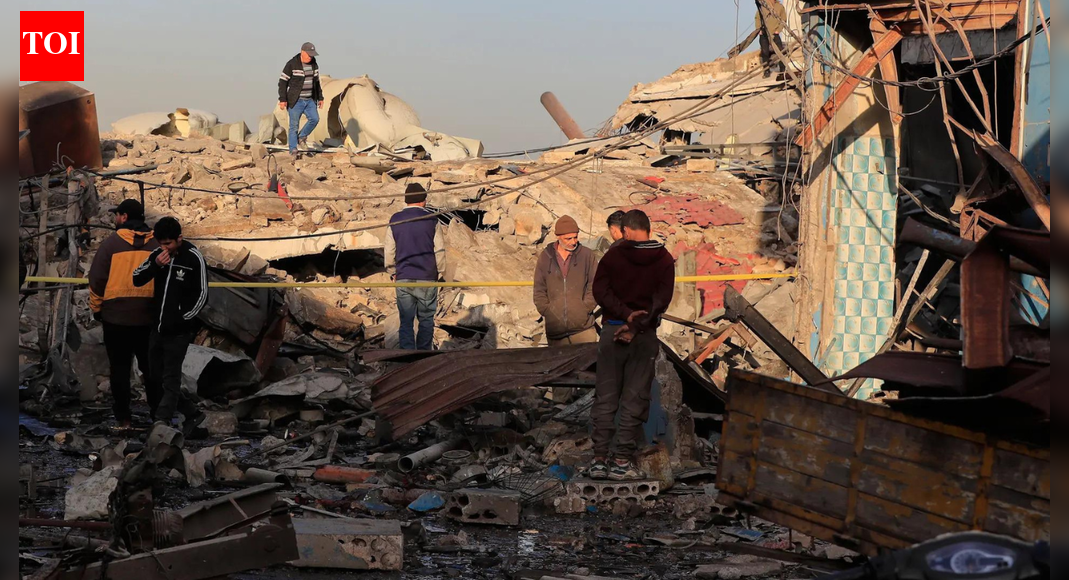
Israeli forces carried out air strikes across southern Lebanon on Friday, and Israeli statements said they hit Hezbollah weapons storage sites and a weapons-production facility intended to rebuild the group’s military capabilities.
Lebanese state media reported heavy strikes in Iqlim al-Tuffah, between Kfar Fila and Ain Qana, and in parts of Jezzine, between Rihan and Sajd.
Al Jazeera’s local account described the raids as concentrated in the eastern sector largely north of the Litani River, noting massive explosions, low-flying warplanes and poor visibility that complicated assessments of exact locations.
These reported attacks follow Lebanon’s army announcement that it completed the first phase of an agreement to confine weapons to the state in southern Litani.
Coverage Differences
Narrative emphasis
Firstpost (Asian) frames the strikes primarily as targeted hits on Hezbollah weapons storage and production facilities, emphasizing the Israeli claim of degrading military capability. Al-Jazeera Net (West Asian) emphasizes on-the-ground effects—low-flying warplanes, explosions, and the difficulty of locating strikes—while also reporting the Lebanese government’s claim about confining weapons. Times of India (Asian) does not present coverage of the strikes in the provided snippet and instead states it lacks the full article text, illustrating an omission in the available sources.
Post-ceasefire tensions
Both Firstpost and Al-Jazeera place the strikes in the broader context of a fragile post-ceasefire environment.
Firstpost notes Israel and Lebanon have observed a ceasefire since November 2024 that ended more than a year of cross-border fighting that left over 4,000 dead and about 17,000 injured, while Israeli forces were supposed to withdraw but remain at five border outposts.
Al-Jazeera reports that the raids followed the Lebanese government and army's announcement that they completed the first phase of an agreement to confine weapons to the state in southern Litani - an agreement Al-Jazeera says excludes seven sites occupied by Israel.
Firstpost additionally cites Israeli media reporting that Lebanon's army is preparing for a possible large-scale offensive if Hezbollah's arms are not dismantled by the end of 2025, highlighting continued tensions and potential for renewed escalation.
Coverage Differences
Context and escalation risk
Firstpost (Asian) foregrounds the broader casualties of prior cross-border fighting and reports Israeli media claims about preparations for a potential large-scale offensive by Lebanon’s army if arms are not dismantled by end-2025. Al-Jazeera (West Asian) underscores the local agreement to confine weapons and notes exclusions (seven sites occupied by Israel), focusing on the mechanics of the deal and immediate operational follow-up. Times of India (Asian) again provides no reporting on the Lebanon strikes in the supplied snippet.
Reports on strikes
Accounts differ on the operational details and reported effects of the strikes.
Al-Jazeera relays an official’s claim that the Israeli army identified four sites to shell without warning and has carried out strikes on vehicles and buildings, ground incursions, and home demolitions.
Al-Jazeera reports an Israeli force destroyed a building in Hayy al-Bayader in Yaroun after advancing more than 1,500 meters.
Firstpost specifies geographic targets, describing heavy strikes in Iqlim al-Tuffah and parts of Jezzine, and frames the operation as striking weapons storage and production capabilities.
The two sources together portray both the claimed intent of degrading Hezbollah’s arms and the immediate impact on populated areas.
The Times of India supplied text contains no on-the-ground report to corroborate or dispute these operational claims.
Coverage Differences
Operational detail vs. target framing
Al-Jazeera (West Asian) supplies granular operational claims from a local official — specific behaviors like 'four sites to shell without warning,' strikes on vehicles/buildings, ground incursions, and home demolitions — and documents a reported building destruction in Yaroun. Firstpost (Asian) frames the actions as deliberate hits on weapons storage and a production facility and names affected areas (Iqlim al-Tuffah, Jezzine). Times of India (Asian) does not provide operational reporting in the supplied snippet.
Firstpost and Al-Jazeera coverage
Firstpost included an additional regional security detail alongside its battlefield reporting.
It reported that the UK and Norway agreed to a permanent deployment of British Royal Marines to northern Norway, involving about 1,500 personnel and advanced equipment at Camp Viking.
The deployment is intended to bolster NATO's Arctic deterrence ahead of Cold Response 2026.
That item appears as a broader security note alongside Firstpost's coverage of the Lebanon strikes.
By contrast, Al-Jazeera's reporting remained narrowly focused on the southern Lebanon raids and their local impacts.
Coverage Differences
Scope and off-topic inclusion
Firstpost (Asian) juxtaposes the Lebanon strikes with a NATO-related security development in northern Europe, presenting a broader geopolitical angle. Al-Jazeera Net (West Asian) confines its reporting to events and operational consequences in southern Lebanon and does not introduce the NATO/Arctic detail in the supplied snippet. Times of India (Asian) again does not provide reporting on the strikes or the NATO note in the supplied text.
Coverage differences and uncertainties
The snippets reflect complementary but not identical reporting.
Firstpost highlights Israel's claim that it degraded Hezbollah’s weapons capabilities and frames the strikes within a ceasefire-to-escalation risk narrative.
Al-Jazeera stresses local eyewitness and official descriptions of raids, notes their concentration north of the Litani River, and reports damage to buildings and homes.
The Times of India excerpt provided contains no reporting on this incident, representing a coverage omission that itself marks a difference among sources.
Important uncertainties remain, including the need for independent corroboration of strike details, verified casualty figures for these specific strikes, and clarity on how Lebanese and Israeli authorities will respond.
Coverage Differences
Summary and uncertainty
Firstpost (Asian) and Al-Jazeera Net (West Asian) offer overlapping but different emphases: Firstpost highlights the declared targets and wider ceasefire context and potential for future offensives, while Al-Jazeera focuses on operational descriptions and local impacts, noting poor visibility and unspecified targets in a reported Israeli threat. Times of India (Asian) does not provide coverage in the given excerpt, indicating an omission among the provided sources. The snippets do not provide independent casualty figures or full operational verification, leaving key uncertainties unresolved.