Asia29 November, 20253 min read
Israel Bombs Lebanon
This article is an automated aggregation of coverage from news outlets. Our editorials offer in-depth analysis curated by the NewsCord team.
Pope arrives in Lebanon urging peace amid ongoing Israeli air strikes Pope urges an Israel–Palestine two-state solution as the only path to justice

8 outlets told this the same way.
Pope visit amid strikes
Israel’s air campaign directly affected Lebanon’s security environment during Pope Francis’s visit. AL‑Monitor noted the pope traveled to Lebanon to appeal for peace in a country targeted by Israeli air strikes. Al Jazeera reported he would not travel to the south because of ongoing Israeli air strikes and highlighted reinforced airport security and a convoy route through Hezbollah‑controlled suburbs.
CNN framed the trip around Lebanon’s religious diversity and the pope’s meetings with religious and political leaders, which took place against this tense backdrop. Firstpost and The Business Standard said the pope used the trip to press for diplomacy and a ceasefire amid many bloody conflicts. These accounts share a common factual base—that Israeli strikes affected Lebanon and the pope’s visit—but they differ in emphasis between security constraints, interreligious symbolism, and calls for diplomacy.
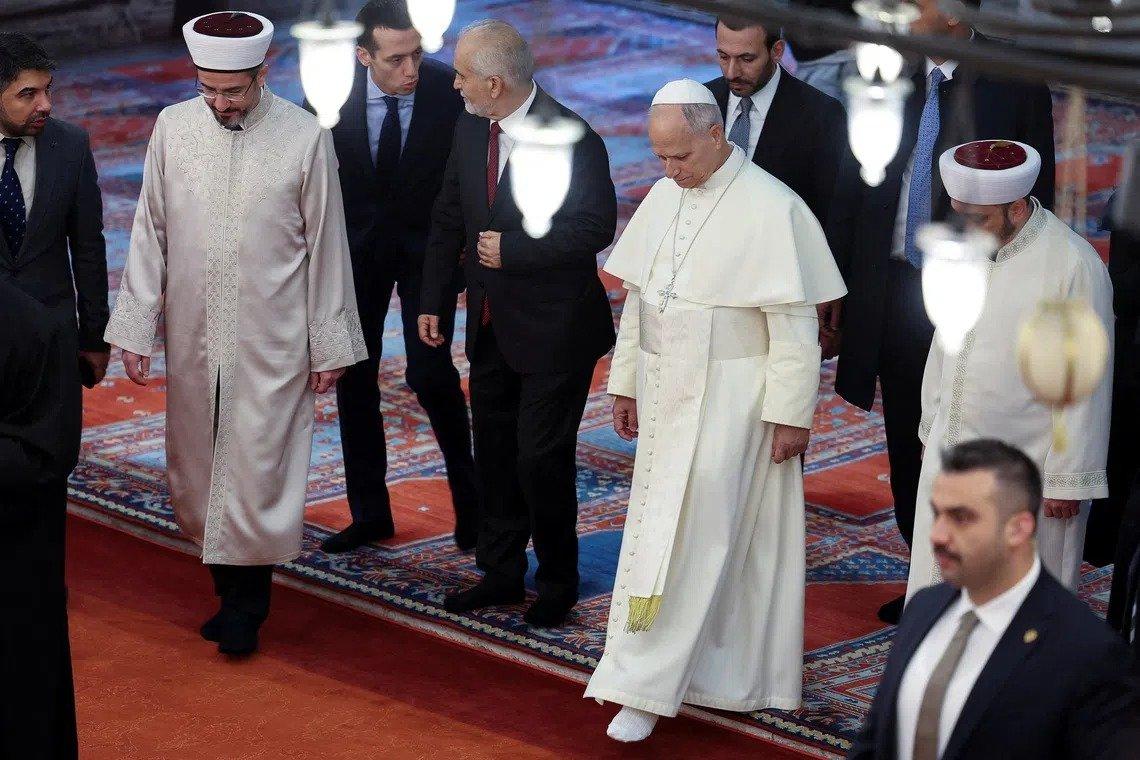
Pope's Lebanon visit
Al Jazeera reported that security was reinforced at Beirut’s airport and that the pope's convoy was planned to pass through southern suburbs controlled by Hezbollah where affiliated scouts planned a roadside welcome. The pope avoided the southern suburbs because of ongoing strikes. AL‑Monitor provided timing and official engagements, noting he was due to land at Beirut’s Hariri International Airport at 3:45 p.m. and would meet Lebanon’s president and prime minister and speak to national leaders.
CNN listed the pope's private meetings with Christian, Muslim and Druze leaders and his planned prayers at religious sites. CNN also underscored that the pastoral program proceeded alongside heightened security precautions. Together these reports mapped how Israeli strikes shaped where the pope could and could not go and how officials adjusted his schedule for safety.

Pope visit media reactions
Local political reactions to the strikes and the pope's visit are mixed in media coverage. Al Jazeera reports Lebanon has reacted cautiously but largely welcomingly and says Hezbollah urged the pope to condemn what it calls 'injustice and aggression'. Al Jazeera also notes locals hoped the visit would bring attention and peace but remained wary about what might happen after his departure.
“Lebanon — roughly 30% Christian and majority Muslim (Shia and Sunni) — has reacted cautiously but largely welcomingly, with some leaders calling the trip a needed symbol of hope and Hezbollah urging the pope to condemn what it calls injustice and aggression.”
AL‑Monitor frames the trip as an expected papal appeal for peace. Firstpost highlights the pope's calls for a ceasefire and his reiteration of support for a two‑state solution as a path to justice. CNN focuses on the pope's outreach across Lebanon's many communities rather than detailing political responses.
The Business Standard situates the pope's statements within a broader joint declaration lamenting global conflicts. These differing focal points reveal distinct priorities among outlets: local political dynamics and Hezbollah's stance in Al Jazeera, diplomatic prescriptions in Firstpost, and peace appeals emphasized by AL‑Monitor and The Business Standard.
Media split on papal remarks
Sources diverge on how directly the pope addressed the Israel‑Gaza war and on what policy prescriptions he emphasized. Firstpost reports the pope reaffirmed the Vatican’s long‑standing support for a two‑state solution, called it the only solution that can deliver justice, and urged a ceasefire. Al Jazeera says the pontiff avoided any direct mention of Israel’s war on Gaza while in Turkey, and it notes there was no immediate response from Israeli Prime Minister Netanyahu’s office to his comments.
AL‑Monitor records his warnings in Turkey about the risk to humanity amid many conflicts and his expected appeal for peace in Lebanon. CNN does not foreground his Gaza‑specific positions and instead focuses on his pastoral engagements in Lebanon. These differences show a split between outlets that highlight explicit policy advocacy (Firstpost) and those emphasizing restraint or omission on Gaza (Al Jazeera and CNN).

Gaps in strike coverage
The sources together leave significant gaps and uncertainties about the strikes themselves. None of the provided snippets supply detailed casualty figures, the precise locations or dates of particular strikes, or an authoritative timeline of military actions in southern Lebanon. Al Jazeera notes the pragmatic consequence that the pope 'will not travel to the south because of ongoing Israeli air strikes,' and AL-Monitor and Firstpost emphasize the pope's peace appeals and calls for a ceasefire.
However, the scale and human cost of the bombing in Lebanon are not specified in these pieces. That absence is important because reporting here concentrates on the pope's visit and its diplomatic-symbolic implications rather than on a battlefield or humanitarian accounting of the strikes. Readers should therefore understand the coverage is incomplete on operational and casualty details.
&w=1920&q=75)