Israel Bombs Lebanon, Forcing Nearly 700,000 to Flee, UNICEF Says
Key Takeaways
- Nearly 700,000 people displaced across Lebanon, the United Nations reported
- Israeli air strikes forced hundreds of thousands of civilians to flee
- Aid groups and the U.N. warned of an escalating humanitarian crisis
Scale of displacement
UN agencies say nearly 700,000 people have been driven from their homes in Lebanon as Israeli air strikes and mass evacuation orders have intensified since March 2, creating a large-scale displacement crisis.
“War in theMiddle East Advertisement Supported by Mass evacuation orders and an intensifying Israeli bombing campaign targeting the Iran-backed militia Hezbollah have caused a humanitarian crisis, aid groups warn”
The New York Times reported that “Nearly 700,000 people have been driven from their homes in Lebanon, the United Nations said on Tuesday,” while Tempo cited the United Nations Children’s Fund, saying “Israeli air strikes in Lebanon have forced nearly 700,000 people, including 200,000 children, to flee, the United Nations Children's Fund (UNICEF) said.”
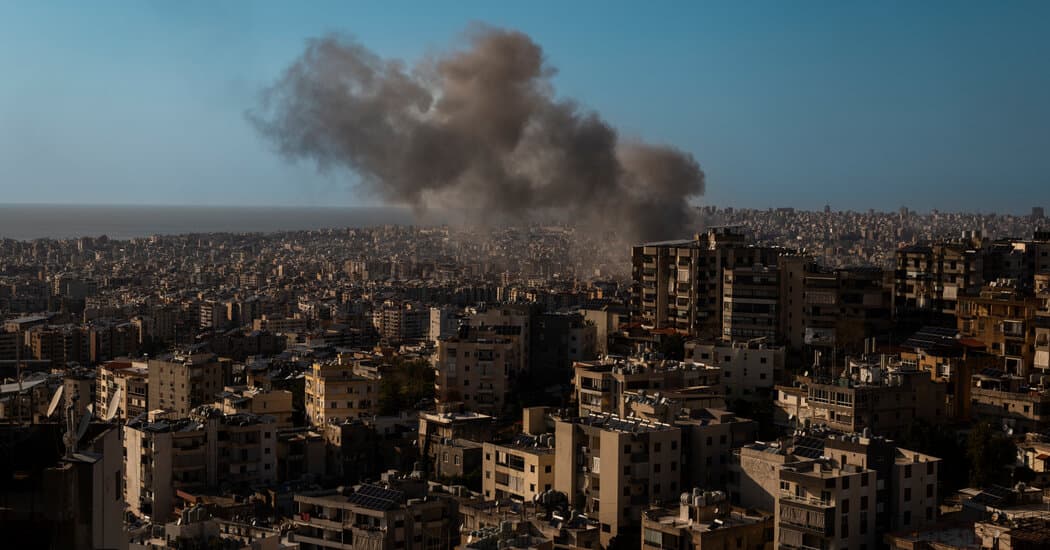
Tempo also noted government registration figures, reporting that “According to Lebanese authorities, over 667,000 people have registered on the government's online displacement platform, an increase of over 100,000 in a single day.”
Casualties and damage
The displacement is accompanied by mounting civilian casualties and the evacuation of dense urban neighbourhoods after sustained Israeli bombardment.
The New York Times said “Nearly 600 people have since been killed in Lebanon, according to the Lebanese authorities,” and described Israeli strikes pounding southern Beirut’s Dahiya neighbourhood, which has been “largely been emptied amid days of Israeli bombardment.”
Tempo provided child-specific tolls, reporting that “At least 83 children have been killed, and 254 others injured in the escalating conflict since March 2,” and warned that child deaths have risen sharply in recent weeks.
Sequence and triggers
Articles attribute the fighting’s immediate trigger to cross-border exchanges between Hezbollah and Israel, and describe a cycle of retaliation that escalated the violence.
“War in theMiddle East Advertisement Supported by Mass evacuation orders and an intensifying Israeli bombing campaign targeting the Iran-backed militia Hezbollah have caused a humanitarian crisis, aid groups warn”
The New York Times reported that “After Hezbollah fired rockets at Israel last week in retaliation for the killing of Iran’s supreme leader, Ayatollah Ali Khamenei, the Israeli military went on the offensive: launching a wide-scale bombing campaign and ordering the evacuation of southern Lebanon, as well as parts of Beirut.”
Tempo likewise said “On March 2, a series of rockets were fired from Lebanon towards Israel, with Hezbollah claiming responsibility,” and framed those launches as linked to earlier strikes involving Iran.
Humanitarian response
Humanitarian agencies on the ground warn the response is underfunded and struggling to meet needs as people shelter in collective sites, with many families displaced repeatedly.
Tempo quoted Karolina Lindholm Billing, the UNHCR representative in Lebanon, saying the crisis “has rapidly displaced families after intensive air strikes and evacuation warnings issued on March 2” and noting that roughly “120,000 displaced residents are currently sheltered in government-designated collective sites.”
Tempo added that UNHCR had delivered “about 168,000 emergency relief items to over 63,000 displaced people... but warned that their response in Lebanon is only 14 percent funded,” while the New York Times reported aid groups warning of a mounting humanitarian crisis.
Political and regional effects
The spillover is straining Lebanon politically and regionally, prompting calls for talks and concerns about wider destabilisation.
“War in theMiddle East Advertisement Supported by Mass evacuation orders and an intensifying Israeli bombing campaign targeting the Iran-backed militia Hezbollah have caused a humanitarian crisis, aid groups warn”
The New York Times reported that Lebanon’s president, Joseph Aoun, signaled his country was “ready for direct peace talks with Israel” amid pressure to disarm Hezbollah, and Tempo documented cross-border population movements, saying “over 78,000 Syrians and over 7,700 Lebanese have entered Syria since the escalation began.”
European leaders have urged restraint as the conflict broadens, and both outlets highlighted risks of renewed, larger-scale violence.
More on Lebanon

Hezbollah Fires 200 Rockets at Israel From Lebanon
17 sources compared
Israel Pounds Tehran With Airstrikes
12 sources compared

Israel Bombs Central Beirut, Targeting Hezbollah Infrastructure
14 sources compared

Unidentified Attacker Plants Explosive at U.S. Embassy Entrance in Oslo; Oslo Police Investigate Possible Terrorism
12 sources compared