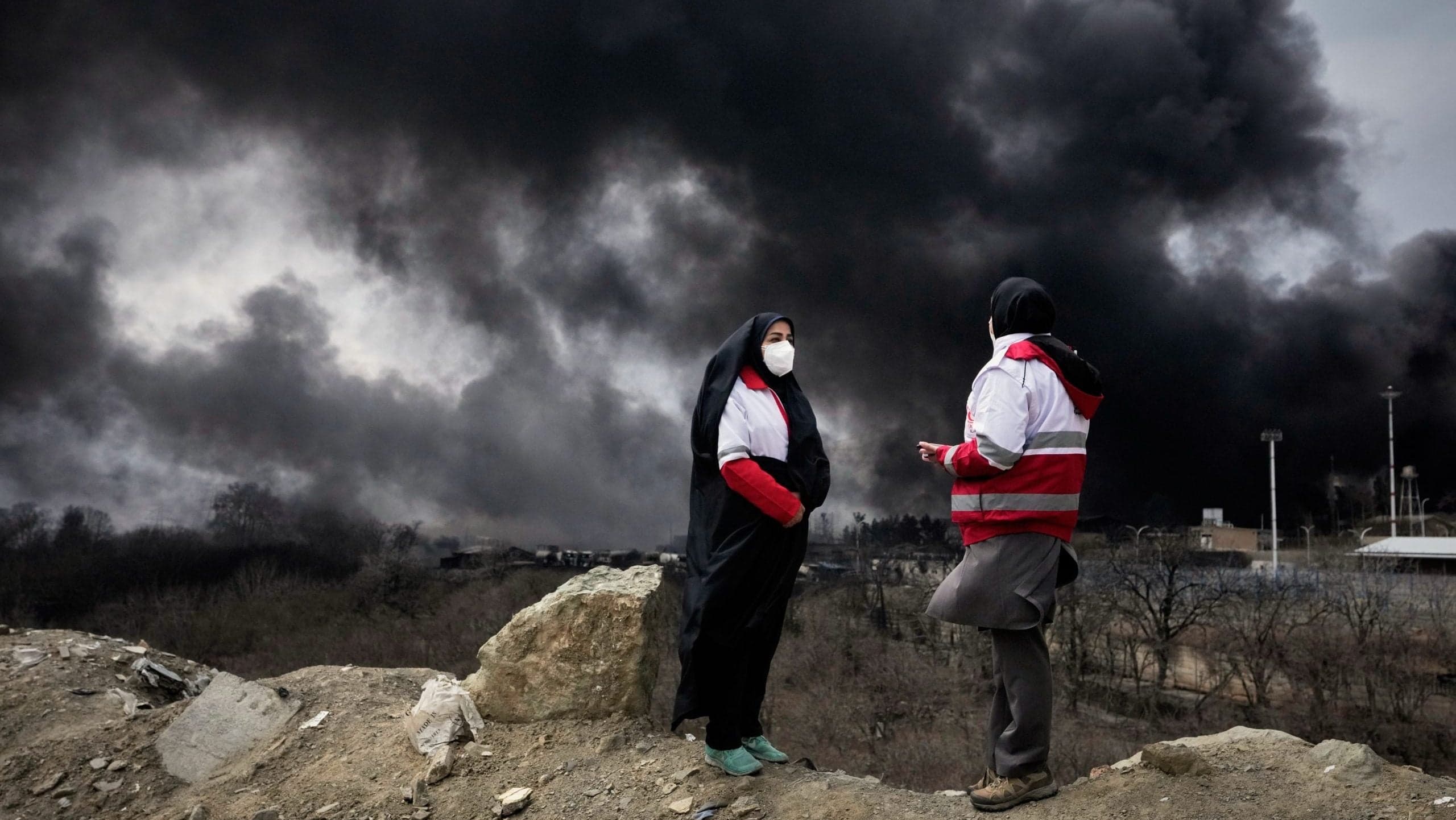
Israel Bombs Oil Storage Facilities in Tehran, Blankets Capital With Smoke
Key Takeaways
- Israel struck oil storage facilities in Tehran and targets in southern Lebanon and Beirut
- Thick smoke blanketed Tehran after the strikes
- Iran accused of attacks in the UAE and Bahrain and hit a Bahrain desalination plant
Strike overview
Israeli forces struck multiple targets on Sunday as the Middle East war escalated, including southern Lebanon, Beirut and oil storage facilities in Tehran, sending smoke and pillars of fire across the Iranian capital.
“Iran accused of attacks in UAE and Bahrain, smoke blankets Tehran from Israeli strikes Israel on Sunday struck southern Lebanon, Beirut and oil storage facilities in Tehran as the war in the Middle East keeps escalating, and Prime Minister Benjamin Netanyahu promised “many surprises” for the next phase of the conflict”
The attack on Tehran’s oil storage sites was visible in video and blanketed parts of the city with smoke, while Israel’s Prime Minister Benjamin Netanyahu vowed “many surprises” in the conflict’s next phase.
The wider campaign also involved strikes in Lebanon and other fronts as the confrontation that began Feb. 28 continues to spread.
Civil facility targeted
Observers noted the strike on oil storage as notable because it appeared to be the first time a civil industrial facility has been targeted in the war, marking a possible escalation in target selection.
Video captured pillars of fire over the storage sites, underscoring the visibility and symbolic weight of hitting energy infrastructure in a densely populated capital.
Analysts and officials described the incident as a new phase in which military actions are reaching deeper into Iran’s civilian industrial sphere.
Regional hits and claims
The incident unfolded amid broader regional incidents and competing claims: WISH-TV reported Iran had been accused of attacks in the UAE and Bahrain, while Iran itself reportedly struck a desalination plant in Bahrain.
“Iran accused of attacks in UAE and Bahrain, smoke blankets Tehran from Israeli strikes Israel on Sunday struck southern Lebanon, Beirut and oil storage facilities in Tehran as the war in the Middle East keeps escalating, and Prime Minister Benjamin Netanyahu promised “many surprises” for the next phase of the conflict”
Iran’s foreign minister also alleged that a U.S. airstrike damaged a desalination plant on Qeshm Island and warned that the U.S. had “set this precedent, not Iran,” highlighting conflicting attributions for damage to civilian infrastructure.
These back-and-forth accusations reflect a complex environment where multiple states and non-state actors are trading strikes and claims.
Casualties and rhetoric
Casualty counts and rhetorical posturing accompanied the strikes: WISH-TV cited official tallies stating the war that erupted on Feb. 28 has so far killed at least 1,230 people in Iran, more than 300 in Lebanon and around a dozen in Israel.
Iran’s foreign minister framed the country’s military posture in stark terms on NBC’s Meet the Press, saying Iran has “very brave soldiers who are waiting for any enemy” and would “destroy” those who enter Iranian soil, while stressing Iran’s capability to defend itself.
The combination of high casualty figures, strikes on infrastructure, and bellicose statements from leaders signals the conflict remains highly escalatory and volatile.
More on Lebanon

Hezbollah Fires 200 Rockets at Israel From Lebanon
17 sources compared
Israel Pounds Tehran With Airstrikes
12 sources compared

Israel Bombs Central Beirut, Targeting Hezbollah Infrastructure
14 sources compared

Unidentified Attacker Plants Explosive at U.S. Embassy Entrance in Oslo; Oslo Police Investigate Possible Terrorism
12 sources compared