Israel Braces For Renewed Conflict With Iran After Trump Signals Possible Strikes
Key Takeaways
- Israel on alert for possible Iran escalation as U.S. signals shift.
- U.S. military buildup near Iran; potential attacks could come soon.
- Iran facing sustained domestic unrest and economic strain amid international pressure.
Escalation fears around talks
Israel is bracing for possible renewed fighting with Iran if negotiations between Washington and Tehran collapse, as officials track shifting signals from U.S. President Donald Trump.
“Israel raises alert level on the Lebanon border amid possible U”
The Israeli alert posture is tied to Trump’s alternation between optimism about a deal and warnings that the United States could resume strikes, with one Israeli official telling the outlet, “It’s too early to know where this is going.”

The ynetglobal report says Trump has stated he will not allow Iran to “blackmail” the United States following Tehran’s renewed closure of the Strait of Hormuz.
It also reports that Pakistan continues to mediate between the sides, and that a Pakistani official told Saudi media that Iran had proposed transferring enriched uranium to Pakistan.
At the same time, the report says Iran’s Revolutionary Guards warned that the Strait of Hormuz would remain closed until the U.S. lifts its naval blockade, and that vessels not to move from anchor points in the Persian Gulf or the Sea of Oman would be treated as cooperating with an enemy and could be targeted.
Israeli officials view that stance as increasing the likelihood of renewed conflict, and the report adds that the Israeli Air Force is on high alert with target lists prepared.
The same report says Home Front Command guidelines have not changed and that schools are set to reopen fully nationwide starting Sunday, including in northern border communities, while officials stress the situation remains fluid ahead of Memorial Day and Independence Day.
Military pressure and readiness
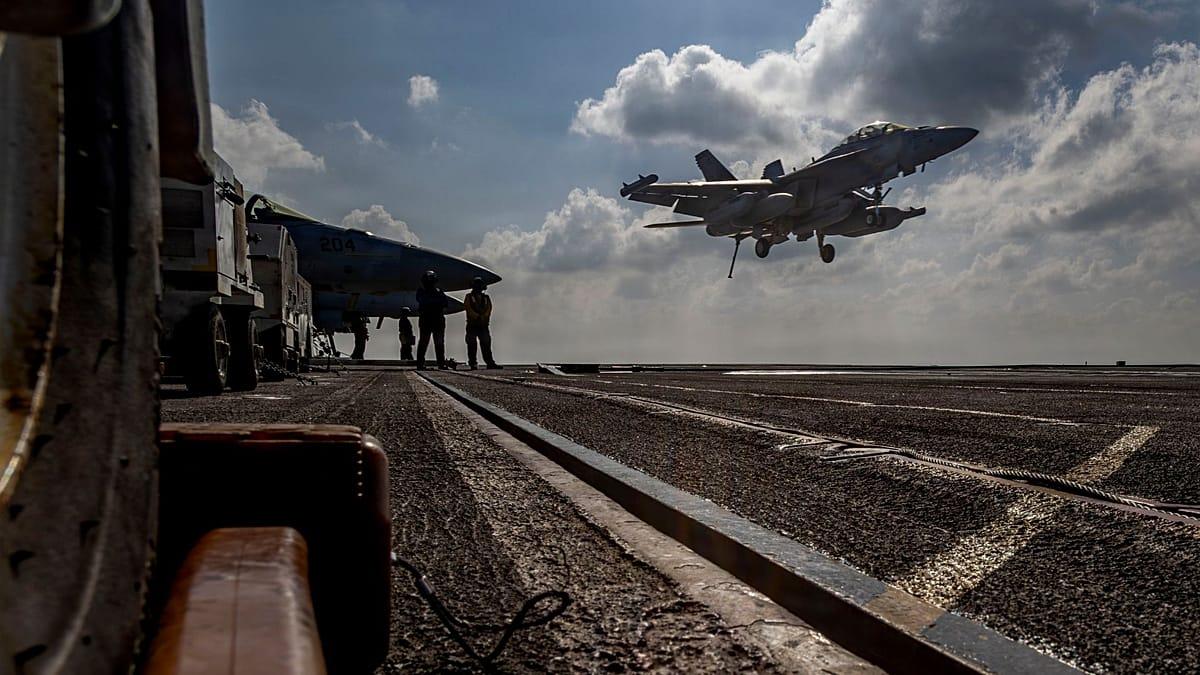
Multiple reports describe a widening gap between diplomacy and military readiness as the United States weighs possible action against Iran.
DW says several American media outlets reported that the United States is significantly expanding its military presence near Iran and could be ready to carry out attacks as early as this weekend, while White House spokesperson Karoline Leavitt said, “It would be wise for Iran to come to an agreement with President Trump and his administration.”

DW also quotes Leavitt saying, “The military is ready to attack, but the final decision has not been made.”
The report adds that CNN and CBS reported the United States informed President Donald Trump that American forces are ready to strike Iran even this weekend, while emphasizing Trump has not made a final decision.
DW further states that the aircraft carrier USS Abraham Lincoln, with nearly 80 aircraft, remained about 700 kilometers from Iran’s coast as of Sunday, and that a second group of aircraft carriers, USS Gerald R. Ford, is also on its way to the area.
It also says CBS reported the Pentagon ordered the withdrawal of some U.S. forces from the Middle East to reduce potential casualties in the event of a reciprocal Iranian attack.
Anadolu Ajansı frames the same pressure through Israel’s northern posture, reporting that the Israeli Army placed its Home Front Command at the highest level of readiness and ordered emergency units to be on standby against the possibility of multi-front escalation.
Negotiation timeline and Iranian response
As the diplomatic track approaches another round, Iran’s National Security Council secretary and the reported U.S. posture are portrayed as moving in parallel rather than converging.
“As tensions rise, several American media outlets on Wednesday reported that the United States is significantly expanding its military presence near Iran and could be ready to carry out attacks as early as this weekend”
The Shafaqna report, citing Arabi 21, says Shafaqna—the Israeli site Walla published a report stating that security agencies are preparing for a scenario involving a broad and devastating missile attack from Iran if negotiations between Washington and Tehran fail and the confrontation escalates to military action.
It further quotes Walla’s scenario that the collapse of the diplomatic track could lead to a preemptive US strike against Iran, which could be met with a hard and devastating response from Iran, including the firing of heavy ballistic missiles toward the Israeli domestic front.
The Shafaqna report also says the scenario discussed within the security apparatus is that Iran’s possible response would not be confined to the territory of that country, but could include missile launches by Tehran’s allies in Lebanon, Iraq, and Yemen.
In parallel, ynetglobal reports that Pakistan continues to mediate and that a Pakistani official told Saudi media about Iran proposing transferring enriched uranium to Pakistan, which would be significant if confirmed as part of a broader agreement.
The Shafaqna report adds that Ali Larijani, secretary of Iran’s National Security Council, said last Wednesday that Tehran has not received a specific proposal from Washington and that the talks in Muscat were merely a signaling exchange.
DW, meanwhile, says indirect talks on Tuesday between representatives of the United States and Iran in Geneva yielded only limited results and that the White House said, “We still have very serious differences on some issues.”
Different outlets frame the same risk
The sources diverge in how they portray the same underlying risk of escalation, with some emphasizing Israeli preparations, others emphasizing U.S. readiness, and still others emphasizing missile scenarios and negotiation breakdown.
ynetglobal emphasizes Israel’s uncertainty and readiness, saying Israeli officials said it remains unclear how the situation will develop and that preparations are in place for a rapid escalation, with the Israeli Air Force on high alert and target lists prepared.

It also stresses that there has been no change in Home Front Command guidelines and that schools are set to reopen fully nationwide starting Sunday, including in northern border communities.
DW, by contrast, centers on U.S. military posture and decision-making ambiguity, quoting Karoline Leavitt that “The military is ready to attack, but the final decision has not been made,” and describing the USS Abraham Lincoln as remaining about 700 kilometers from Iran’s coast as of Sunday.
Anadolu Ajansı frames the same threat through Israel’s border management, saying the Israeli Army raised the alert level on the Lebanon border and ordered emergency units to be on standby against the possibility of multi-front escalation.
The ynetglobal report ties its escalation concerns to Iran’s Revolutionary Guards saying the Strait of Hormuz would remain closed until the U.S. lifts its naval blockade, while Shafaqna’s report, citing Walla, focuses on a broad and devastating missile attack scenario and the possibility of simultaneous fronts.
Meanwhile, یورونیوز adds a further framing by describing an Israeli institute disclosing the coordinates of 25 potential targets for an attack on Iran and by placing that disclosure on the eve of the second round of negotiations in Geneva.
What happens next and what’s at stake
Across the reporting, the next steps are framed as contingent on whether negotiations proceed and on how quickly military actions could be triggered.
DW reports that indirect talks in Geneva yielded only limited results and that the White House said, “We still have very serious differences on some issues,” while also noting that Marco Rubio, the United States Secretary of State, is planned to travel to Israel in the coming weeks to discuss negotiations related to Iran’s nuclear program with Prime Minister Benjamin Netanyahu.

DW also states that Washington says Iran must halt its nuclear program and that Trump has repeatedly stressed that Iran must stop its nuclear activities, while Iran says its nuclear activities are entirely civilian and that it will continue these programs.
In parallel, ynetglobal says the ceasefire in Lebanon remains fragile and that Hezbollah leader Naim Qassem continued to issue threats, criticizing diplomatic efforts and warning that the group’s operatives would remain ready, while outlining demands including a halt to Israeli military activity, a withdrawal from Lebanese territory, the release of prisoners, the return of displaced residents and reconstruction support.
Shafaqna’s report, citing Walla, describes a worst-case chain in which the collapse of diplomacy could lead to a preemptive U.S. strike against Iran and a response that includes heavy ballistic missiles toward the Israeli domestic front, with the possibility of missile launches by Tehran’s allies in Lebanon, Iraq, and Yemen.
Anadolu Ajansı says Israel’s Home Front Command was placed at the highest level of readiness to counter potential retaliatory actions by Hezbollah along the northern borders and to prevent being surprised in a multi-front war.
Finally, ynetglobal reports that Iran’s Revolutionary Guards said the Strait of Hormuz would remain closed until the U.S. lifts its naval blockade and warns ships approaching the strait could be targeted, linking the maritime environment to the escalation calculus.
More on Iran

Donald Trump Threatens Iran Infrastructure Strike Over Strait Of Hormuz Ceasefire Violations
23 sources compared

Trump Threatens Strikes as Iran Fires on Ships in Strait of Hormuz
11 sources compared
Donald Trump Sends U.S. Delegation to Pakistan for Iran Talks, Threatens Power Plants and Bridges
47 sources compared

Iran Rejects Trump Claims It Will Transfer Enriched Uranium to the United States
21 sources compared