Full Analysis Summary
UNRWA aid access concerns
UNRWA’s deputy commissioner-general Natalie Boucly publicly accused Israel of breaching international law by restricting the delivery of humanitarian aid into Gaza.
She warned that much of UNRWA’s stocks remain blocked outside Gaza despite acute need.
Boucly told reporters in Brussels that UNRWA has enough supplies outside Gaza to fill about 6,000 trucks — enough food to feed the territory’s population for roughly three months — but much of it remains stuck in Jordan and Egypt.
ABNA English and The Guardian record Boucly’s alarm about UNRWA’s indispensable role serving 5.9 million refugees and her warning that the agency must not be allowed to collapse.
These sources together present direct claims that the restrictions are preventing life-saving deliveries and endangering civilians dependent on UNRWA services.
Coverage Differences
Tone and emphasis
Mehr News Agency (West Asian) emphasizes a legal framing and urgent operational numbers, reporting Boucly saying “Israel is breaching international law by restricting aid into Gaza” and quantifying stocks and truckloads; ABNA English (West Asian) focuses on Israel’s diplomatic break and the irreplaceable nature of UNRWA (“It is not the time for UNRWA to collapse.”), while The Guardian (Western Mainstream) frames the problem in broader political terms, stressing a failure to achieve a political solution and urging European governments to apply moral pressure on Israel rather than relying solely on military force. Each source is reporting Boucly’s statements but selects different aspects—legal breach and logistics (Mehr), institutional survival and diplomatic rupture (ABNA), and the need for political settlement and multilateral process (The Guardian).
Gaza aid access crisis
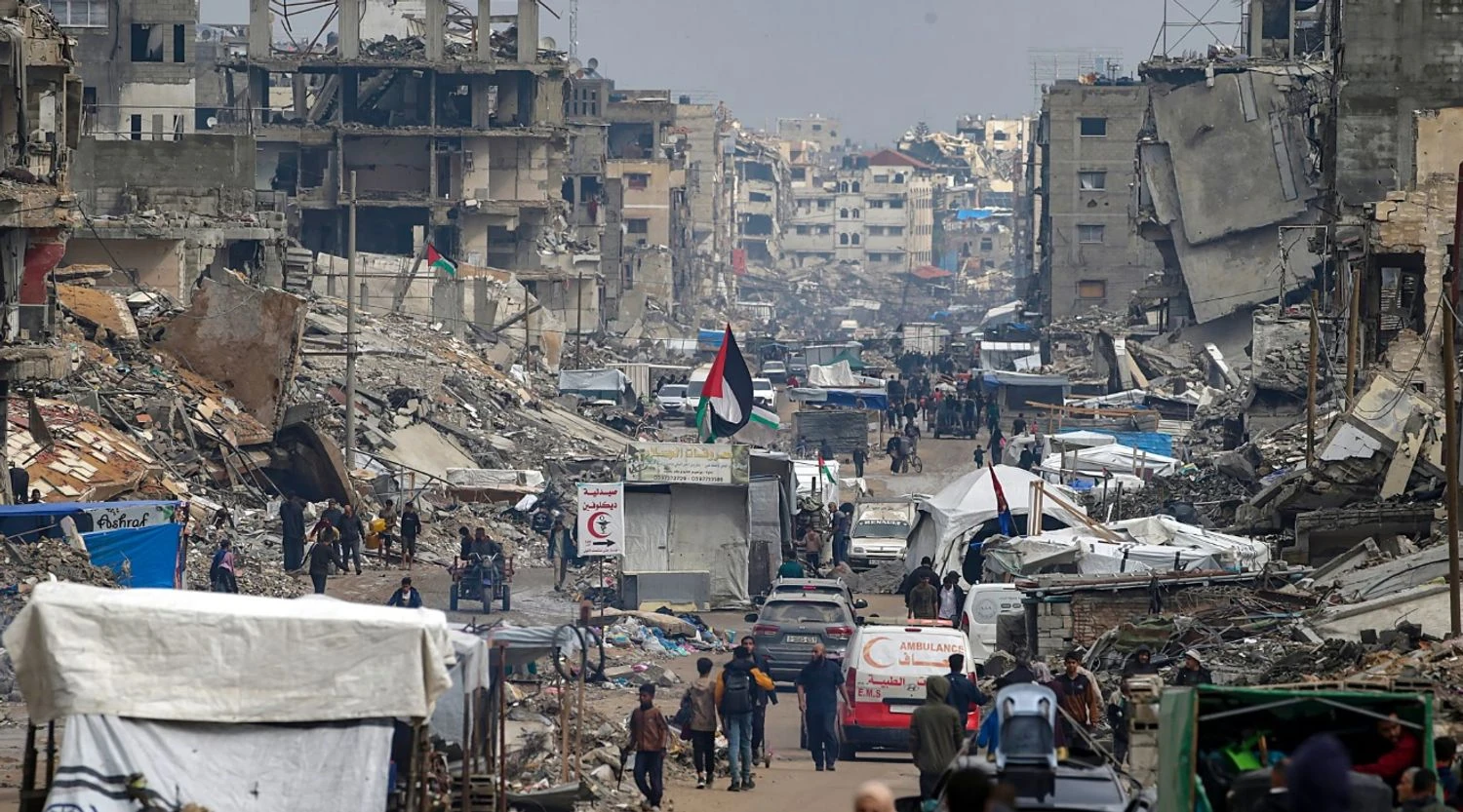
Boucly provided concrete figures showing a shortfall of aid reaching Gaza and the scale of supplies stranded outside the territory.
Mehr estimated that only about half — 'if that' — of the 500–600 daily truckloads needed are reaching Gaza.
She added that UNRWA's queued stocks could fill about 6,000 trucks.
ABNA and The Guardian corroborate that UNRWA is the primary provider for millions of refugees and report a diplomatic rupture and no-contact policy by Israel toward the agency.
Together these accounts indicate both a logistical blockade of supplies and an institutional squeeze, where supplies exist but are not being delivered at the necessary scale because of restrictions and diplomatic break-offs.
This combination produces an acute risk of winter shortages and potential famine in Gaza.
Coverage Differences
Narrative focus
Mehr News Agency (West Asian) reports detailed operational figures and legal obligations (citing the Fourth Geneva Convention and an ICJ advisory opinion) to argue that Israel’s restrictions equate to a breach of duties; ABNA English (West Asian) foregrounds the diplomatic fallout—Israel cutting ties and alleging infiltration—while The Guardian (Western Mainstream) highlights the wider political failure to secure a settlement and the backlash experienced by UN staff after 7 October. The sources therefore converge on a serious humanitarian shortfall but emphasize different roots and remedies: legal enforcement and external pressure (Mehr), institutional survival and accountability (ABNA), and renewed political diplomacy (The Guardian).
Media framing of UNRWA
The legal framing differs across sources.
Mehr explicitly cites the Fourth Geneva Convention and a 22 October International Court of Justice advisory opinion to support Boucly's statement that Israel, as occupying power, must ensure essential supplies and cooperate with UNRWA.
Mehr reports the ICJ found no evidence to substantiate broad Israeli claims that UNRWA lacked neutrality.
ABNA notes the ICJ recorded that nine UNRWA employees had been dismissed over possible involvement in the October 7 attacks, but that Israel's broader allegations remained unproven.
The Guardian, while not recounting the ICJ's specific findings in the snippet provided, emphasizes the need for a political settlement and for European governments to press Israel to pursue reconciliation rather than rely on force.
These differences show Mehr and ABNA stressing legal and evidentiary rebuttals to Israeli claims, while The Guardian situates the crisis in a broader political and diplomatic failure.
Coverage Differences
Contradiction vs. political framing
Mehr News Agency (West Asian) and ABNA English (West Asian) stress legal findings and the ICJ’s role in challenging Israeli allegations—Mehr: “the ICJ found no evidence to substantiate broad Israeli claims that UNRWA lacked neutrality,” ABNA: “The International Court of Justice noted that nine UNRWA employees had been dismissed … but said Israel’s broader allegations remained unproven.” The Guardian (Western Mainstream) does not foreground the ICJ’s evidentiary findings in the provided excerpt and instead frames Boucly’s remarks as a call for political solutions and European moral pressure on Israel. Thus West Asian sources foreground legal rebuttal and operational failure; the Western mainstream account emphasizes political settlement and multilateral process.
Israel cuts ties with UNRWA
All three sources report that Israel severed relations with UNRWA and accused the agency of infiltration by Hamas.
ABNA and Mehr make the accusation explicit and record UNRWA’s rebuttal and warnings about institutional collapse.
ABNA states plainly that Israel cut diplomatic ties with UNRWA, accusing the agency of being infiltrated by Hamas and of misuse of its facilities.
Mehr notes Israel has 'severed relations' and that Boucly 'has seen no sign Israel will reverse its no-contact policy'.
The Guardian recalls personal risks and backlash UN staff faced after 7 October, including verbal and physical assaults against UN personnel.
Together, these sources document an environment in which Israel’s accusations have produced diplomatic rupture and operational isolation of UNRWA, reducing the agency’s ability to deliver aid to civilians in Gaza.
Coverage Differences
Detailing of accusations and personal impact
ABNA English and Mehr News Agency (both West Asian) explicitly report Israel’s diplomatic break and accusations of Hamas infiltration—ABNA: “Israel cut diplomatic ties with UNRWA, accusing the agency of being infiltrated by Hamas,” Mehr: “Israel has severed relations with UNRWA after accusing it of infiltration by Hamas.” The Guardian (Western Mainstream) emphasizes the personal danger and backlash faced by UNRWA staff in Jerusalem—“verbal and physical assaults against her and UNRWA colleagues amid a backlash against the agency”—shifting some attention from institutional accusations to the human cost for UN personnel. These differences show West Asian outlets concentrating on diplomatic and legal fallout, while The Guardian spotlights the interpersonal and political-context dimensions.
Pressure to restore Gaza aid
Three sources agree that international pressure is needed to restore assistance flows and prevent catastrophic humanitarian collapse.
Mehr quotes Boucly calling on the EU, US and other states to increase pressure on Israel to allow unrestricted deliveries.
ABNA emphasizes UNRWA's historical role since 1948 and warns that the agency is irreplaceable.
The Guardian urges European governments to apply moral pressure on Israel to pursue reconciliation rather than rely on military force.
There is, however, a clear difference in emphasis: West Asian outlets foreground legal obligations, operational numbers and institutional survival, while the Western mainstream piece centers the need for a political settlement and concern about peacemaking outside traditional multilateral mechanisms.
Given the sources' contents, the material supports the claim that Israeli restrictions are preventing adequate humanitarian aid from reaching Gaza and that international legal and political remedies are being urged by UNRWA officials to avert further civilian suffering.
Coverage Differences
Recommended remedies and framing
Mehr News Agency (West Asian) reports a legal and coercive remedy—calling on states to pressure Israel to restore unrestricted deliveries and citing the Fourth Geneva Convention—ABNA English (West Asian) emphasizes the irreplaceability of UNRWA and the institutional risk, while The Guardian (Western Mainstream) prioritizes political solutions and multilateral process, warning that peacemaking is occurring outside traditional UN mechanisms. Each source therefore endorses external action but frames the remedy differently: legal/pressure (Mehr), institutional protection (ABNA), and renewed political diplomacy (The Guardian).