Israel Carries Out Over 220 Lebanon Ceasefire Violations, Al-Manar Reports
Key Takeaways
- Israeli shelling continues, violating the Lebanon ceasefire across southern Lebanon.
- Displaced Lebanese families return home amid destruction, highlighting a fragile ceasefire.
- ‘Yellow Line' plan to isolate villages mirrors Gaza strategy.
Ceasefire, then more strikes
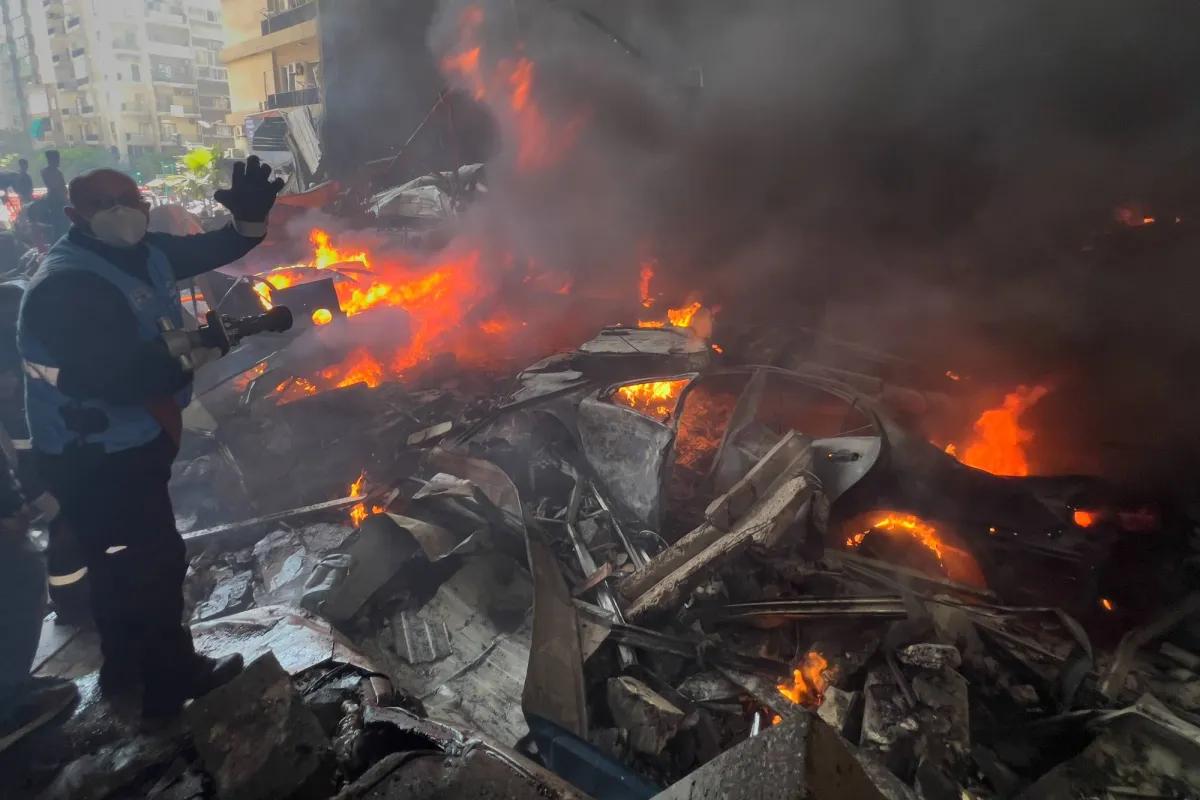
Lebanon’s ceasefire with Israel has been accompanied by repeated reported violations, with Al-Manar TV Lebanon saying the “Zionist enemy continued to violate the ceasefire with Lebanon” and reporting specific bombings and shelling across southern Lebanon and the Bekaa Valley.
Al-Manar’s correspondent said the enemy carried out “a bombing in Mais al-Jabal at dawn today,” then “a large bombing in the town of al-Tiri” around “8:30 AM,” and “another bombing before noon in the town of Al-Qantara,” while also reporting “enemy artillery shelling targeting the town of Qounin.”

The same report said “enemy drones flew at low altitude over Beirut and areas in southern Lebanon and the Bekaa Valley,” and it added that the Israeli army issued “a statement calling on Lebanese citizens not to move to several villages it is still occupying in southern Lebanon.”
Al-Manar also asserted that “Since the ceasefire took effect early Friday, April 16, the Israeli enemy carried out over 220 violations, including air raids, bombings, artillery shelling, etc.”
In parallel, Scripps News described a diplomatic effort to keep a “fragile truce” in place, saying “A second round of talks between Israel and Lebanon are expected in Washington on Thursday” and that negotiators were working “to maintain a fragile truce between the nations.”
Scripps News tied the talks to a prior round at the State Department on “Apr. 14,” describing it as “productive,” and it said the meeting would be at the “ambassador-level” in Washington.
The Al Jazeera report framed the ceasefire’s implementation as contested, describing how “Within hours, Israeli forces were reported to be carrying out demolitions, artillery shelling and land-clearing operations in several border areas in violation of the ceasefire.”
Diplomacy in Washington
While Al-Manar and Al Jazeera described battlefield friction, Scripps News reported that U.S.-hosted negotiations were moving forward in Washington as a way to manage the truce.
Scripps News said “A second round of talks between Israel and Lebanon are expected in Washington on Thursday,” with “U.S. and Israeli sources” confirming the schedule, and it specified that the talks would take place at the “ambassador-level” at the “State Department.”

The report said the format would “mirror[] the format to the first round of historic negotiations that took place there on Apr. 14,” which a Department official described as “productive.”
It also named participants from the first round, saying “Secretary of State Marco Rubio, U.S. Ambassador to Lebanon Michael Issa and Counselor to the State Department Mike Needham all participated,” and that “U.S Ambassador to the United Nations Mike Waltz was also present for a photo opportunity before they kicked off.”
On the Israeli side, Scripps News said “an Israeli official familiar with the situation confirmed Israeli Ambassador to the U.S. Michael Leiter would represent his nation in the conversation.”
On the Lebanese side, Scripps News reported that “Lebanese President Joseph Aoun said Lebanon would be represented by its former Ambassador to the U.S. Simon Karam,” adding that “no one from Lebanon will participate in this mission or replace him.”
The report also quoted Aoun’s Monday statement about the purpose of the talks, saying Thursday’s negotiations were intended to “halt hostile actions, end the Israeli occupation of southern areas, and deploy the army up to the internationally recognized southern borders.”
Hezbollah fires back
Hezbollah’s response to ceasefire violations was described in multiple reports, with Hezbollah framing its actions as retaliation and continuation of pressure.
In an Arabic-language report carried by الشرق الأوسط, Hezbollah said it fired rockets at northern Israel “in the first attack it has carried out since the United States and Iran agreed to a two‑week ceasefire,” and it said the attack came “in response to the enemy's violation of the ceasefire.”
The same report quoted Hezbollah’s statement that “Islamic resistance fighters targeted at 02:30 a.m. on Thursday... the Mount Manara settlement with a rocket salvo,” and it added that “This response will continue until the Israeli-American aggression against our country and our people stops.”
Kurdistan24 reported that the Deputy Chairman of the High Political Council of Lebanese Hezbollah, Mahmoud Qamati, told the outlet that “the Israeli military has repeatedly violated a recently implemented 10-day ceasefire,” and it said Qamati warned that Hezbollah’s forces maintain “full operational readiness should hostilities resume.”
Kurdistan24 also described the alleged nature of the violations, saying Qamati asserted they included “the deployment of unmanned aerial vehicles (UAVs) and warplanes, localized artillery shelling, and the demolition of residential structures,” and it said Qamati emphasized that “these operations have resulted in the targeting and death of ordinary civilians.”
The same Kurdistan24 report said Qamati confirmed Hezbollah’s readiness with the phrase “hands on the trigger,” asserting that “their missile arsenals and broader military capabilities are prepared to respond to any tactical development.”
Al Jazeera, meanwhile, described Hezbollah’s position on the ceasefire agreement, quoting that Hezbollah condemned it as “an insult to our country” and “a slippery slope with no end in sight.”
The “Yellow Line” dispute
A central dispute in the ceasefire’s implementation, according to Al Jazeera, revolves around what Israel calls a “Yellow Line” and how that zone relates to the ceasefire’s promise of “cessation of hostilities.”
Al Jazeera said the ceasefire “started on Thursday night after 46 days of Israeli bombardment and a ground invasion in southern Lebanon,” and it described how “Within hours” Israeli forces were reported to carry out demolitions, artillery shelling and land-clearing operations in border areas.

The report said “At the centre of the dispute is what Israel calls a “Yellow Line” – a military zone stretching roughly 10km (6 miles) north of the border inside southern Lebanon,” and it said Israeli officials intend to keep the zone under military control while reserving the right to strike it to “root out Hezbollah.”
Al Jazeera quoted Prime Minister Benjamin Netanyahu saying Israeli forces “are remaining in Lebanon in a reinforced security buffer zone,” and it included Netanyahu’s description that “This is a security strip ten kilometres deep, which is much stronger, more intense, more continuous and more solid than what we had previously.”
The report also said that “Senior Israeli military officials told reporters during a briefing on Saturday” that “the ‘Yellow Line’ model implemented in Gaza will be replicated in Lebanon; the IDF [Israeli military] has already established a ‘Yellow Line’ and its forces are currently working towards it.”
Al Jazeera further reported that the military officials added residents “will not be allowed to return to 55 Lebanese towns and villages within that area,” and it said Israeli Defence Minister Israel Katz announced on Friday that the Israeli military “will continue to hold and control all the positions it has cleared and secured.”
In addition to the boundary dispute, Al Jazeera described how the ceasefire text itself became a point of contention, saying it includes language that Israel “will implement a cessation of hostilities” while also saying Israel “shall preserve its right to take all necessary measures in self-defence, at any time, against planned, imminent, or ongoing attacks.”
Iran, casualties, and next talks
As the ceasefire framework is debated, Iran’s position and the reported casualty toll are presented as part of the wider negotiating context.
Al-Manar TV Lebanon said the Israeli enemy issued a statement calling on Lebanese citizens not to move to several villages it is still occupying in southern Lebanon, while it also claimed that “Since the ceasefire took effect early Friday, April 16, the Israeli enemy carried out over 220 violations.”

In a separate report, الجزيرة نت said Iran reaffirmed that the ceasefire agreement with the United States includes Lebanon, even as Israeli raids described as the fiercest continue, and it quoted Speaker of the Iranian Parliament Mohammad Bagher Ghalibaf saying the United States and Israel violated “three fundamental provisions of the proposed ceasefire agreement.”
The same report said Ghalibaf argued the violations included failing to comply with “the first clause on declaring an immediate ceasefire that includes Lebanon,” and it also cited a clause banning violating Iranian airspace by an unmanned aircraft over “the city of Lar in Fars Province.”
It further said Ghalibaf pointed to “the rejection of the sixth clause which guarantees Iran's right to enrich uranium,” and it described his conclusion that “there is no point in a mutual ceasefire or negotiations in light of these violations,” stressing “a deep-seated mistrust toward Washington due to its systematic breach of commitments.”
The report also said Masoud Bezhkian, the Iranian president, told French President Emmanuel Macron in a phone call that Iran’s acceptance of the truce is evidence of “a genuine will to resolve disputes,” and it said the Lebanese Civil Defense reported that “the toll of Israeli attacks on Lebanon has risen to 254 dead and 1,165 injured.”
Finally, Scripps News described how the ceasefire’s diplomatic track is expected to continue with “a second round of talks” in Washington, while it also noted that Hezbollah “have rejected the ceasefire agreement as “an insult to our country” and “a slippery slope with no end in sight.”
More on Lebanon
Emmanuel Macron Reaffirms Lebanon Ceasefire And Sovereignty With Prime Minister Nawaf Salam In Paris
13 sources compared

Israeli Soldiers Damage Jesus Statue in Debel, Lebanon, After Photo Verified
29 sources compared

Israeli Forces Destroy Civilian Infrastructure in Southern Lebanon, Detonate Imam Moussa Al-Sadr Sports Complex
17 sources compared

Israeli Soldier Vandalizes Jesus Statue in Debel, Lebanon, Netanyahu Orders Criminal Probe
12 sources compared