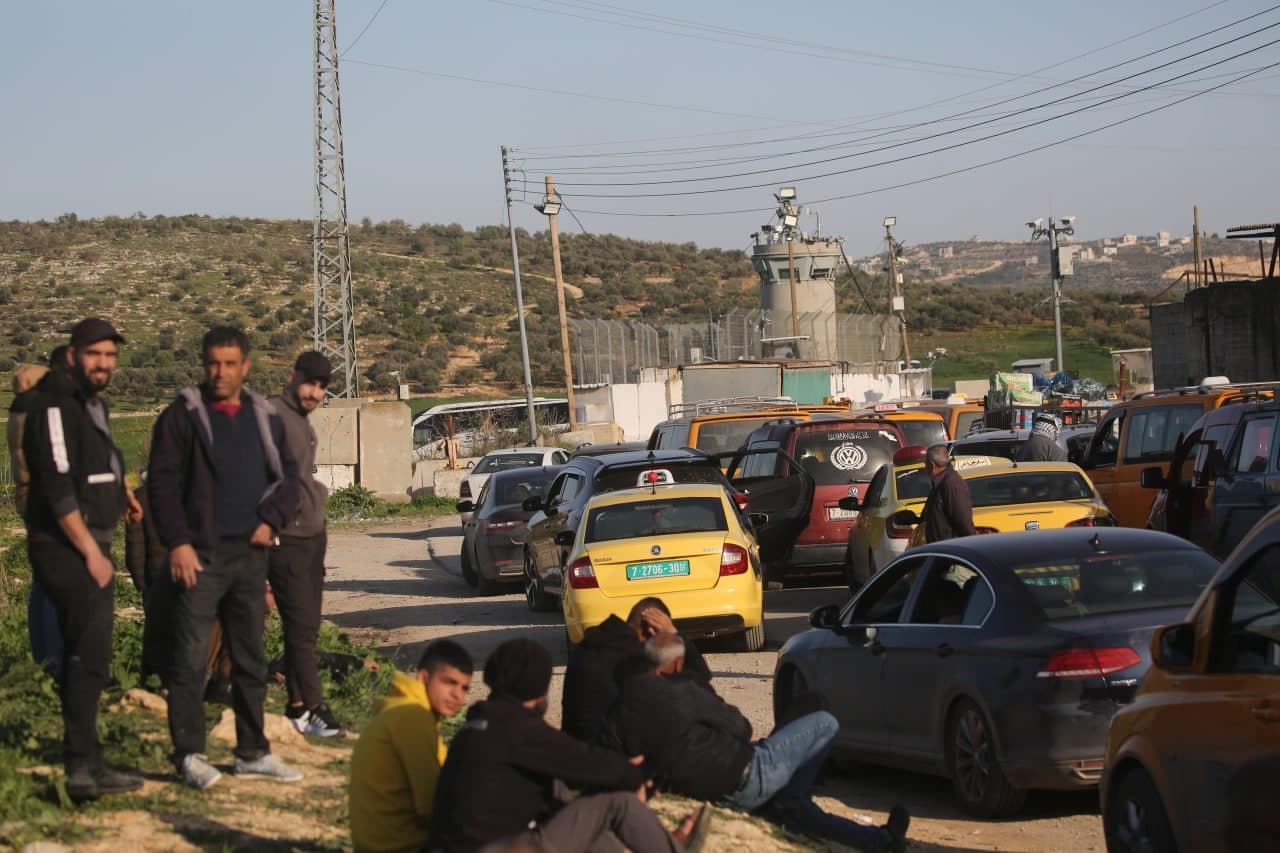
Israel Closes West Bank Checkpoints, Paralyzes Palestinian Movement and Economy Amid War on Iran
West Bank movement restrictions
The Israeli army implemented wide closures across the West Bank after the outbreak of the war with Iran.
“It is the thirteenth day of the holy month of Ramadan, and Palestinian roads in the West Bank are almost empty at sunset as people break their fast”
It shut major checkpoints such as Zaatara and the Container and tightened hundreds of local gates.
The closures effectively sealed cities and imposed a de facto blockade on surrounding countryside, restricting Palestinians’ basic freedom of movement.
These measures were unpredictable and only partially eased after several days, producing immediate disruption to travel and access.
Residents reported that access to Jerusalem and to Jordan via the Allenby Bridge was cut for days.
Even limited Ramadan permits to enter al‑Aqsa were revoked, and some medically necessary permits were canceled at the last minute.
Impact of movement restrictions
The Palestinian Authority responded to the movement restrictions by closing schools and shifting classes online, reflecting the rapid social impact of the closures and signaling broader interruptions to daily life and public services.
With gates frequently shut and travel becoming more time-consuming, many workers faced restricted mobility that limited their ability to earn income, and residents described a growing sense of isolation and economic hardship.
Local shopkeepers and ordinary Palestinians expressed that the closures compounded pre-existing vulnerabilities under occupation and blockade, further straining livelihoods.
Settler attacks and shutdowns
The shutdowns dovetailed with a reported uptick in settler violence and intimidation.
“It is the thirteenth day of the holy month of Ramadan, and Palestinian roads in the West Bank are almost empty at sunset as people break their fast”
Groups of settlers entered Palestinian towns such as Taybeh, vandalized property and stole animals while soldiers reportedly watched from nearby.
Settler raids on villages and farmers increased.
At least one person was hospitalized after an attack in Qusra, underscoring how the security environment and movement restrictions together heightened risk and exposed civilians to violence.
Residents linked these incidents to an emboldened settler presence amid the heightened security measures.
Local impacts of military measures
Overall, residents described the combined effect of checkpoint closures, canceled permits, and increased settler aggression as leaving communities "strangled and unsafe," with immediate humanitarian and economic consequences.
The snapshot provided shows how military measures tied to regional hostilities - in this case the war with Iran - can rapidly translate into localized blockades, curtailed access to religious sites and cross-border travel, disruptions to education and healthcare access, and a surge in lawlessness affecting Palestinian civilians.
The available reporting shows a community coping with curtailed movement, economic squeeze, and heightened insecurity.
Key Takeaways
- All West Bank checkpoints between Palestinian towns closed after U.S.-Israeli war on Iran began
- West Bank movement paralyzed; roads nearly empty at sunset during the thirteenth day of Ramadan
- Road closures occurred amid unprecedented economic pressure on Palestinians
More on Iran-Israel

Iran Names Mojtaba Khamenei Supreme Leader After US-Israel Strike Killed Ali Khamenei
41 sources compared

Israel Bombs Tehran Oil Depots, Blankets Capital With Toxic Black Smoke and Oil Rain
11 sources compared

U.S. and Israel Kill Iran's Supreme Leader, Trigger Regional War
49 sources compared

Iran Kills Seventh U.S. Service Member After Attack on Saudi Military Base
16 sources compared