Full Analysis Summary
Eilat military drill overview
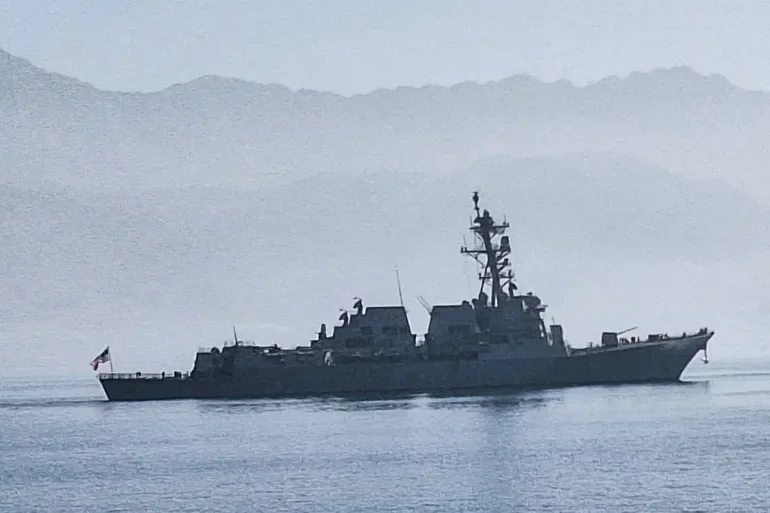
Israel conducted a military maneuver in Eilat while the country remained at a heightened state of security, deploying ships and emergency forces as part of a broader exercise intended to prepare for possible escalation on multiple fronts.
وكالة صدى نيوز reports that the drill came after Prime Minister Benjamin Netanyahu met with U.S. President Donald Trump to discuss Iran's nuclear negotiations and frames the exercise as underscoring Israeli preparations amid rising regional tensions and threats of confrontation with Iran.
The report emphasizes Israel's readiness posture and the timing of the maneuver relative to high-level diplomacy with the United States.
Coverage Differences
Narrative Framing
وكالة صدى نيوز (Other) frames the Eilat maneuver primarily as an Israeli preparedness and deterrence action linked to Netanyahu’s meeting with Trump and rising regional tensions. In contrast, Al-Jazeera Net (West Asian) emphasizes Iran’s perspective — accusing the U.S. and Israel of manufacturing pretexts for military intervention and warning of retaliation — shifting focus from Israeli readiness to Iranian warnings and the underlying nuclear negotiations. The two sources therefore highlight different actors and motives: one describes Israeli exercises and political signaling, the other foregrounds Iranian accusations and the diplomatic dispute over enrichment.
Eilat maneuver and diplomacy
Sources tie the timing of the exercise to diplomatic talks in Washington, with وكالة صدى نيوز explicitly linking the Eilat maneuver to Netanyahu’s meeting with President Trump and describing the Israeli leader’s push to ensure any Iran deal accounts for Israel’s security needs.
The account frames the drill as a demonstration of deterrence and contingency planning should negotiations or shifts in sanctions prompt escalation.
The report portrays Israel as signaling to both domestic and international audiences that it will defend its security interests.
Coverage Differences
Focus
وكالة صدى نيوز (Other) places emphasis on Israeli signaling after Netanyahu’s meeting with Trump and describes the maneuver as linked to Israel’s security concerns. Al-Jazeera Net (West Asian), however, focuses on Iran’s conditions in the nuclear dispute — that Tehran would limit its program only if sanctions are lifted — and presents Iran’s accusations that the U.S. and Israel are manufacturing pretexts for intervention. Thus, the first source centers Israeli political-military signaling, while the second centers Iranian political conditions and accusations, showing different focal points in coverage.
Iranian perspective and context
Al-Jazeera Net presents the Iranian perspective.
It reports that Tehran accuses the United States and Israel of creating pretexts for intervention and warns it would retaliate against any attack, even a limited one.
The source situates the Eilat drill within a larger dispute over uranium enrichment terms.
It notes Iran's stated willingness to limit enrichment only if sanctions are lifted, while the U.S. seeks a full halt and removal of highly enriched uranium.
It also reports a U.S. push to widen talks to include missiles and regional support for armed groups, which Iran rejects.
Coverage Differences
Actor Emphasis
Al-Jazeera Net (West Asian) emphasizes Iran’s claims and conditions, including its warning to retaliate and its refusal to discuss non-nuclear issues. وكالة صدى نيوز (Other) emphasizes Israel’s own preparations and the immediate security posture following Netanyahu’s U.S. meeting. This produces different emphases: one on Iran’s deterrent rhetoric and negotiation stance, the other on Israeli military readiness and political signaling.
Contrasting media coverage
Taken together, the two sources present complementary but differently angled accounts.
وكالة صدى نيوز (Other) underscores Israeli military preparedness and political signaling after Netanyahu’s meeting with Trump.
Al-Jazeera Net (West Asian) centers Iranian accusations, negotiation stances on enrichment, and warnings of retaliation.
The coverage diverges in tone and emphasis — one stressing deterrence and readiness, the other emphasizing diplomatic dispute and Iranian threat perceptions.
Both accounts leave ambiguity about operational details, such as the scope of ship deployments and the exact emergency forces mobilized, which the snippets do not specify.
Coverage Differences
Missing Details
Both sources omit specific operational details about the drill: وكالة صدى نيوز (Other) describes ‘ships and emergency forces’ and high readiness but does not enumerate units, timing, or scope; Al-Jazeera Net (West Asian) focuses on Iran’s political claims and nuclear negotiation positions and does not provide granular details on Israeli force deployments. This absence creates ambiguity about the exercise’s scale and immediate tactical implications.