Full Analysis Summary
Gaza civilian casualties update
Israeli strikes continue to kill civilians in Gaza amid failing truce guarantees and collapsing shelters.
The Council on American-Islamic Relations (CAIR) condemned an Israeli strike on a wedding celebration in Gaza that killed at least six people, including a five-month-old, calling the attack an act of brutality and saying it exposed the complete meaninglessness of Israel's ceasefire commitments.
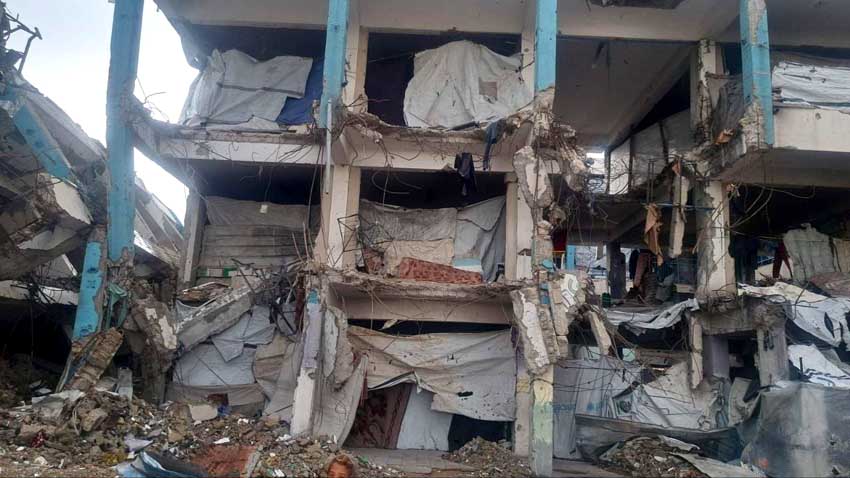
The wedding took place at a school being used as a shelter for displaced families, which Israeli forces shelled, leaving Gaza Civil Defence struggling to recover bodies amid ongoing ground operations.
Reports indicate Israeli forces carried out strikes on locations used by displaced civilians while rescue teams faced blocked access and dangerous conditions.
Coverage Differences
Tone and focus
Workers Revolutionary Party (Other) foregrounds CAIR's condemnation and frames the strike as an “act of brutality” and a failure of ceasefire guarantees; The News Line (Other) emphasizes Civil Defence teams struggling amid rubble and winter; Dazed (Other) focuses on the wider humanitarian toll from winter and shortages. Each source reports on Israeli strikes and civilian suffering but with different emphases: legal/moral condemnation (Workers Revolutionary Party), rescue/infrastructure impact (The News Line), and humanitarian crisis context (Dazed).
Gaza winter humanitarian crisis
Winter is compounding the humanitarian disaster in Gaza, as tens of thousands remain without shelter and essential supplies are blocked.
Dazed reports that Israel has restricted entry of blankets and tents, along with food and fuel, leaving many without shelter.
Footage shows flooded streets, collapsing buildings and battered makeshift camps.
The UN estimates over 90% of homes have been destroyed and almost two million Palestinians have been displaced.
Local organisations are running winter appeals to distribute tarpaulins, tents and blankets and to clear rubble, but they face severe shortages of resources while aid has dropped due to a perceived ceasefire.
Coverage Differences
Narrative emphasis
Dazed (Other) centers the winter emergency, material shortages and operational limits on aid entry, highlighting restrictions on blankets, tents and fuel as drivers of extra deaths; Workers Revolutionary Party (Other) and The News Line (Other) stress the lethal consequences of Israeli strikes and infrastructure collapse, which intersect with winter dangers but are presented as primary causes of immediate civilian harm.
Gaza civilian casualties
Civilians are dying not only from bombing but also from collapsing buildings and exposure.
The News Line reports Gaza’s Interior Ministry said 18 Palestinians have died in collapses of 46 buildings since the ceasefire.
Dazed records at least 13 people, including two newborns, who have already died from cold.
Workers Revolutionary Party highlights a wedding strike that killed an infant and several other civilians.
Rescue and recovery operations are being hindered by ongoing Israeli ground operations and the presence of rubble.
Coverage Differences
Detail and casualty reporting
The News Line (Other) provides figures on deaths from building collapses and the scale of infrastructure loss; Dazed (Other) documents deaths from cold and displacement-related causes; Workers Revolutionary Party (Other) focuses on specific deadly incidents like the wedding strike and on the obstruction of rescue work by Israeli operations. The sources thus present complementary but different casualty pathways: structural collapse, exposure, and direct strikes.
West Bank and Gaza crisis
Israeli forces are conducting lethal operations in the occupied West Bank while Gaza’s infrastructure collapses.
The News Line reports that Israeli forces shot dead two Palestinians in separate Jenin-area raids — 16-year-old Rayyan Abdel Qader and 22-year-old Ahmad Zayoud.
Witnesses said Abdel Qader was shot at close range while walking home and that emergency crews were reportedly prevented from reaching him.
The Workers Revolutionary Party says the bombing and killings expose the meaninglessness of ceasefire guarantees and calls on international actors to intervene.
Dazed warns that a perceived ceasefire has reduced donations and international attention, worsening shortages.
Coverage Differences
Geographic scope and political framing
The News Line (Other) adds coverage of West Bank killings by Israeli forces and witness accounts of shootings and prevented aid; Workers Revolutionary Party (Other) frames these attacks as evidence that ceasefire guarantees are meaningless and urges international intervention; Dazed (Other) links a perceived ceasefire to reduced aid and worsening humanitarian conditions. The sources differ in whether they foreground specific West Bank incidents (The News Line), political condemnation (Workers Revolutionary Party), or humanitarian funding dynamics (Dazed).
Sources' emphasis on harm
Different source excerpts reflect varied priorities rather than disagreement about Israeli responsibility for harm.
The Workers Revolutionary Party stresses political condemnation and calls for intervention.
Dazed focuses on the humanitarian catastrophe driven by winter, shortages, and restrictions on aid.
The News Line highlights destroyed infrastructure and reports of specific killings in the West Bank.
None of the snippets uses the word "genocide"; they record large-scale destruction, direct strikes on civilian shelters, and deaths from exposure and building collapses, leaving legal characterization open.
Readers should note the differing tones — legal and moral condemnation in the Workers Revolutionary Party, humanitarian context and aid constraints in Dazed, and infrastructure and casualty details including West Bank shootings in The News Line.
Coverage Differences
Omission and explicit terminology
All three sources attribute civilian harm to Israeli strikes and restrictions, but none of the provided snippets explicitly uses the word 'genocide'. Workers Revolutionary Party (Other) uses strong moral language like “act of brutality” and “complete meaninglessness” of ceasefire guarantees; Dazed (Other) documents humanitarian and winter impacts including UN estimates of destruction; The News Line (Other) supplies casualty counts from building collapses and reports West Bank shootings. The variations affect whether readers see the story as legal-political condemnation, humanitarian emergency, or detailed casualty/infrastructure reporting.