Full Analysis Summary
Gaza devastation and control
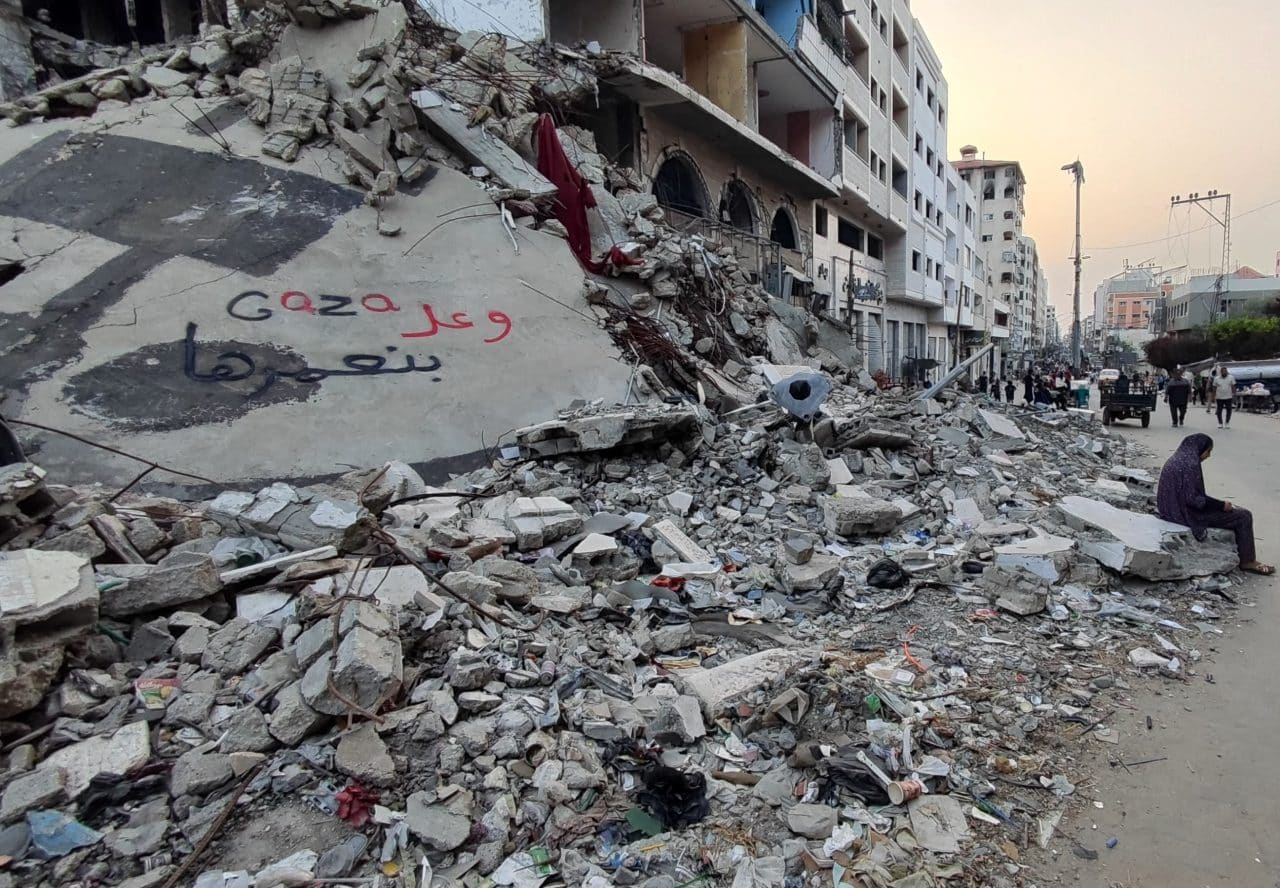
Mondoweiss reports that months into a ceasefire Gaza remains devastated and Gazans continue to suffer extreme hardship under Israeli control.
Displaced families like Abu Ahmad's remain exposed to cold and rain under threadbare tents, with hopes for reconstruction or even winter caravans unfulfilled.
Abu Ahmad's home lies beyond an expanded "Yellow Line" dividing Gaza under Israeli control.
The article cites UN estimates that 25 hospitals are out of service, nearly 70% of housing units are partially or completely destroyed, 85% of water and sewage facilities are damaged, and 95% of schools have been reduced to rubble.
Gazans have described these conditions as a "new form of genocide."
These descriptions link the physical destruction and denial of reconstruction directly to Israeli control and the failure of international pledges to produce relief on the ground.
Coverage Differences
Source limitation / Tone
Only Mondoweiss (Western Alternative) is provided for this briefing, so there is no contrasting coverage from Western Mainstream or West Asian sources to compare against. Mondoweiss frames the situation as Gaza being controlled by Israel and cites Gazans’ own words calling the conditions a 'new form of genocide,' giving the piece a critical and accusatory tone toward Israeli actions and international failures to rebuild. Because no other sources are provided, I cannot identify contradictions or alternate narratives from other outlet types; I can only report Mondoweiss’s framing and evidence.
Gaza reconstruction failures
International conferences and large reconstruction pledges — including the U.S. President's vision of a Gaza Riviera, a proposed foreign Board of Peace, and Egypt's $70 billion reconstruction conference with pledges from Qatar and others — have not produced tangible rebuilding in Gaza.
Mondoweiss documents that these high-level plans lack clear mechanisms, timelines, and material delivery.
Gazans remain without promised caravans, building materials, or functioning services even nearly two months into the ceasefire, intensifying accusations that the devastation is being perpetuated by inaction under Israeli control.
Coverage Differences
Narrative focus / Missed information
Mondoweiss emphasizes the gap between high-level pledges and on-the-ground delivery, criticizing international plans as failing to produce reconstruction. Without other source types to contrast, I cannot show how Western Mainstream outlets might portray these pledges more optimistically or stress different impediments (e.g., security, logistics). Mondoweiss’s narrative centers Gazan experiences and local improvised recovery rather than diplomatic spin.
Grassroots Gaza recovery efforts
Mondoweiss reports that international rebuilding has stalled, leaving recovery work unfulfilled.
Local and diaspora actors have taken on emergency recovery roles to address immediate needs.
Gaza Municipality teams, civil groups and youth launched the "We’ll Rebuild It Again" campaign to clean streets, repair homes and restore public spaces despite 85% of municipal heavy machinery being damaged.
Diaspora-led groups such as the Sameer Project are mobilizing support and resources.
The article frames these grassroots efforts as necessary responses to widespread destruction and as evidence that Gazans are being forced to rebuild themselves while the international community and reconstruction pledges fail to deliver under Israeli-controlled constraints.
Coverage Differences
Tone / Emphasis
Mondoweiss emphasizes grassroots agency and the insufficiency of external plans; it portrays local mobilization as both heroic and forced by the absence of meaningful international reconstruction. With no alternative sources provided, there is no contrasting portrayal (for example, one that might emphasize donor complexity or Israeli security reasons). Mondoweiss’s tone remains critical of the international response and of the control that impedes rebuilding.
Gazans' account and reporting
Mondoweiss uses strong language and relays Gazans' descriptions of their circumstances as a 'new form of genocide'.
The article directly links the scale of destruction, the collapse of services, and blockade-like restrictions on materials and aid to continued harm under Israeli control during the ceasefire period.
Its explicit use of that term stems from Gazans' own characterizations and reported mismatches between pledges and delivery.
Given only this source, that is the clearest basis in the provided material for using the term to describe Gazans' experience and accusations.
Coverage Differences
Terminology / Severity
Mondoweiss reports Gazans describing the situation as a 'new form of genocide,' demonstrating a high-severity framing. Because no other sources were provided, I cannot show if other outlet types use less severe terms or employ softened euphemisms; the only available coverage here assigns the strongest language to describe the effects on civilians.