Full Analysis Summary
Masafer Yatta demolitions
Israeli forces demolished Palestinian homes and livestock shelters in occupied Masafer Yatta, witnesses and reports say.
Daijiworld reported the operation took place on Nov. 12 and explicitly named Masafer Yatta as the affected cluster of villages.
TRT World places related violent demolitions and settler attacks in nearby Khallet al-Dabaa and documents large-scale destruction of dwellings and community infrastructure by Israeli forces in early May.
Al Jazeera's provided snippet in the bundle does not include the full reporting text, indicating missing material from that outlet in the supplied sources.
Coverage Differences
Coverage focus and specificity
Daijiworld (Asian) names the location and date directly — “Masafer Yatta” on Nov. 12 — while TRT World (West Asian) focuses in depth on Khallet al-Daba’a and gives a granular inventory of destruction from an early May operation. Al Jazeera (West Asian) is absent or its content was not included in the provided snippet, representing a notable omission in the supplied sources. This shows Daijiworld’s direct event-reporting vs. TRT World’s localized case study and Al Jazeera’s missing text.
Reported attacks and demolitions
Local residents and testimony collected by TRT World describe brutal physical attacks and intensive demolition methods carried out by Israeli forces and armed settlers.
TRT World records survivors saying Israeli-operated bulldozers and excavators destroyed homes and vital infrastructure, and it recounts Farida’s account in which settlers beat her, broke her hands, exposed her infant to tear gas and seriously injured her 14-year-old son; she is quoted saying the attackers 'came to kill'.
Daijiworld likewise notes that residents watched military and police guard the demolitions in Masafer Yatta, underscoring an Israeli security presence during the actions.
Coverage Differences
Tone and witness emphasis
TRT World (West Asian) foregrounds harrowing personal testimony and explicit descriptions of settler brutality with quotes like “came to kill,” emphasizing immediate physical harm. Daijiworld (Asian) focuses more on reporting the demolitions and the security presence — “residents watched as military and police guarded the area” — and frames the act within eviction threats and broader settlement expansion claims. Al Jazeera’s supplied snippet again contains no substantive reporting in the provided material, an omission that reduces the ability to compare its framing.
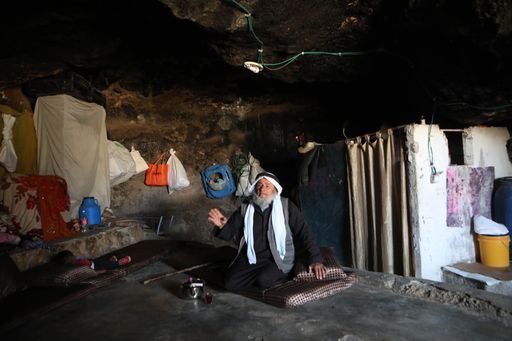
Demolitions in Masafer Yatta
TRT World provides detailed counts of destroyed structures in a major demolition operation: nine homes, six residential caves, eleven bathrooms, ten water tanks, seven cisterns, four animal shelters, an electricity room, most solar panels, and the community centre.
The report states that about 90% of the village was reduced to rubble by Israeli bulldozers.
Daijiworld’s account is less granular but confirms that several homes and livestock shelters were demolished in Masafer Yatta, indicating similar tactics of razing dwellings and agricultural infrastructure by Israeli forces.
Coverage Differences
Level of detail vs. broader confirmation
TRT World (West Asian) supplies a granular inventory of destruction from a specific operation, while Daijiworld (Asian) conveys the same pattern more briefly, confirming demolitions of homes and livestock shelters in Masafer Yatta on Nov. 12 without itemized counts. Al Jazeera again is not available in the provided excerpt, meaning its angle or details cannot be assessed here.
Demolitions and displacement context
Daijiworld highlights human rights and displacement concerns, citing human rights groups that say the demolitions are part of a systematic effort to displace Palestinians and expand Israeli settlements.
TRT World places the demolitions in a wider pattern across the occupied West Bank, noting other November demolitions and notices in Gaza City, Khan Younis, Artas and Asfi and linking the local razing to a broader Israeli policy of removals and settler expansion in occupied areas.
Coverage Differences
Narrative framing and attribution of systematic intent
Daijiworld (Asian) quotes human rights groups directly to frame the demolitions as a “systematic effort to displace Palestinians and expand Israeli settlements,” attributing policy intent to Israeli actions. TRT World (West Asian) contextualizes the demolitions within a broader pattern by listing other demolitions and notices in November, implying systemic practice through pattern rather than quoting NGOs on intent. Al Jazeera’s content is missing from the provided material and thus cannot be evaluated for framing.
Masafer Yatta: Evictions and Resistance
Residents tell a consistent story of refusing to leave their land amid long-standing pressure.
TRT World quotes residents such as Dina and Hassan who say they will not leave despite loss of income and insecurity.
TRT World also reports that Hassan spent six years in Israeli detention.
Daijiworld highlights that military and police presence accompanied the demolitions and points to long-running eviction threats in Masafer Yatta.
Together, the two sources portray Israeli forces and settler actions as directly removing Palestinian homes and livelihoods while local people resist displacement.
Coverage Differences
Agency, resistance, and security presence
TRT World (West Asian) emphasizes local resilience and individual histories of repression — naming residents and detention history — and presents direct quotes about refusing to leave. Daijiworld (Asian) emphasizes the security apparatus present during demolitions and frames the actions in the context of long-running eviction threats and documentary visibility ("No Other Land"). Al Jazeera’s absence in the supplied text again prevents comparison of its framing or emphasis.