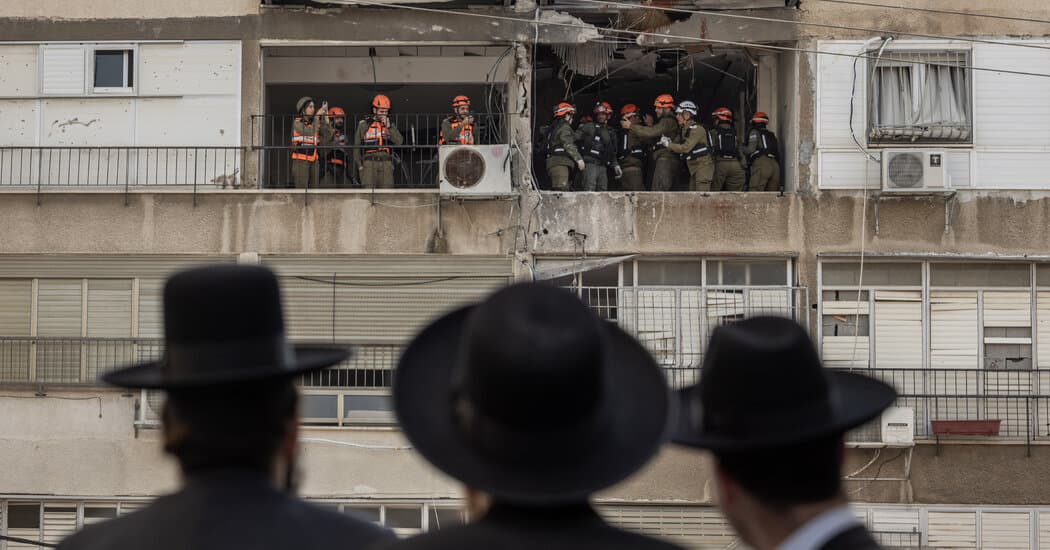
Israel Denies That It Is Running Out of Missile Interceptors
Key Takeaways
- Israel denies running out of missile interceptors despite reports.
- Reports alleged interceptor stocks were critically low, prompting denial.
- The conflict began March 2 and has lasted over two weeks.
Denial of Shortages
Israeli officials have categorically denied reports that the country's military is running out of missile interceptors amid ongoing conflicts with Iran and Hezbollah.
“Israel rejects reports of interceptor shortages Israel's foreign minister on Sunday rejected claims that it had told the United States it was running low on interceptors”
The Israeli military has repeatedly stated it prepared extensively for prolonged combat operations.

Lt. Col. Nadav Shoshani, a military spokesman, told reporters that Iran was firing far fewer missiles than anticipated.
The denial comes after reports from Semafor citing unnamed American officials that Israel had informed the United States it was 'running critically low on ballistic missile interceptors.'
Israel's foreign minister, Gideon Saar, has also firmly rejected the claims.
Saar emphasized that the military maintains adequate defensive capabilities despite facing daily missile volleys from multiple fronts.
Military Preparedness
The Israeli military has emphasized its preparedness for extended combat operations.
Colonel Shoshani explained that Israel maintains flexibility in its defense capabilities through local production and international purchasing.
This approach allows for real-time replenishment of interceptor stocks during prolonged conflicts.
The military issued a formal statement on Sunday clarifying that 'as of now' there was 'no interceptor shortage.'
They are closely monitoring the situation despite the official denials.
The Ministry of Defense declined to comment on whether Israel had requested additional interceptors from the United States.
This leaves some uncertainty about the actual state of their defensive resources amid sustained missile attacks.
Escalating Conflict
The conflict has intensified with Iran launching more than 300 ballistic missiles toward Israel since the joint air campaign began on February 28.
“War in theMiddle East Advertisement Supported by Israeli military says it had prepared for a prolonged conflict after a news report said its supplies of ballistic missile interceptors were running “critically low”
Approximately half of these missiles carry cluster munitions that complicate interception efforts.
Hezbollah has further escalated the conflict, firing over 1,000 shorter-range rockets and drones toward Israel since March 2.
These attacks are in support of Iran's retaliatory strikes against the joint Israeli-American air campaign.
This coordinated attack pattern has placed significant strain on Israel's multi-tiered air defense system.
Israel employs different types of interceptors to handle various types of threats.
While Israel has successfully intercepted most incoming projectiles, some missiles from both Iran and Lebanon have penetrated the country's air defenses.
This demonstrates the limitations of even advanced defense systems under sustained attack.
Defensive Challenges
Despite official denials, alternative reports suggest Israel's defensive capabilities face significant challenges.
This is due to the depletion of interceptor stocks from previous conflicts.
Middle East Eye reports indicate Israeli defense systems entered the current conflict already depleted.
This depletion occurred after last year's fighting with Iran, when substantial interceptor reserves were consumed.
The situation has been exacerbated by Iran's tactical decision to equip some missiles with cluster munitions.
These munitions are particularly challenging to intercept and accelerate the depletion of defensive stocks.
The United States has reportedly been aware of these supply challenges for months.
The extent of any American assistance or additional interceptor deliveries remains unclear.
This creates a complex situation where official government statements conflict with alternative assessments.
Historical Context
The current situation must be understood in the context of previous major conflicts between Israel and Iran.
“War in theMiddle East Advertisement Supported by Israeli military says it had prepared for a prolonged conflict after a news report said its supplies of ballistic missile interceptors were running “critically low”
During Israel's 12-day war against Iran in June of the previous year, Iranian forces fired more than 500 ballistic missiles.
This required significant American missile defense assistance to counter the threat.
Colonel Shoshani has highlighted that Israeli forces have prioritized attacking Iran's launching capabilities.
This strategy aims to reduce future missile fire from Iranian positions.
He claims approximately 70 percent of Iran's missile launchers have been rendered inoperable.
These launchers are being actively targeted and 'hunted in real time' by surveillance assets.
Both Israeli and American forces are conducting this targeting operation.
This represents a shift from purely defensive to offensive counter-measures.
The sustainability of this approach under prolonged conflict remains a subject of debate.
Ongoing Developments
The ongoing conflict continues to evolve as both sides adapt their strategies and capabilities.
Israel maintains that it has prepared for a 'larger threat' than what materialized.
This suggests either successful deterrence or intelligence failures on the part of its adversaries.
The situation remains fluid with daily assessments of interceptor availability.
Operational effectiveness is continuously being evaluated by military planners.
The international community, particularly the United States, monitors developments closely.
This monitoring is due to the strategic importance of regional stability.
There is also concern about potential for further escalation of the conflict.
As the conflict enters its third week, a fundamental question remains unanswered.
The question is whether Israel's defensive capabilities can sustain current operational tempo without experiencing critical shortages that could compromise its security posture.
More on Iran

Israel strikes Iran's Pars gas field as Tehran vows revenge
14 sources compared
Trump threatens to blow up South Pars gas field if Iran attacks Qatar again
10 sources compared
UAE Halts Habshan Gas Facility Operations After Debris From Intercepted Missiles
10 sources compared

Iran Threatens Gulf Energy Facilities After Israel Strikes South Pars Gas Field
11 sources compared