Full Analysis Summary
Access to Al-Aqsa During Ramadan
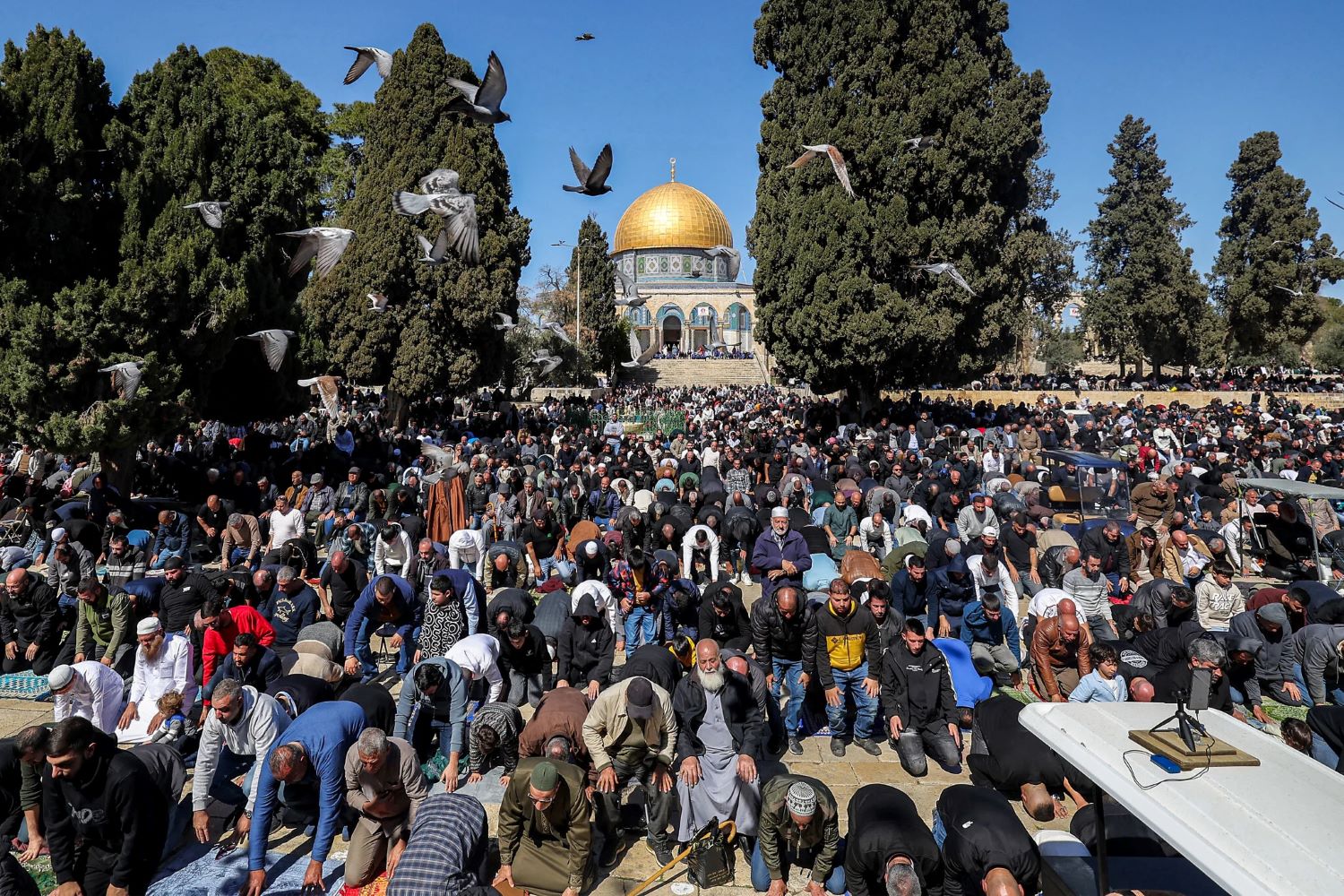
On the first Friday of Ramadan Israeli forces deployed heavily around occupied East Jerusalem, blocking thousands of Palestinians from reaching the Al-Aqsa Mosque and restricting access at key checkpoints.
Local officials said many worshippers were turned back at Qalandia checkpoint north of Jerusalem and Checkpoint 300 near Bethlehem, with elderly worshippers denied entry for lacking permits and ID checks carried out at mosque gates.
Despite these restrictions tens of thousands still attended prayers.
The Jerusalem Governorate reported over 300 orders barring Jerusalem Palestinian residents from entering during Ramadan.
Footage showed Israeli security forces physically preventing some people from reaching the compound.
Coverage Differences
Tone
madhyamamonline (Asian) emphasizes official statements from the Jerusalem Governorate about orders barring residents and highlights the governorate's framing of widespread prevention and permit denials. Al-Jazeera Net (West Asian) focuses on field reporting from Checkpoint 300 and first-hand accounts of people being turned back and of Palestinian Red Crescent teams assisting — Al-Jazeera quotes eyewitnesses and on-the-ground visuals. Both report heavy restrictions but the two sources differ in emphasis: madhyamamonline foregrounds governmental statements and numbers (e.g., 'over 300 orders'), while Al-Jazeera foregrounds field footage and eyewitness descriptions.
Access control in Jerusalem
Footage and eyewitness reporting highlighted intense scenes at Checkpoint 300 and other access points as prayer time approached.
Al-Jazeera's field teams showed large crowds being turned back, gates being closed over loudspeakers and crowds pushed back, while Palestinian Red Crescent teams stood by to assist people who were unable to cross.
Correspondents also reported heavy police deployments, including more than 3,000 personnel around Qalandiya checkpoint.
These descriptions paint a picture of large-scale access control and crowd management at the main entry points to Jerusalem's holy sites.
Coverage Differences
Unique Coverage
Al-Jazeera Net (West Asian) provides field footage detail — 'gates being closed over loudspeakers' and 'crowds pushed back' — and names the Palestinian Red Crescent as present. madhyamamonline (Asian) reports official governorate claims about turnbacks and permit denials but does not include the same level of live-footage detail. This shows Al-Jazeera privileging on-the-ground visual reporting while madhyamamonline presents institutional claims.
Ben-Gvir's Al-Aqsa visit
The visit by Israeli National Security Minister Itamar Ben-Gvir to the Al-Aqsa area also escalated tensions, according to the sources.
Footage showed Ben-Gvir entering via the Moroccan Gate accompanied by Israeli police leaders, and Palestinian officials called the visit provocative.
The Moroccan Gate is noted as being under Israeli control since 1967 and is often used by security forces.
Sources reported intensified restrictions around the compound coinciding with the minister's presence.
Coverage Differences
Narrative Framing
madhyamamonline (Asian) explicitly links Ben-Gvir’s visit with increased tensions and labels the action 'provocative' as reported by Palestinian officials; Al-Jazeera Net (West Asian) reports the footage of Ben-Gvir entering via the Moroccan Gate and frames it as part of the day's escalation but focuses more on the operational details (who accompanied him) and the wider context of heavy deployments.
Al-Aqsa access restrictions
Both sources describe broader measures limiting movement, including photography bans, detentions, and people taken to nearby interrogation areas, and claim the way access was policed violated longstanding arrangements.
A legal expert cited by Al-Jazeera, Mohammad Dahleh, said the measures violate international law and the 'status quo' on Al-Aqsa, linked current tightening to policies since Oslo and the separation wall, and urged recourse to international courts and UN forums.
That legal framing is present in Al-Jazeera's reporting, while madhyamamonline emphasizes the governorate's account of permit denials and orders barring residents.
Coverage Differences
Missed Information
Al-Jazeera Net (West Asian) includes legal analysis (Mohammad Dahleh) explicitly linking measures to international law and post-Oslo policies; madhyamamonline (Asian) does not include this legal assessment in the supplied snippet, instead focusing on governorate statements about entry orders and specific instances of denial.
Sources and limitations
Note on sources and limitations: the account above is drawn only from the provided article snippets from madhyamamonline (Asian) and Al-Jazeera Net (West Asian).
Those two sources broadly agree on core facts — heavy Israeli deployments, turnbacks at Qalandia and Checkpoint 300, permit denials, ID checks, and a Ben-Gvir visit that Palestinian officials called provocative.
They differ in emphasis: madhyamamonline foregrounds governorate statements and counts (e.g., 'over 300 orders'), while Al-Jazeera foregrounds field footage, eyewitness detail and legal analysis (Mohammad Dahleh).
No other distinct source types were provided, so broader cross-type comparison beyond these two items is not possible with the material supplied.
Coverage Differences
Coverage Limitation
Only two source snippets were provided: madhyamamonline (Asian) and Al-Jazeera Net (West Asian). Because no Western mainstream or Western alternative pieces were included in the provided material, I cannot compare how those source types might have framed the story. The differences identified are therefore limited to the two supplied sources and their emphases.