Gaza Genocide · 23 June, 2026 · 3 min read
Israel Dismantles Ibrahimi Mosque Canopy, Withdraws Hebron Municipality Powers, Bans Call To Prayer
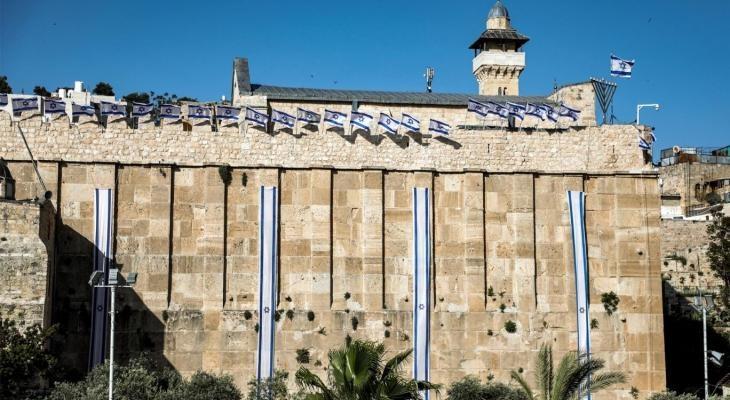
Israel dismantled the Ibrahimi Mosque canopy, roofing the courtyard after withdrawing Hebron's planning powers. Palestinian Awqaf condemns lighting the mosque with the Israeli flag colors.
Canopy removal: neutral administrative act vs deliberate identity change.
4 of 5 outlets skipped it: call to prayer was blocked for nine consecutive days..
22outlets compared
Same story, two versions
tap a side to read it in full
Anadolu Ajansı
“aimed to 'facilitate issuing a building permit for a project to roof the mosque courtyard,'”Read the original ↗
Disputes intent: Judaization versus permitting/roofing rationale.
Canopy removed in Hebron
In Hebron’s old city, Israeli authorities dismantled the canopy covering the courtyard of the Ibrahimi Mosque, a move the Palestinian Islamic Waqf denounced as a "flagrant aggression" aimed at altering the site’s historical and Islamic identity. The Anadolu Ajansı report said the mosque is located in the Old City of Hebron under Israeli control, where about 400 settlers live under the guard of roughly 1,500 Israeli soldiers. AAnadolu Ajansı also said that on June 15 Israeli Finance Minister Bezalel Smotrich announced procedures to withdraw Hebron Municipality’s powers in civil planning and construction, tied to the "Hebron Redeployment Protocol" signed on January 17, 1997.A
Al-Jazeera Net described the canopy removal as one of several steps that Palestinians interpret as dismantling the framework governing Hebron’s administration for nearly three decades and imposing a Judaizing reality inside one of the holiest Islamic sites in Palestine. The Ilke Haber Ajansı report added that Israeli occupation authorities continued to prevent the call to prayer at the Ibrahimi Mosque for a ninth consecutive day, while barring two senior officials from entering the sanctuary.
Voices accuse Judaization
Palestinian religious officials and administrators framed the measures as an assault on Islamic identity, with the Palestinian Islamic Waqf denouncing the canopy removal as a "flagrant aggression". Anadolu Ajansı quoted Moutaz Abu Sunina, director of the Ibrahimi Mosque, accusing Israel of "exploiting political circumstances to impose new faits accomplis inside the Ibrahimi Shrine." İlke Haber Ajansı reported that Palestinian authorities condemned the ongoing restrictions as part of a broader campaign aimed at expanding Israeli control over the Ibrahimi Mosque and altering its historical and religious character.A
Al-Jazeera Net said Palestinians interpret the rapid sequence of decisions and field changes as a dismantling of the framework that has governed the city’s administration for nearly three decades. In the same account, Al-Jazeera Net reported that Smotrich said at the time, “We are applying de facto sovereignty through settlement.”

Hebron’s governance at stake
The dispute over the Ibrahimi Mosque is tied in the sources to changes in Hebron’s municipal authority, with Mondoweiss saying Smotrich stripped the planning and construction authority from Hebron’s Palestinian municipality. Mondoweiss said the implications became clear when Israeli authorities approved the construction of a new Jewish religious school near the Beit Romano settlement in the heart of the Old City, described as the first project authorized without the Palestinian municipality’s knowledge or consent. Anadolu Ajansı said the mosque’s division in 1994 left 63 percent allocated to Jews and 37 percent to Muslims after a massacre carried out by a Jewish settler that killed 29 Palestinian worshippers.A
Al-Jazeera Net reported that the Higher Planning Committee approved the construction of the Shavei Havron religious school, covering about 1,000 square meters near the Beit Romano settlement, without the municipality’s approval, alongside a package including 576 new settlement units in the West Bank. İlke Haber Ajansı warned that restrictions on worshippers have intensified significantly since late 2022 and have become even more severe during the ongoing war on Gaza, as worshippers face military checkpoints, closures, and entry bans limiting their ability to pray at the sacred site.