Gaza Genocide20 November, 20253 min read
Israel Empties Refugee Camps in Occupied West Bank, Forcibly Displaces 32,000 — Human Rights Watch Says War Crimes
This article is an automated aggregation of coverage from news outlets. Our editorials offer in-depth analysis curated by the NewsCord team.
Israel forcibly displaced 32,000 Palestinians from Jenin, Tulkarm and Nur Shams camps. Human Rights Watch said the forced displacements amount to war crimes and crimes against humanity.
8 outlets told this the same way.
Outlets did split on Thousands March in London Calling for Britain to Stop Arming Israel and Impose Sanctions →
West Bank displacement report
Human Rights Watch says Israeli forces forcibly displaced about 32,000 Palestinians from three occupied West Bank refugee camps — Jenin, Tulkarem and Nur Shams — during a campaign HRW calls "Operation Iron Wall" in January–February 2025. HRW says the forces have since prevented the displaced from returning and describes the actions as possible war crimes, crimes against humanity and ethnic cleansing.
“Human Rights Watch says Israeli forces forcibly displaced about 32,000 Palestinians from three West Bank refugee camps — Jenin, Tulkarem and Nur Shams — during ‘Operation Iron Wall’ in January–February 2025 and have since blocked their return.”
HRW’s 105-page report is based on interviews with 31 displaced people, satellite imagery, demolition orders, and verified photos and videos documenting abrupt eviction orders (sometimes broadcast from drones), house raids, ransacking, and demolitions carried out with helicopters, bulldozers and ground troops. WAFA Agency and Middle East Eye report the same findings and emphasize HRW’s legal characterizations and calls for investigations and prosecutions.

Camp demolition and displacement
Human Rights Watch documents systematic demolition and clearing tactics by Israeli forces. Bulldozers widened alleys, troops sealed camp entrances, and soldiers issued abrupt eviction orders, while witnesses reported soldiers firing on people trying to return. HRW says the military provided no shelter or humanitarian assistance.
HRW verified more than 850 homes and structures destroyed or heavily damaged across the camps six months after the operations, and Al-Jazeera cites UNOSAT’s preliminary figure of 1,460 damaged buildings across the three camps. WAFA and Human Rights Watch describe imagery and videos showing leveling of areas and sealing of camp entrances, underscoring that bulldozing often appeared intended to prevent returns.

Calls for criminal accountability
Human Rights Watch and regional outlets call for criminal accountability. HRW urges investigations and prosecutions, specifically recommending action against senior officials. Al-Jazeera lists HRW’s calls for ICC probes, targeted sanctions, an arms embargo, and suspension of preferential trade.
“Human Rights Watch describes the actions as possible war crimes, crimes against humanity and ethnic cleansing and urges investigation and prosecution.”
Middle East Eye reports HRW asked for investigations into named Israeli leaders Benjamin Netanyahu, Bezalel Smotrich, and Yoav Gallant, while WAFA underscores HRW’s plea for prosecutions. These sources push a legal and political follow-up agenda, contrasting with mainstream outlets that concentrate more on immediate incidents and political processes. Cited sources include Human Rights Watch, Al-Jazeera, Middle East Eye, WAFA, and CBC.
Media framing: West Bank raids
Regional and mainstream outlets frame West Bank raids within the wider context of Israeli actions in Gaza and the occupied territories.
Al-Jazeera reports Human Rights Watch's finding that the operations 'amount to crimes of apartheid and persecution' and documents roughly 1,000 Palestinian deaths in the West Bank since Oct. 7, 2023, alongside expanded detention, demolitions, and settler attacks.
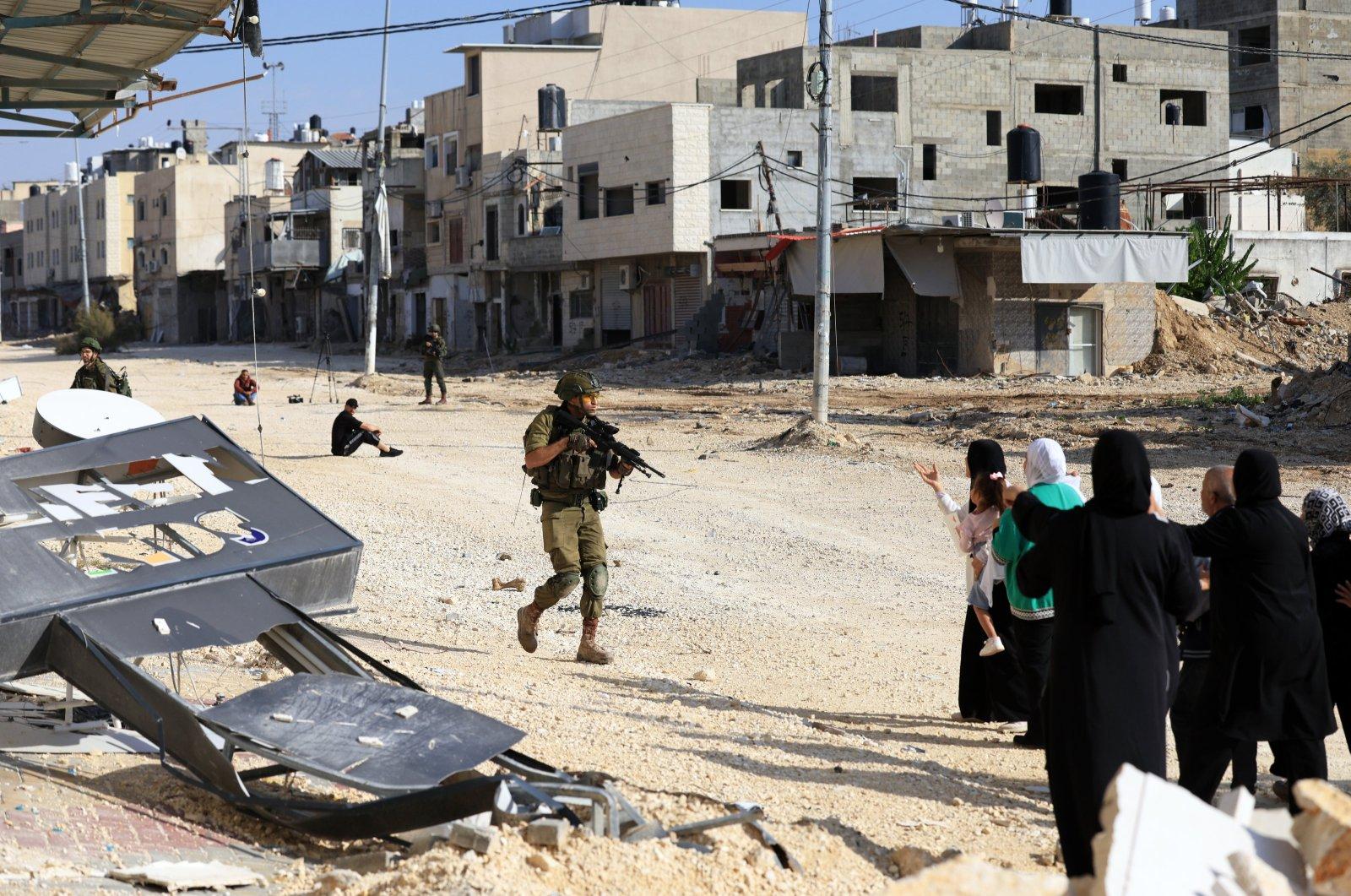
Daily Sabah explicitly describes the Gaza campaign as 'genocidal' and reports over 1,073 Palestinians killed in the West Bank.
CBC provides a contrasting mainstream framing that includes Israeli military statements about attackers killing Israelis and cites casualty tallies of about 1,200 Israelis killed and more than 69,000 Palestinians killed according to the Gaza Health Ministry.
CBC also focuses on United Nations diplomatic steps regarding Gaza reconstruction.
These sources vary sharply in severity and language, with regional outlets using direct legal and moral condemnations such as 'genocide' and 'apartheid,' Human Rights Watch applying legal categories, and mainstream outlets emphasizing political processes and official statements.
Sources cited in coverage include Al-Jazeera, Daily Sabah, CBC, Human Rights Watch, and WAFA.
Media framing of Israeli actions
Across these sources, the facts Human Rights Watch documents are consistent: Israeli forces carried out mass expulsions, demolished and sealed parts of the camps, and continue to block returns. Reporting diverges sharply in legal framing, severity of language, and follow-up priorities. Some Western and West Asian outlets (Human Rights Watch, Al-Jazeera, WAFA, Daily Sabah, Middle East Eye) use explicit legal or moral labels, including 'ethnic cleansing,' 'crimes of apartheid,' and 'genocidal,' to describe Israeli actions in the West Bank and Gaza.
“Human Rights Watch describes the actions as possible war crimes, crimes against humanity and ethnic cleansing and urges investigation and prosecution.”
Mainstream outlets like CBC focus on reporting events and casualty tallies while foregrounding Israeli statements and UN processes. These differences reflect source orientation: HRW produces a rights-based legal analysis with evidence, regional outlets amplify severe terms and calls for criminal accountability, and mainstream outlets emphasize diplomatic avenues and official narratives. Readers should note numerical discrepancies (850+ versus UNOSAT's 1,460), recognize HRW's clear legal claims, and be aware that mainstream coverage may under-emphasize HRW's proposed legal remedies.
