Full Analysis Summary
Gaza outpost expansion
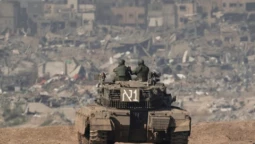
Forensic Architecture’s satellite imagery analysis, reported by Drop Site News and summarized by PressTV, documents that Israel constructed at least 13 new outposts in Gaza and expanded or consolidated 48 existing ones between October 10 and December 2.
The report says Israel built roads, berms and other infrastructure, especially east of the ceasefire’s so-called "yellow line."
It describes systematic demolition of Palestinian property in eastern Khan Younis, Rafah and Jabalia, where tent camps and buildings were razed to make way for new outposts and connecting routes.
PressTV and Forensic Architecture argue these actions physically reshape territory in ways consistent with long-term Israeli control rather than temporary security measures, implying an entrenchment of permanent military occupation through a dense network of outposts linked to Israeli bases, roads and settlements outside the coastal strip.
Coverage Differences
Tone and emphasis
PressTV (West Asian) emphasizes Forensic Architecture’s framing that Israel’s construction of outposts, roads and demolitions creates ‘‘irreversible facts on the ground’’ suggesting long‑term control. In contrast, خبرگزاری بین المللی قدس (Other) places the developments in the context of the U.S.‑backed 20‑point Gaza plan (Trump’s plan), highlighting that Israeli forces placed physical markers west of the mapped ‘‘yellow line’’ and suggesting the activity contradicts stated Israeli and U.S. claims that Israel would not occupy Gaza. Both sources report the same physical actions (new outposts and demolitions) but emphasize different implications: PressTV underscores territorial reshaping consistent with long‑term control, while خبرگزاری بین المللی قدس frames it as a breach of stated withdrawal lines under the ceasefire agreement.
Gaza ceasefire disputes
خبرگزاری بین المللی قدس places these developments against the initial terms of the ceasefire tied to President Donald Trump’s 20‑point Gaza plan, noting that U.S. and Israeli maps showed Israeli forces withdrawing to a 'yellow line' that would leave roughly 53–58% of Gaza under Israeli control.
The report says that despite those mapped withdrawal lines, Israeli forces placed at least 27 physical markers west of the boundary and rerouted corridors, actions the Quds report interprets as seizing additional territory and consolidating control despite official claims that Israel would not occupy or annex Gaza and would hand over control to an International Stabilization Force.
This suggests the Israeli military is actively converting temporary security measures into a permanent territorial presence on the ground.
Coverage Differences
Narrative context
خبرگزاری بین المللی قدس (Other) explicitly ties Forensic Architecture’s findings to the U.S.‑Israel political framework (Trump’s 20‑point plan) and stresses that the physical markers and corridor rerouting contradict the plan’s commitments. PressTV (West Asian) focuses more on the physical and spatial aspects—outposts, roads, demolitions—and their effect in creating long‑term control. The Quds piece frames the activity as a breach of a politically negotiated agreement; PressTV frames it as strategic territorial consolidation.
Demolitions and territorial control
Both sources report that Israeli forces demolished Palestinian homes and tent camps in areas where new outposts and roads were constructed, which Forensic Architecture and commentators describe as a systematic reshaping of Gaza’s inhabited landscape.
PressTV and the Quds agency identify eastern Khan Younis, Rafah, and Jabalia as focal points of demolitions, implying Israel’s actions directly dispossessed Palestinians and erased civilian infrastructure to expand military control.
Those demolitions, paired with new outposts and rerouted corridors, are presented as part of a deliberate pattern to make Israeli control on the ground durable and difficult to reverse.
Coverage Differences
Specificity of legal/political framing
PressTV (West Asian) emphasizes the spatial and physical evidence (outposts, roads, demolitions) suggesting a strategy of creating irreversible facts on the ground. خبرگزاری بین المللی قدس (Other) adds the legal/political frame that these actions contravene the withdrawal mapped in the Trump plan and therefore amount to an effective occupation despite claims to the contrary. PressTV focuses on the material outcomes; Quds highlights the inconsistency with stated political commitments.
Territorial consolidation in Gaza
Two sources argue that the pattern of new outposts, linked infrastructure, and demolitions is not a short-term security posture but a process of territorial consolidation that could amount to permanent occupation.
PressTV frames the activities as aligning with past Israeli strategies of creating 'irreversible facts on the ground,' while خبرگزاری بین المللی قدس highlights the contradiction between these on-the-ground actions and the ceasefire plan's political commitments, including the promise not to occupy Gaza.
Both accounts, citing Forensic Architecture, present evidence that Israeli forces are physically reshaping Gaza to ensure long-term military control.
Coverage Differences
Consensus vs. political emphasis
Both PressTV (West Asian) and خبرگزاری بین المللی قدس (Other) report the same set of facts (new outposts, road construction, demolitions) and both infer long‑term control. The main difference is framing: PressTV emphasizes historical strategy and physical permanence; Quds emphasizes the political betrayal of the ceasefire’s mapping and the U.S. role in that framework. Neither source disputes the core factual claims, but they highlight different implications—strategic permanence vs. breach of political commitments.