Gaza Genocide23 December, 20252 min read
Israel Extends Law That Empowers Government To Shut Down Al Jazeera And Other Foreign Broadcasters Until 2027
Knesset extended the law allowing closure of foreign broadcasters until December 31, 2027 Law authorizes government to shut foreign broadcasters deemed to endanger state security, targeting Al Jazeera
11 outlets told this the same way.
Extension of media shutdown law
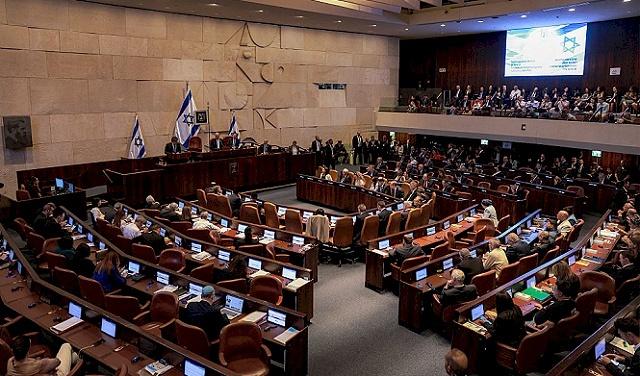
On 23 December 2025, Israel’s parliament voted to extend until the end of 2027 a law that allows the government to shut down foreign broadcasters it deems a national-security threat without prior court approval. The measure codifies emergency powers first used in April–May 2024. Those powers have been used to close Al Jazeera’s offices and seize equipment.
“On 23 December 2025 Israel’s parliament approved an amendment allowing the government to extend until the end of 2027 a broadcasting ban on foreign media deemed to undermine national security. The rule, introduced in April 2024 during the Israel–Hamas war, has been aimed mainly at Qatar’s al Jazeera, which Israeli authorities shut down and accused of ‘actively participating’ in the 7 October attack.”
The Knesset approved the extension in a 22–10 vote. Israeli officials say the powers are needed to stop channels they accuse of pro-Hamas bias or active participation in the October 7 attacks. Critics inside Israel and abroad call the move a severe infringement on press freedom and say it will apply even in peacetime.

Media restrictions and reactions
The extension directly reinforces measures already used against Al Jazeera, as Israeli authorities shuttered its offices, seized equipment and maintain the network’s ban under Israeli law. Al Jazeera rejects accusations of bias and says the steps are violations of international law and media freedom.
Internationally, actions such as the May 2024 seizure of an Associated Press live feed were later reversed after condemnation. Reporters and unions say the new law will make similar suppressive actions easier and more durable.

Media restrictions and Gaza impact
Several outlets link the expanded media restrictions to broader Israeli policies that critics say entrench control over Palestinians and restrict humanitarian access. Il Sole 24 ORE reports the Palestinian National Authority condemned recent settlement plans as consolidating 'colonial control' and continuing 'apartheid, settlement and annexation policies.' Al Jazeera reports mass Palestinian deaths in Gaza, noting more than 70,000 dead, and cites UN accusations that Israeli actions have systematically destroyed Gaza's healthcare system and targeted medical staff; MSF warns that new operational rules could further block NGOs and jeopardise lifesaving care in Gaza in 2026.
“The Palestinian National Authority condemned Israel’s announcement of plans to build 19 new West Bank settlements, calling the move a ‘dangerous step’ that consolidates ‘colonial control,’ continues ‘apartheid, settlement and annexation policies,’ and undermines Palestinian rights.”
Israeli media freedom concerns
Domestic Israeli politics and the broader media environment show additional escalation: hours after the vote, the cabinet approved a plan to close Army Radio (Galei Tzahal) by March 2026. Journalists' unions and the Israel Democracy Institute say this would eliminate much independent public radio news and have announced a High Court petition.
Critics inside Israel and abroad characterise the expansion of ministerial power and the absence of required judicial review as a further deterioration in media freedom. Those concerns are reflected in Israel's drop to 112th in the Reporters Without Borders index.