Full Analysis Summary
Pitch demolition paused
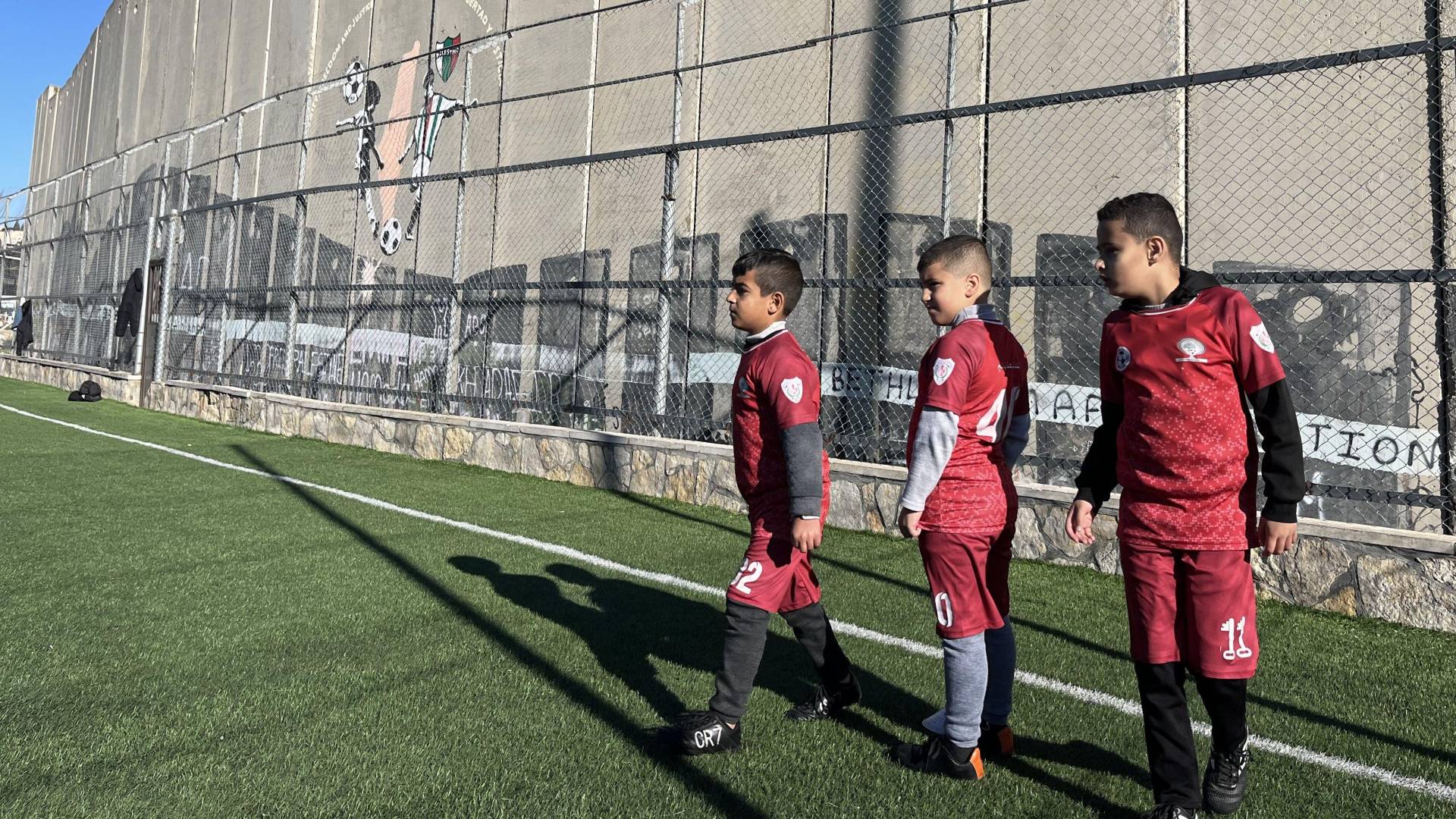
Israeli authorities have paused plans to demolish a small children's football pitch in the Aida Refugee Camp near Bethlehem after a high-profile international campaign by football bodies and supporters, marking a temporary win for the camp's youth.
Roya News reports the suspension came "after intense international pressure from global football governing bodies," framing the outcome as an example of sports diplomacy that "preserves an important recreational space for Palestinian youth."
The BBC says Israel "has postponed the planned demolition" and that an international campaign, "including a petition with over 500,000 signatures, appears to have forced a reconsideration."
Coverage Differences
Tone/Narrative
Roya News (West Asian) presents the decision as a clear suspension driven by international football bodies and highlights the preservation of a community resource, while BBC (Western Mainstream) emphasizes a postponed or temporary nature of the decision and credits a broad international petition as a principal factor. Each source reports third-party actions (Roya News reports pressure from governing bodies; BBC reports an international campaign and petition).
Conflicting reports on pitch
Sources differ on key factual details about the pitch's origin and the scale it serves.
Roya News says the field was built in 2023 by the Aida Youth Center for the camp's roughly 5,000 residents, many of them children.
The BBC describes a tiny rusted-goalpost pitch created to serve more than 200 young players from the nearby Aida refugee camp.
Roya also states a demolition order was issued on December 31, 2025.
The BBC reports a notice declaring the field illegal was posted on 3 November.
These concrete discrepancies (year built, users served, and dates) remain unresolved in the available reporting.
Coverage Differences
Contradiction (factual details)
Roya News reports the pitch was built in 2023 for around 5,000 camp residents and cites a demolition order date of December 31, 2025; BBC reports the pitch was built in 2020, serves “more than 200 young players,” and says a notice was posted on 3 November. These are factual contradictions across sources rather than differences of interpretation.
Contrast in news framing
Roya News presents the suspension as a preservation victory resulting from intense international pressure and frames it as sports diplomacy influencing policy.
The BBC repeatedly underscores the reprieve’s provisional nature, noting the club has not yet received formal notification of the decision and calling the reprieve temporary for now.
This difference in framing affects whether readers interpret the pitch’s survival as assured or conditional on further processes.
Coverage Differences
Tone/Narrative and Emphasis
Roya News emphasizes preservation and diplomatic influence of sports bodies, portraying the suspension as a success; BBC stresses the temporary quality of the postponement and the lack of formal notice to the club, indicating uncertainty. Each source reports claims (Roya reports pressure from governing bodies; BBC quotes the club’s status) rather than asserting identical conclusions.
West Bank pitch dispute
Both sources place the story within the larger contested setting of the occupied West Bank.
The BBC explicitly ties the pitch and camp to the history of displacement, calling residents 'descendants of families displaced in 1948'.
The BBC also highlights Israeli security justifications for the notice, noting the pitch was located very close to Israel's concrete security barrier.
Roya News stresses the camp's needs, describing the pitch as serving the camp's population and as a vital recreational space.
Together the pieces underscore competing priorities: security and permit rules versus community recreation and international solidarity.
Coverage Differences
Narrative/Contextual focus
BBC (Western Mainstream) frames the issue around security control, legal notices, and historical displacement context; Roya News (West Asian) centers the humanitarian and community value of the pitch and the idea of sports diplomacy. Both report others’ claims (BBC reports authorities’ security rationale; Roya reports the impact on youth and calls the suspension an example of sports diplomacy) rather than presenting identical focal points.
Discrepancies in two reports
Important uncertainties remain and should be noted: the two sources disagree on the year the pitch was built, the number of beneficiaries, and the exact timing of legal notices.
BBC stresses the postponement’s temporary nature and the lack of formal notification, while Roya News frames the outcome as a suspension prompted by football bodies.
Because only these two reports are available here, those contradictions cannot be reconciled without further reporting or official documentation.
Readers should treat specific factual claims (dates, numbers, permanence) as unresolved unless corroborated by additional sources or official statements.
Coverage Differences
Missed information/Uncertainty
Both sources leave unresolved factual discrepancies (year built, size served, notice dates and permanence). This is not a difference in interpretation only but in basic reported facts; Roya News and BBC each report claims and details that contradict one another, and neither source supplies the definitive evidence to reconcile the differences.