Gaza Genocide08 January, 20262 min read
Israel-Hamas Ceasefire Allows Gaza Children to Return to Makeshift Tent Classrooms
This article is an automated aggregation of coverage from news outlets. Our editorials offer in-depth analysis curated by the NewsCord team.
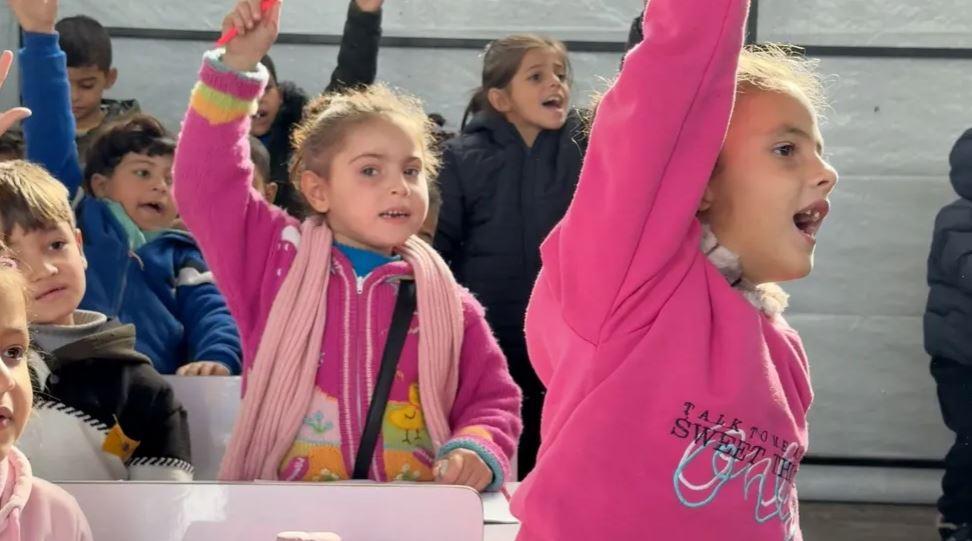
Children return to makeshift tent classrooms after nearly two years without formal schooling Tents host noisy, chaotic but lively lessons with boards for basic Arabic and English
6 outlets told this the same way.
Outlets did split on Thousands March in London Calling for Britain to Stop Arming Israel and Impose Sanctions →
BBC was read line by line by the Watchdog: 2.6. See the score →
Gaza tent school reopening
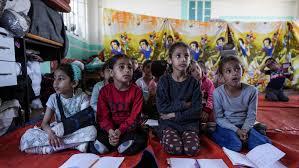
After the October Israel-Hamas ceasefire, children in Gaza City began returning to classes in UNICEF-run makeshift tent classrooms at the ruined Lulwa Abdel Wahab al‑Qatami School in Tel al‑Hawa. The building was hit in January 2024 and later used as a shelter for displaced families. The tent school is led by a principal appointed in mid-November and serves roughly 1,100 boys and girls across three shifts.
“After the October Israel-Hamas ceasefire, children in Gaza have returned to school in a UNICEF-run makeshift tent school that brings together students displaced from the original Lulwa school and others.”
Boys and girls attend on alternating days as an improvised rhythm to regain routine after nearly two years without regular schooling. These tents are a temporary, crowded substitute for the original building and are intended to bring displaced pupils back into some form of organised learning.
Tent classroom conditions
Classroom conditions are stark: tents are noisy, cramped and only permit limited lessons focused on basics such as Arabic, English, maths and science rather than the full curriculum. Teachers are improvising with boards and running three short daily shifts to reach as many pupils as possible.
UNICEF and staff warn the tents lack reliable electricity and internet and face shortages of basic supplies. Many children have fallen years behind because of the disruption, including setbacks from the COVID pandemic.
Schooling after conflict
Children and teachers describe relief, trauma and fragile hope. Teenagers such as 14-year-old Naeem al-Asmaar, who lost his mother in an airstrike, and ninth-grader Rital Alaa Harb, whose studies were severely disrupted and who hopes to become a dentist, say returning to lessons 'matters' and helps restore a sense of routine. Sources present these personal accounts as evidence of the psychological and social importance of schooling even under dire material constraints.
“14‑year‑old Naeem al‑Asmaar, who lost his mother in an airstrike and stresses that although education in tents is not the same, being back at school ‘matters,’ and ninth‑grader Rital Alaa Harb, whose studies were severely disrupted and who hopes to become a dentist.”
Education and humanitarian collapse
The tent reopening sits within a larger humanitarian and educational collapse. UNICEF says more than 97% of Gaza’s schools were damaged or destroyed and most of the Strip’s 658,000 school-age children have had little or no formal education for nearly two years. Several sources say the original Lulwa building was struck by Israeli air strikes in January 2024 and later served as a shelter.
Some reporting notes the Israeli military has accused Hamas of using civilian infrastructure, including schools, for operations. Outlets say that accusation has rarely been accompanied by public, hard evidence. Reporting emphasizes the scale of destruction, the short-term relief of tents, and the long road back to meaningful education.
