Full Analysis Summary
Rafah crossing returns
Forty-one Palestinians were sent back into Gaza through the Rafah crossing on WHO buses and taken to Nasser Medical Complex in Khan Younis.
This marked the seventh return since the crossing was partially reopened on Feb. 2 under a U.S.-brokered ceasefire.
Returnees told reporters they endured humiliating searches and interrogations by the Israeli military, which controls the Palestinian side of the crossing.
Overall movement since Feb. 2 remains tiny compared with needs.
Since then, 172 people have returned and about 250 patients and companions have been allowed to leave, well short of the agreement's daily evacuation promise.
Coverage Differences
Tone
Both Al Jazeera (West Asian) and Daijiworld (Asian) report the same factual movements and humiliating searches; Al Jazeera frames this in the context of a U.S.-brokered ceasefire and emphasizes that the Israeli military controls the Palestinian side, while Daijiworld repeats the operational details and also stresses the small numbers allowed compared with promises.
Gaza medical crisis
Gaza’s health system remains devastated and unable to meet demand, with Palestinian Health Ministry figures cited by outlets reporting 22 hospitals out of service and roughly 1,700 medical workers killed during the war.
The reopening of Rafah has not eased the medical crisis; patient evacuations to date are far below the roughly 20,000 patients estimated to need treatment abroad and well under the deal’s pledged 50 patient evacuations per day.
Coverage Differences
Narrative Framing
Al Jazeera (West Asian) and Daijiworld (Asian) both cite Health Ministry figures to describe the degraded health system; Al Jazeera states 'about 1,700 medical workers killed' while Daijiworld gives a similar figure as 'some 1,700 medical workers killed', showing parallel sourcing and consistent framing of medical collapse.
Ceasefire and continued strikes
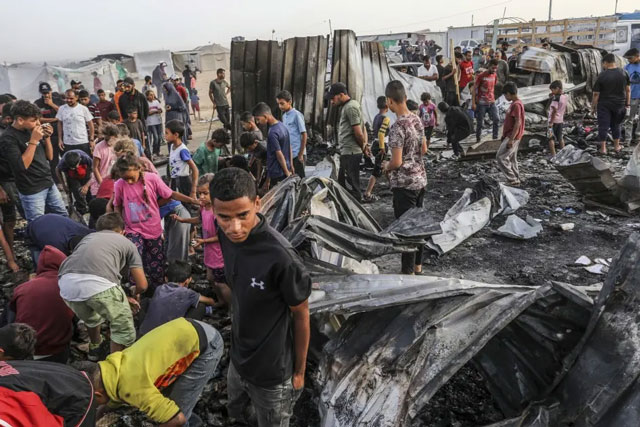
Despite ceasefire terms tied to the reopening, both sources report that Israeli strikes and shelling have continued in and around Khan Younis, killing at least seven Palestinians.
The reports attribute the strikes to Israel and record civilian deaths, undermining the notion that the ceasefire halted Israeli military action harming Palestinian civilians.
Coverage Differences
Direct Attribution
Both Al Jazeera (West Asian) and Daijiworld (Asian) explicitly attribute continuing strikes and shelling that killed Palestinians to Israel; neither outlet uses euphemisms to obscure who is conducting the strikes.
Deportation of Palestinian citizens
Israel has, for the first time, approved the forced expulsion to Gaza of two Palestinian citizens convicted of attacks.
Authorities invoked a 2023 law that allows revocation of citizenship and deportation in alleged terrorism cases.
Prime Minister Benjamin Netanyahu named the two men and said he signed the orders, while rights groups, including Adalah (cited by Daijiworld and reported by Al Jazeera), said the move violates citizenship protections and international law.
Coverage Differences
Wording
Al Jazeera (West Asian) uses the phrase 'forced expulsion' while Daijiworld (Asian) uses 'deporting' and both highlight legal controversy; Daijiworld explicitly names Adalah and quotes its condemnation as violating citizenship protections and international law, whereas Al Jazeera reports rights groups condemned the move more generally.
Reporting on Rafah and Gaza
The two sources, Al Jazeera (West Asian) and Daijiworld (Asian), together present a consistent account.
They report that Israel controls the Palestinian side of Rafah and is subjecting returnees to degrading searches and interrogations.
They say the flow through Rafah is far below what was promised.
They describe Gaza’s health system as ravaged.
Israeli strikes continue to kill Palestinian civilians.
Israel has moved to deport two Palestinian citizens, a step rights groups say breaches legal protections.
Differences between the outlets are small and mostly in wording and emphasis.
Al Jazeera frames the deportations as "forced expulsion" while Daijiworld uses "deporting" and names Adalah.
Both outlets explicitly attribute continued strikes and civilian deaths to Israel and stress the humanitarian shortfall versus pledged evacuations.
Coverage Differences
Overall Framing
Both outlets align on core facts but vary slightly in phrasing and which legal actors they name; Al Jazeera (West Asian) emphasizes the forced nature and rights-group condemnation in general terms, while Daijiworld (Asian) names Adalah and describes the legal claim more explicitly.