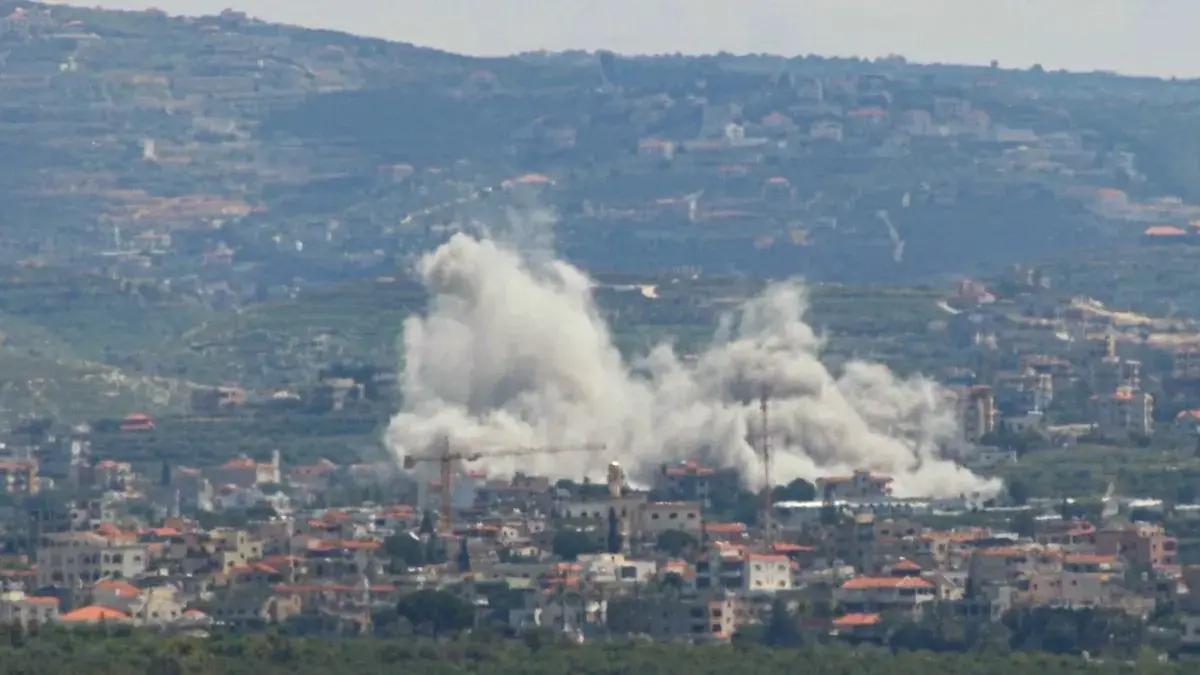
Israel Intensifies Air Raids And Ground Operations In Bint Jbeil After Choking Siege
Key Takeaways
- Israel intensified air raids and ground operations in Bint Jbeil amid clashes with Hezbollah.
- Israel bombarded southern Lebanon, including Bint Jbeil and Tyre fortress.
- Hezbollah engaged in battles to prevent seizure of Bint Jbeil.
Bint Jbeil siege intensifies
Israel has intensified its air raids and ground operations in the town of Bint Jbeil in southern Lebanon since mid-April, after imposing what Al-Jazeera Net describes as a “choking siege” amid “fierce back-and-forth battles with Hezbollah” in a bid to seize the town.
“Since mid-April of this year, Israel has intensified its air raids and ground operations in the town of Bint Jbeil in southern Lebanon, after the choking siege it imposed on the city amid fierce back-and-forth battles with Hezbollah in a bid to seize it”
The article frames Bint Jbeil as a place that “covers no more than 9 square kilometers,” while also presenting it as a focal point for Israeli decision-making at both political and military levels.

It says the town lies “about 5 kilometers from the Lebanese border with Israel” and calls it “an important stronghold for the Lebanese resistance.”
Al-Jazeera Net links the current fighting to earlier history, saying that Israeli forces are fighting a “dense and historic battle in Bint Jbeil” and that it is “a continuation of the battles the city witnessed in 2006.”
The piece also describes Israeli statements that target the city’s stadium, from which Hezbollah leader Hassan Nasrallah delivered a speech “26 years ago,” and it says Israeli officials “boasted of striking the stadium.”
In parallel, Masrawy reports that Hezbollah members repelled an Israeli incursion into Bint Jbeil and that fighting continued “for the fifth day,” with air support and “intensive monitoring.”
Why Bint Jbeil matters
Al-Jazeera Net argues that Israel’s focus on Bint Jbeil is rooted in the town’s “symbolic and strategic importance,” describing it as a “geographic and military hub in southern Lebanon.”
It says the town sits at “a vital crossroads” at the intersection of the “Tabenin/Bint Jbeil road” and the “Ainata–Maroun al-Ras–Bint Jbeil road,” which it says connects border sectors, mountainous villages, and towns including “Ramish and Ain al-Shaab.”
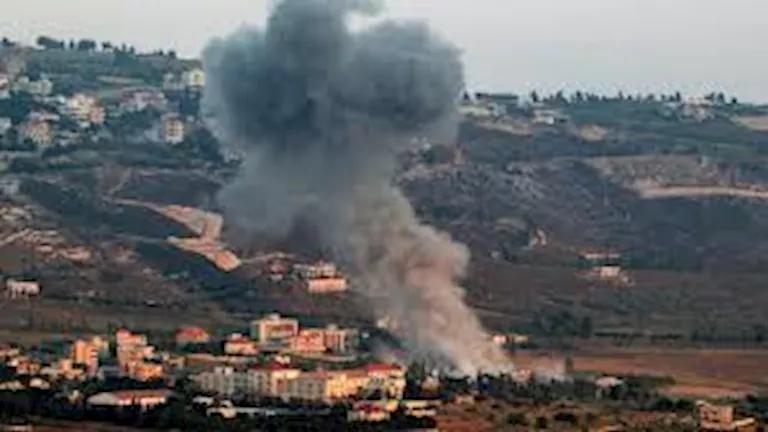
The article also describes “Fire control,” saying Bint Jbeil is “about 3 kilometers from the Blue Line,” giving it “a direct view of the border and the settlements of the Upper Galilee.”
It adds that elevation provides occupying forces with a position that “overlooks the surrounding areas,” and it says this gives them “the firepower to besiege other areas and target any movement in the region.”
Al-Jazeera Net further says that controlling the city’s roads allows Israel to “cut Hezbollah supplies coming from neighboring towns or those heading west toward Tyre,” while the surrounding hills and valleys provide “a natural defensive advantage.”
It also introduces a “Project “Yellow Line”,” saying Bint Jbeil lies “in the middle of what is called the new Israeli Yellow Line,” and that controlling it means imposing an “occupying strip” aimed at isolating the area.
Finally, it describes a “Scorched-earth policy,” saying “the Israeli army has poured its wrath on Bint Jbeil” and that “Satellite images show drastic transformations in the city’s urban landscape.”
Nasrallah, stadium, and battlefield rhetoric
Al-Jazeera Net connects the current fighting to Hezbollah’s earlier messaging and to Israeli efforts to frame the battle as a reversal of past events.
“Lebanese media said that Israeli artillery fire hit the ancient fortress in the city of Tyre as Israeli raids continued on several towns in southern Lebanon”
It says Israeli statements by politicians and military officials reveal “the roots of the Israeli knot toward Bint Jbeil,” calling the town “an important stronghold for the Lebanese resistance.”
The article says the “commander of the Paratroopers Brigade in the Israeli army” described the fighting as “a dense and historic battle in Bint Jbeil,” and it presents the commander’s remarks as a continuation of the 2006 battles.
It also says the commander spoke during a speech marking the anniversary of the death of “more than 30,000 Jews,” “most of them soldiers since the start of Jewish settlement in Palestine in 1851.”
Al-Jazeera Net quotes the commander’s description of the area where Nasrallah tried to show Israel as weak, saying that “the paratroopers are now fighting hard, eliminating militants and achieving important operational gains.”
The article then ties this to Nasrallah’s earlier words, stating that Israeli military rhetoric references “Hassan Nasrallah’s famous speech 26 years ago,” where he said “Israel is weaker than a spider’s web.”
It further says the Israeli army announced during the current war that it targeted the city’s stadium “from which Nasrallah delivered his speech 26 years ago,” and it adds that Israeli officials “boasted of striking the stadium.”
Israeli control claims and Hezbollah resistance
While Al-Jazeera Net emphasizes Israeli strategic aims, other reporting highlights competing claims about control and battlefield outcomes.
The piece from قناة ومنصة المشهد says an Israeli military official told Lebanese media that “full operational control over the town of Bint Jbeil in southern Lebanon would be achieved within days,” and it frames this as limiting “the ability of Iran-backed Hezbollah fighters to launch attacks on northern Israel from this area.”
The same report quotes the official saying, “Only a few terrorists remain in the Bint Jbeil area,” and it adds that the army “killed terrorists as they were leaving a hospital in Bint Jbeil, and also found many rocket launch platforms and weapons.”
Masrawy, by contrast, reports that “Hezbollah members repelled an Israeli incursion into the southern city of Bint Jbeil,” and it describes the fighting as continuing “for the fifth day” with “clashes raged at close range.”
Masrawy says Hezbollah fighters relied on “mobile defense,” targeting “the enemy forces and their supply lines,” and it states they “succeeded in inflicting losses, especially near the municipal stadium and the Al Baraka neighborhood.”
Together, the accounts set up a direct clash between Israeli claims of imminent control and Hezbollah-linked claims of repelled incursions and inflicted losses.
The reporting also situates the fighting in specific parts of the town, including “near the municipal stadium and the Al Baraka neighborhood,” which Masrawy presents as key locations during the clashes.
Broader strikes and cultural sites
Beyond Bint Jbeil, the sources describe Israeli artillery and airstrikes across southern Lebanon, including attacks on areas tied to historical and religious sites.
قناة ومنصة المشهد reports that Lebanese media said Israeli artillery fire hit “the ancient fortress in the city of Tyre,” adding that it “houses the shrine and the burial shroud of the Prophet Shimon al-Safa,” and it says the fortress is “among the historical sites listed on UNESCO's list, which provides it with international protection.”
Masrawy similarly reports that Israeli artillery shelled “the ancient fortress in the city of Tyre in south Lebanon,” reiterating that it “houses a shrine and the shroud of Prophet Shimon Ha-Safa,” and it again ties the site to UNESCO-listed archaeological sites.
The same Masrawy report describes a wider pattern of strikes, saying Israeli warplanes targeted “this evening, Monday,” the town of “Sahmar east of Lebanon,” and the towns of “Yater, Kafra, and Kafr Ramān,” as well as “Mizrat Mushrif, Zibdin, and Sir al-Gharbiyah.”
It also says Israeli drones and artillery shelling targeted “many cities and towns in south Lebanon,” and it reports an airstrike on “the town of Bustan in south Lebanon this morning” that resulted in the “martyrdom of a number of Syrian workers.”
Masrawy adds that “A young man was martyred in an airstrike on the town of Nabatieh al-Fouqa in south Lebanon.”
In addition to strikes, Masrawy reports that “Israeli bulldozers entered Naqoura in south Lebanon this evening and began demolishing a number of houses and some landmarks of the town,” and it says warplanes struck “the town of al-Qantara and the outskirts of Tebnin in south Lebanon.”
More on Lebanon
Emmanuel Macron Reaffirms Lebanon Ceasefire And Sovereignty With Prime Minister Nawaf Salam In Paris
13 sources compared

Israeli Soldiers Damage Jesus Statue in Debel, Lebanon, After Photo Verified
29 sources compared

Israeli Forces Destroy Civilian Infrastructure in Southern Lebanon, Detonate Imam Moussa Al-Sadr Sports Complex
17 sources compared

Israeli Soldier Vandalizes Jesus Statue in Debel, Lebanon, Netanyahu Orders Criminal Probe
12 sources compared