Gaza Genocide20 May, 20269 min read
Israel Intercepts Gaza-Bound Global Sumud Flotilla Near Crete, Releases All But Two Activists
Israel intercepted the Global Sumud Flotilla near Crete, detaining about 175 activists aboard 22 boats. Foreign ministers condemned the attack as a flagrant violation of international law.

NBC News was read line by line by the Watchdog: 3.4. See the score →
Crete Interception
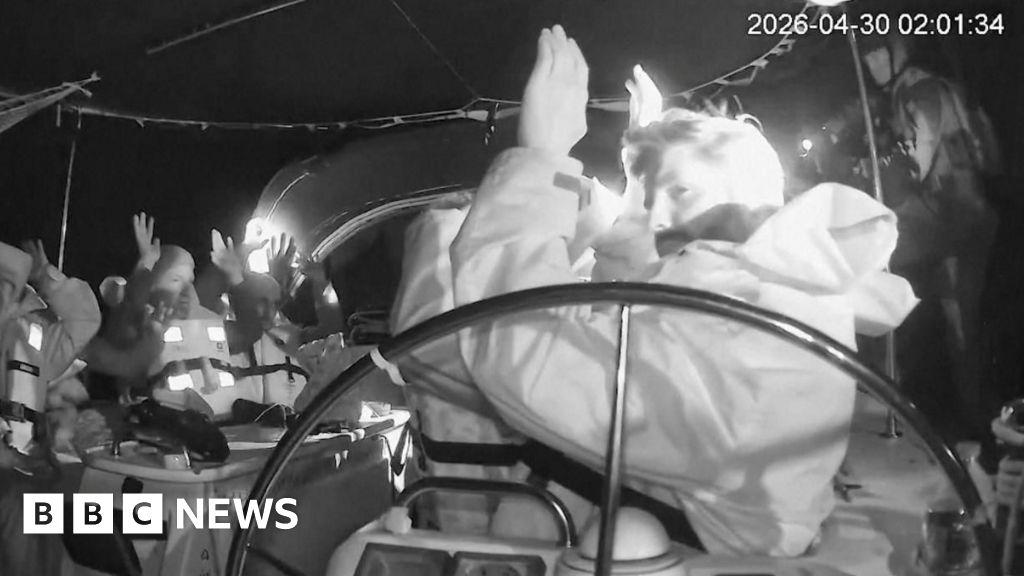
Israel intercepted a Gaza-bound aid flotilla in international waters near Greece and released all but two detained activists in Greece, according to the BBC. The BBC reported that “All but two pro-Palestinian activists detained by Israeli forces after their flotilla headed for Gaza was intercepted in international waters have now been released in Greece,” with the remaining two men “being brought to Israel ‘for questioning’” and “Both men remain in Israeli custody.” The BBC said the seizure occurred “around 175 activists aboard 22 boats carrying aid” seized “near the island of Crete” on Thursday, and that the Global Sumud Flotilla (GSF) denounced the action as “piracy.”
Israel’s foreign ministry called the flotilla a “PR stunt,” and the BBC reported that Israel said one of the men, Saif Abu Keshek, was “suspected of affiliation with a terrorist organisation” while the other, Thiago Ávila, was “suspected of illegal activity.” The BBC also said that “All the detained activists have disembarked in Crete, apart from two men,” and that Greek authorities had been preparing to receive people “since the early hours of Friday morning.”

It added that the group is being transported “to the southern coast of Crete, where they are expected to arrive at Atherinolakkos,” with buses waiting to take them onward. The BBC further stated that “their final destination is Heraklion,” where they are expected to be temporarily accommodated before arrangements are made for their return to their home countries.
What Israel Did
Multiple outlets described the interception as involving boarding, damage to equipment, and detentions, while Israel framed its actions as lawful and necessary to prevent a blockade breach. The BBC reported that the GSF said Israeli naval forces had “intercepted, boarded, and systematically disabled and destroyed various boats” during a “violent raid in international waters” north-west of Crete on Thursday, and that after detaining participants “smashing an engine and jamming communications” the forces “retreated, kidnapping participants or intentionally leaving civilians stranded on powerless, broken vessels.” In contrast, the BBC said Israel insisted its actions “comply with international law,” and quoted the Israeli foreign ministry saying that “due to the large numbers of vessels participating in the flotilla and the risk of escalation, and the need to prevent the breach of a lawful blockade, an early action was required.”
The BBC also quoted Israel’s claim that “The operation was carried out in international waters peacefully and without any casualties,” and that “An initial inspection of the vessels revealed materials that appear to be drugs and contraceptives.” NBC News described the same episode from the activists’ perspective, saying activists “said Thursday that Israel forces intercepted the vessels overnight, smashing engines and detaining some of those onboard while they were sailing in international waters near Greece, hundreds of miles from Gaza and Israel.” NBC News also reported that Israel’s foreign ministry said it was taking “about 175 activists from more than 20 boats participating in the flotilla to Israel,” and that Foreign Minister Gideon Saar later wrote on X that “All participants in the provocative flotilla who were taken off the vessels were taken off unharmed.”

Euronews added that Israel’s foreign minister said the activists would be taken to Greece, quoting Gideon Sa’ar writing on X that “In coordination with the Greek government, the civilians who were transferred from the flotilla vessels to the Israeli vessel will be brought ashore in Greece in the coming hours.” Euronews also included the flotilla’s account that “Our boats were approached by military speedboats, self-identified as ‘Israel’, pointing lasers and semi-automatic weapons ordering participants to the front of the boats and to get on their hands and knees,” and that “the boat communications are being jammed and an SOS was issued.”
Diplomatic and Protest Response
The interception triggered condemnation from governments and protests in Italy, while activists and rights groups demanded releases and framed the action as piracy. Hürriyet Daily News reported that “The foreign ministers of 12 countries, including Türkiye, have condemned Israel’s attack on the Global Sumud humanitarian aid flotilla,” calling it a “flagrant violation of international law,” and quoted the joint statement saying “The Israeli attacks against the vessels and the unlawful detention of humanitarian activists in international waters constitute flagrant violations of international law and international humanitarian law.” It said the ministers urged Israel “to take immediate steps for their release,” and described the flotilla as “a peaceful civilian humanitarian initiative aimed at drawing attention to the crisis in Gaza.”
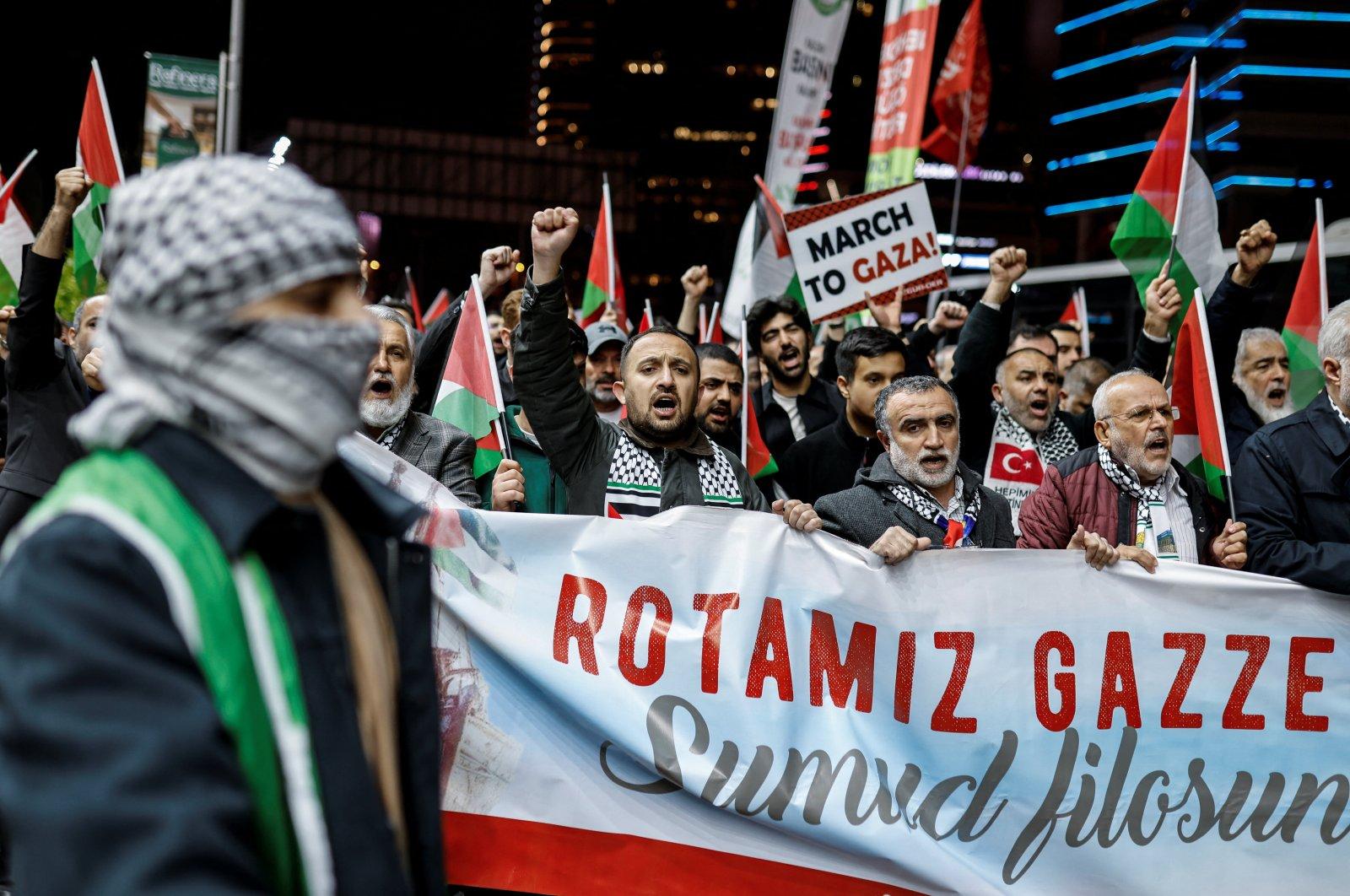
Al Jazeera described “World reacts to Israeli interception of Gaza aid flotilla” and said Italy called for “the immediate release of Italian nationals on board the flotilla,” quoting that Italy “condemns the seizure of the Global Sumud Flotilla vessels … and calls on Israel to immediately release all the unlawfully detained Italians.” Al Jazeera also reported that Spain’s Prime Minister Pedro Sanchez wrote on X that “Israel is once again violating international law by attacking a civilian flotilla in waters that do not belong to it,” and that “Spain ‘is doing everything necessary to protect and assist the detained Spaniards,’ Sanchez added.” In Italy, Anadolu Ajansı reported that “Thousands of people took to the streets in several Italian cities Thursday to protest Israel's attack on a humanitarian aid flotilla bound for Gaza,” with demonstrations held in “Rome, Milan, Naples and Turin.”
It said in Rome demonstrators gathered “near the Colosseum before marching through the city center, passing Piazza Venezia, the Monti district, and Termini train station,” and that Maya Issa, president of the Palestinian Student Movement in Italy, described the incident as “piracy” and suggested it could amount to a “declaration of war.” Anadolu Ajansı also reported that protesters carried “Palestinian flags” and voiced support for “both the flotilla and Palestinians in Gaza,” while chanting “Free Palestine” and calling for “an end to Israel’s attacks.”
Competing Narratives and Numbers
While the incident centered on the Global Sumud Flotilla, outlets diverged on key details such as how many boats were intercepted and how many activists were detained, reflecting competing narratives about what happened at sea. The BBC said “around 175 activists aboard 22 boats carrying aid were seized near the island of Crete,” and later described that “All the detained activists have disembarked in Crete, apart from two men,” while also stating that “Israel said about 175 people had been detained.” NBC News reported that “22 vessels were intercepted in international waters west of the southern Greek island of Crete,” while also saying “a further 36 were still sailing midday on Thursday,” and that Israel’s foreign ministry said it was taking “about 175 activists from more than 20 boats.”
Euronews stated that “The number of vessels seized is unclear at this time,” and said Israeli army radio, citing an unnamed military source, reported “seven of the 58 boats had been intercepted near Kythira,” while the flotilla said it had “lost contact with 11 vessels and described 15 as having been boarded.” Al Jazeera said Israel “intercepted 22 out of the 58 aid boats travelling through international waters,” and reported that “Israel ‘kidnapped’ 211 of the 400 activists taking part in the flotilla, including a Paris city councillor, according to the flotilla’s organisers,” while also noting that “Israel’s Foreign Ministry had earlier put the number of those detained at 175.” Greenpeace described the episode as an “attack” and said “More than 20 vessels were illegally boarded and harassed in international waters, 600 nautical miles from Gaza,” and that Greenpeace’s ship Arctic Sunrise was “sailing with flotilla,” while stating “who have detained 175 flotilla participants.”
Tempo.co offered a different framing of the fleet’s size and origin, saying the convoy consisted of “more than 100 ships” and set sail from “Marseille, Barcelona, and Syracuse,” while also reporting that “Communications with 11 vessels have been lost” and quoting the flotilla that “Communications with 11 vessels have been lost.” Across these accounts, the same event is described through different lenses—Israel’s “lawful blockade” rationale versus activists’ “piracy” language—while the reported counts range from “22” to “seven” to “more than 20” vessels and from “175” to “211” activists depending on the source.
Aftermath and Stakes
The immediate aftermath involved transfers to Greece and calls for releases, while the broader stakes were tied to Gaza’s humanitarian situation and to the future of blockade-breaking efforts. The BBC said the two remaining activists are “being brought to Israel ‘for questioning’” and that “Both men remain in Israeli custody,” while also reporting that “The Global Sumud Flotilla (GSF) called for the immediate release of Abu Keshek and Ávila” and that the group said: “We demand that all governments do all they can to pressure the Israeli regime to release all the illegal abductees.” Greenpeace urged the New Zealand government to act, saying it had written to Foreign Minister Winston Peters “urging him to immediately condemn the attack and demand the immediate release of people abducted by Israeli military last night, including New Zealand citizens,” and quoting Greenpeace Executive Director of Greenpeace Aotearoa, Russel Norman: “Blocking aid and targeting those who attempt to deliver it are violations of international humanitarian law.”
“We demand that all governments do all they can to pressure the Israeli regime to release all the illegal abductees.”
The BBC also placed the flotilla episode in a wider humanitarian context by quoting a senior UN official saying Gaza’s “2.1 million people were ‘facing ongoing and deadly Israeli strikes and dire humanitarian conditions,’” and that “Food security remains a challenge, while essential services, particularly water, sanitation, and health, are again on the brink of collapse.” NBC News described the broader conflict backdrop, saying “Israel and Egypt have imposed varying degrees of a blockade on Gaza since Hamas seized power from rival Palestinian forces in 2007,” and that “critics say it amounts to collective punishment of Gaza’s Palestinian population.” It also said the activists’ attempt came “less than a year after Israeli authorities foiled a previous effort by the group to reach Gaza,” when Israel arrested and deported participants including “Swedish climate activist Greta Thunberg” and “MEP Rima Hassan,” and that Israel had thwarted the previous flotilla set up by the GSF from reaching Gaza “last October.”
Al Jazeera reported that the flotilla organisers said they remained committed to their mission, with the group’s statement calling the seizure “This is piracy,” and saying it was “the unlawful seizure of human beings on the open sea near Crete, an assertion that Israel can operate with total impunity, far beyond its own borders, with no consequences.” In the BBC’s account, Israel justified the interception as preventing “the breach of a lawful blockade,” while the GSF said its objectives include “challenge Israel's illegal blockade, advance the opening of a permanent humanitarian corridor, and intensify coordinated international pressure on governments and corporations complicit in its enforcement,” setting the stage for further confrontations at sea.