Full Analysis Summary
Israeli deployment in Quneitra
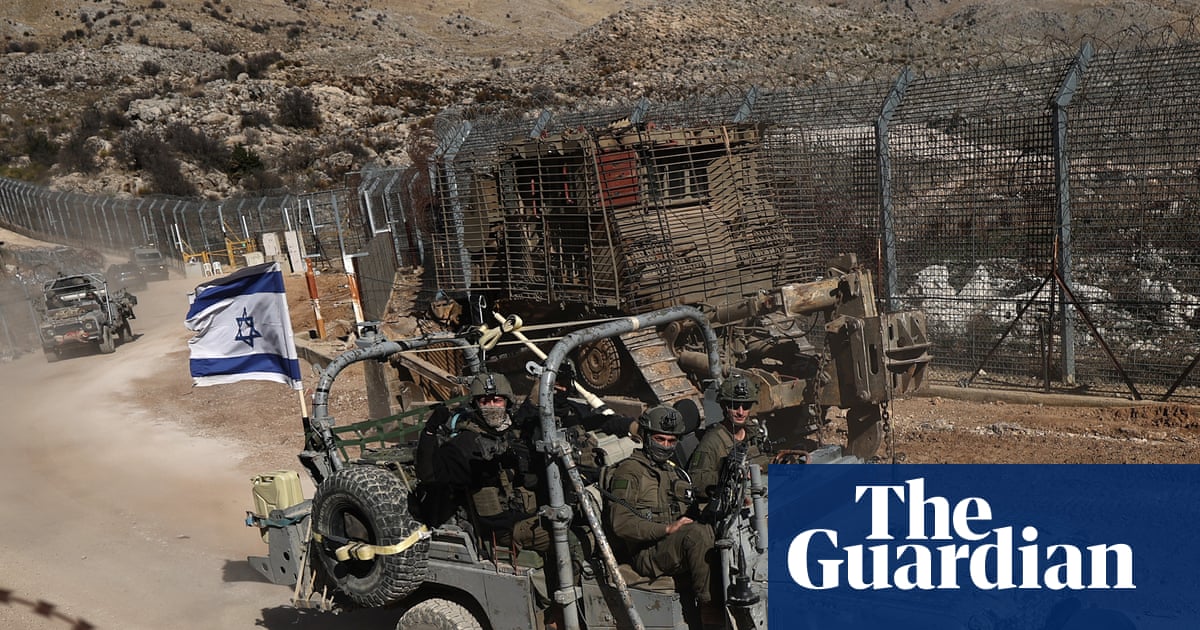
According to The Guardian, Israeli forces moved into southern Syria's Quneitra province on 9 December 2024 and remain deployed a year later.
Residents report increased raids and incursions, and say checkpoints are now run by Israeli soldiers.
The article describes weapon confiscations, the construction of six bases—sometimes involving the bulldozing of homes—night-time raids, phone searches, and frequent arrests of people suspected of links to Iranian militias or Hezbollah.
It also reports a late-November raid in Beit Jinn that reportedly killed at least 13 people, including two children.
Locals say they feel they traded Assad's rule for a military occupation that has upended daily life.
The reporting frames Israel's actions as a significant breach of local sovereignty and a disruption of daily normalcy for residents.
Coverage Differences
Missing comparative sources
Only The Guardian (Western Mainstream) is provided for this request. Because no other sources were supplied, I cannot compare different narratives, tones, or factual variations across source types. The statements in this paragraph are drawn directly from The Guardian’s reporting and are reported as the newspaper describes residents’ accounts and official Israeli explanations. Any claims about Daraa specifically, or wider international reactions not mentioned in The Guardian, cannot be confirmed from the available material.
Detentions and civilian impact
The Guardian reports frequent arrests and detentions by Israeli forces in the occupied Quneitra area.
Locals say some relatives have been detained for months.
Residents describe phone searches, night raids and arrests of people suspected of links to Iranian militias or Hezbollah.
Many of the detentions are tied to Israel's stated security concerns.
The human cost includes fear, disrupted daily life and fatalities in raids such as the Beit Jinn incident.
The article reports that the Beit Jinn raid killed civilians, including children.
Coverage Differences
Missing comparative sources
Because only The Guardian is available, I cannot show contrasting accounts (for example, from Israeli government statements beyond the brief justification or from Syrian or UN statements in other outlets) except for what The Guardian itself reports about Israel’s stated rationale. The Guardian reports Israel’s position — that deployments protect its border and prevent rearmament — but the lack of alternative supplied sources prevents assessing differences in emphasis or language across source types.
Sovereignty and official responses
The Guardian notes Israel’s justification that its deployments "protect its border and prevent the new Syrian government from rearming the area," while also reporting that Syria’s authorities can do little to resist and that UN complaints have had little effect.
This frames the situation as both an asserted security measure by Israel and a de facto breach of Syrian sovereignty in practice, since Syrian institutions reportedly cannot enforce control where Israeli forces are operating.
The piece portrays the occupation as enduring and contested, with on-the-ground consequences for civilian governance and movement.
Coverage Differences
Missing comparative sources
Only The Guardian’s account is available here, including its reporting of Israel’s stated rationale and descriptions of Syrian impotence and limited UN influence. Without other provided sources—such as direct Israeli government briefings, Syrian state releases, UN statements from other outlets, or regional media—it's not possible to contrast the tone (e.g., legal framing, humanitarian language, or security emphasis) across different source types.
Reporting scope and limits
The Guardian’s reporting focuses on Quneitra and cites local testimony and incidents such as the Beit Jinn raid.
The provided snippet does not specifically name Daraa as a site of Israeli deployment.
This creates an important limitation for claims that Israel invaded Daraa because the supplied material documents incursions in Quneitra and Beit Jinn, not Daraa.
Readers should be wary of extending the article’s geographic claims beyond what it explicitly reports.
The article also highlights that UN complaints have had little effect.
That suggests international mechanisms are not reversing the situation, at least as reported by The Guardian.
Coverage Differences
Missed information / Clarification
The Guardian’s text provided mentions Quneitra and Beit Jinn, not Daraa. Because only this single source is available, I must explicitly note that the supplied article does not substantiate an 'invasion of Daraa' and therefore cannot confirm that specific claim. This is a gap between the user’s requested headline and the actual content of the supplied source.
Guardian report on Syria
Based solely on The Guardian's reporting, Israeli forces are described as having entered and remained in parts of southern Syria (Quneitra).
They are said to have erected checkpoints and bases, carried out raids and detentions, and caused civilian harm in incidents like the Beit Jinn raid.
The Guardian reports Israel's stated security rationale but frames the effect as a military occupation that residents say has upended life and led to relatives being detained for months.
Because only this single source is provided, comparisons across different media types and independent verification of locations beyond Quneitra (for example, an 'invasion of Daraa') are not possible here.
That gap should be filled by consulting additional sources for corroboration and wider perspectives.
Coverage Differences
Ambiguity / Lack of multiple-source corroboration
The Guardian provides a detailed local account and cites both resident testimony and Israel’s stated rationale, but without other sources supplied I cannot show how other outlets (West Asian, Western Alternative, Syrian state media, Israeli official releases or UN statements in other reporting) might differ in wording, emphasis, or disputed facts. The lack of multiple supplied sources means we must treat some claims (especially about Daraa) as unverified by the material provided.