Gaza Genocide19 February, 20262 min read
Israel Killed More Than 75,000 Palestinians in First 16 Months of Gaza War, Lancet Study Finds
Lancet study estimates more than 75,000 Palestinians killed violently in Gaza's first 16 months Study estimates at least 25,000 more deaths than Gaza Ministry of Health reported

12 outlets told this the same way.
Outlets did split on Israel Marks Oct. 7 Anniversary With Strikes on Gaza, Netanyahu Faces Election After Nova Tribute →
Anadolu Ajansı was read line by line by the Watchdog: 5.7. See the score →
Gaza mortality survey findings
A peer‑reviewed Lancet Global Health household mortality survey estimates that more than 75,000 people were killed violently in Gaza in the first 16 months of the war (7 Oct 2023–5 Jan 2025). The study interviewed 2,000 representative Gaza households using experienced Palestinian pollsters and found that women, children and older people accounted for roughly 42,200 deaths — about 56% of violent deaths.
“A study published in Lancet Global Health estimates that more than 75,000 people were killed in Gaza in the first 16 months of the war (7 Oct 2023–5 Jan 2025) — at least 25,000 more than the death toll announced by local authorities at the time.”
Indirect deaths from malnutrition and untreated disease added several thousand more. The researchers calculate that between 3–4% of Gaza’s population had been killed violently by 5 January 2025 and stress the sensitivity of the survey and the need for careful interpretation of indirect‑to‑direct death ratios.

Disputed Gaza casualty counts
The Lancet estimate is substantially higher than contemporaneous Gaza Ministry of Health totals for the same period. The study’s central estimate is roughly 25,000 above the ministry figure for early January 2025. AOAV calculates the MoH tally was about 34.7% below the study’s central estimate.
Some outlets note Gaza authorities later reported a higher cumulative toll (over 71,000). A senior Israeli security official told journalists that Gaza health ministry totals were "broadly accurate," even as casualty figures remain contested. One news summary observed that later tallies include deaths recorded after a ceasefire in October 2025, which complicates direct comparisons.

Uncertainty in casualty counts
Co-author Michael Spagat cautioned about sensitivity and margins of error. Independent commentators and media summaries stress uncertainty and warn that a definitive accounting may take years or never be possible. AOAV highlights methodological safeguards, including sampling, weighting and a conservative treatment of missing people.
“Lead author Michael Spagat emphasized the sensitivity of the survey, the importance of Palestinian interviewers, and cautioned against applying a single indirect-to-direct death ratio across different conflicts.”
The authors treated about 12,200 people listed as missing as alive in their main estimates, a conservative choice that could raise totals if many missing are later confirmed dead. Other outlets note that casualty figures remain contested and that public “desensitisation” to the scale adds another political layer to counting the dead.
Demographic impact estimates
Beyond the Lancet survey, other demographic reconstructions reach similar or higher estimates and warn of catastrophic population impacts. The Max Planck Institute’s demographic work is cited as estimating more than 78,000 deaths over a comparable period and documents a steep collapse in life expectancy.
AOAV reports the violent crude death rate implied by the Lancet survey was 33.1 per 1,000 per year and that roughly 3–4% of Gaza’s roughly 2.2 million population had been killed violently by early January 2025. These figures underscore a profound demographic shock concentrated among women, children and the elderly.
Humanitarian and media impacts
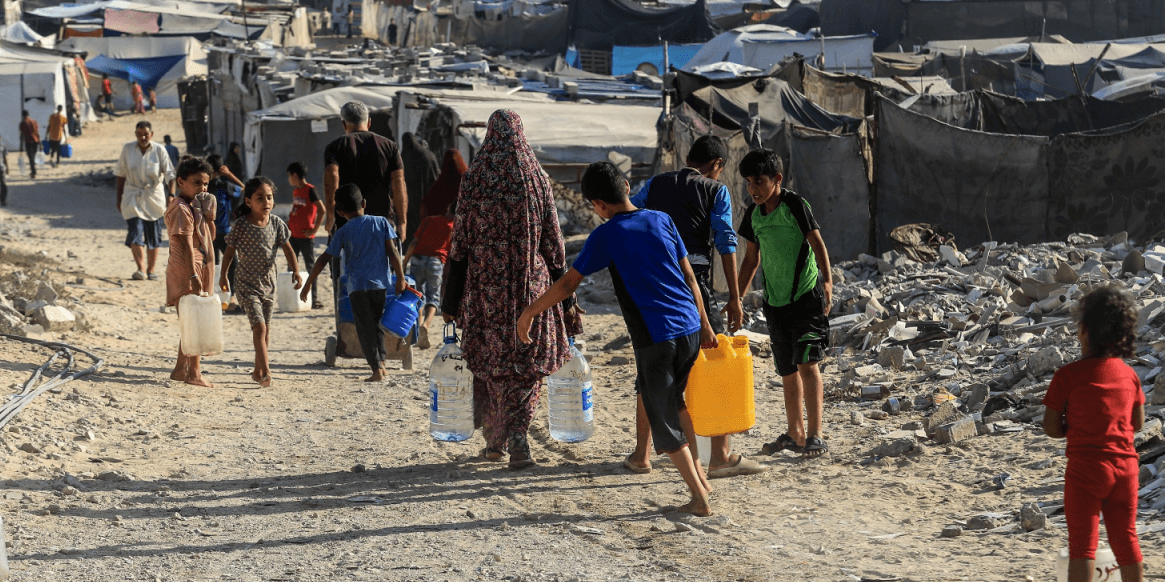
The Lancet study’s findings have immediate humanitarian and political implications. AOAV notes that the survey period ends in early January 2025 and that humanitarian conditions continued to deteriorate afterwards. Famine was declared in parts of Gaza in August 2025.
“Context: humanitarian conditions have continued to deteriorate since the survey, with famine declared in parts of Gaza in August 2025; long-term health consequences will extend beyond the study period.”
Media summaries report political debate over casualty tallies and public fatigue or desensitisation to the figures. Some outlets primarily amplifying the study’s fundraising or platform aims — for example, a Western Alternative outlet’s appeal for reader support — do not add substantive analysis of casualty methodology, which affects how audiences receive and act on the study’s findings.