Gaza Genocide13 February, 20262 min read
Israel Kills 11 Palestinians in Gaza Airstrikes Despite Oct. 10 Ceasefire
Israeli airstrikes killed at least 11 Palestinians across northern and southern Gaza Tent encampment in Jabalia was struck, killing at least four displaced civilians

40 outlets told this the same way.
Outlets did split on Israel Marks Oct. 7 Anniversary With Strikes on Gaza, Netanyahu Faces Election After Nova Tribute →
Haaretz was read line by line by the Watchdog: 8.3. See the score →
Gaza airstrikes and responses
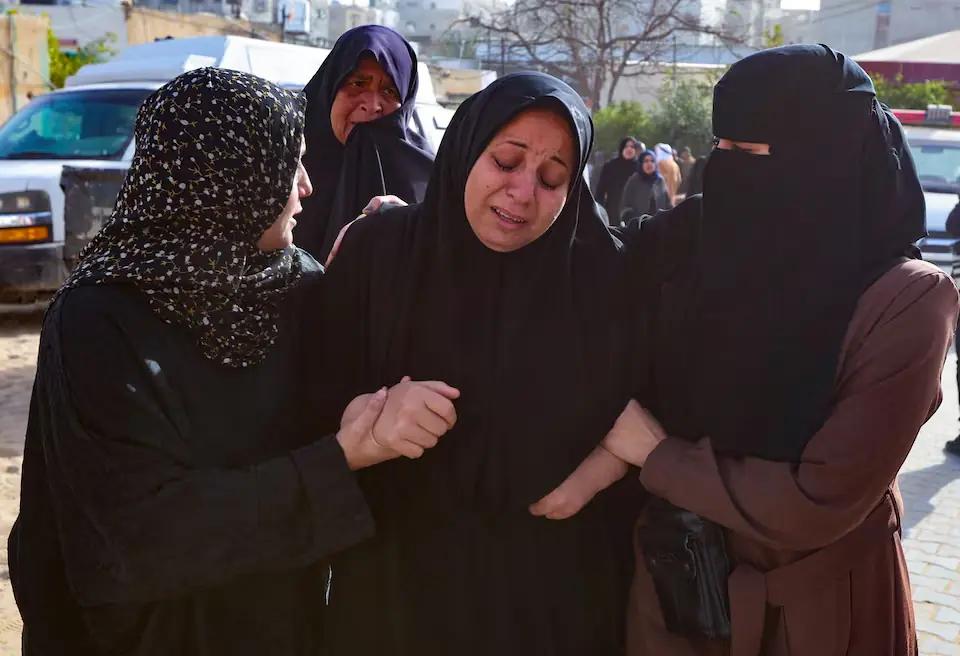
Israeli airstrikes across the Gaza Strip on Sunday killed at least 11 Palestinians, according to multiple Gaza health and civil defence sources. Reported deaths included four people at a tent encampment for displaced families, five in Khan Younis, and other casualties in the north and Tel Al-Hawa. Israel said it also struck a building it claimed housed an Islamic Jihad commander.
“On Feb. 15, Israeli airstrikes across the Gaza Strip killed at least 11 people, including four at a tent encampment for displaced families, five in Khan Younis and one person shot in the north; Israeli aircraft also struck a Tel Al‑Hawa building Israel said housed an Islamic Jihad commander.”
Israel described the strikes as "precise" responses to alleged violations of the October ceasefire and said militants had emerged armed from a tunnel past the agreed "yellow line." Gaza medics and relatives described the hits as deadly attacks on displaced civilians. The incident occurred days before a Washington meeting tied to President Trump’s new Board of Peace and reconstruction planning for Gaza.
Ceasefire breaches and claims
The Israeli military explicitly tied the strikes to alleged ceasefire breaches, saying militants had been seen emerging from tunnels past the agreed "yellow line" and describing the operations as "precise" responses. Israeli statements framed the actions as lawful counter-measures against armed fighters and tunnel use, while international and regional outlets noted that the military provided no publicly available evidence for some of those claims. Several reports also say Israel has at times moved the "yellow line" deeper into Gaza, a unilateral change that further complicates monitoring of alleged violations.
Gaza truce violations report
Gaza's Hamas-run health ministry and medics said Israeli fire has killed roughly 600 people since the Oct. 10 truce.
They condemned the latest strikes as violations of the ceasefire and described the attack as a "massacre" when civilians in tents were hit while sleeping.
Humanitarian and medical organizations reported disruptions to services.
Doctors Without Borders said it suspended non-critical operations at Nasser Hospital after patients and staff reported armed masked men moving through parts of the facility.
Gaza officials are urging international participants in the Washington Board of Peace meeting to press Israel to stop what they call repeated breaches of the truce.
Gaza humanitarian impact
The broader humanitarian toll remains enormous. Multiple outlets cite Palestinian and U.N. figures that place total deaths since the wider Gaza campaign began in October 2023 at roughly 72,000. Those sources also estimate massive infrastructure destruction and multibillion‑dollar rebuilding needs.
Al Jazeera and other regional outlets underscore that strikes and fighting continue despite the ceasefire. UN estimates of reconstruction costs and the scale of damage have been repeatedly referenced in coverage of reconstruction planning tied to the Board of Peace.

International response to Gaza plan
Diplomatic efforts and the new Board of Peace are at the centre of international responses. U.S. officials and President Trump’s Board plan to unveil a multibillion‑dollar Gaza reconstruction plan and proposals for a U.N.-authorized stabilization force at a Washington meeting, with the U.S. and the UAE pledging significant funding and delegations from more than 20 countries expected to attend. Coverage differs on the board’s mandate and reception: some reports stress the board’s role in reconstruction and stabilizing Gaza under U.N. authority, while others highlight controversy over requirements for Hamas disarmament and questions about membership fees or invitations to leaders like Vladimir Putin.
“A new international board set up under President Trump’s Gaza plan and backed by a U.N. Security Council resolution will hold its first full meeting in Washington on Feb. 19. U.S. officials plan to unveil a multibillion-dollar Gaza reconstruction plan and proposals for a U.N.-authorized stabilization/peacekeeping force.”