Gaza Genocide31 January, 20262 min read
Israel Kills 12 Palestinians, Including Women and Children, in Gaza Strikes
This article is an automated aggregation of coverage from news outlets. Our editorials offer in-depth analysis curated by the NewsCord team.
Israeli airstrikes killed at least 12 Palestinians, including women and children. Strikes hit northern and southern Gaza, including a Gaza City apartment and Khan Younis tent.

5 outlets told this the same way.
Outlets did split on Thousands March in London Calling for Britain to Stop Arming Israel and Impose Sanctions →
The Guardian was read line by line by the Watchdog: 2.1. See the score →
Gaza civilian casualties report
Israeli strikes early Saturday killed at least 12 Palestinians in Gaza, including women and children, hospitals reported. Hospitals said the strikes hit an apartment in Gaza City and a tent camp in Khan Younis. Shifa Hospital said the Gaza City strike hit an apartment and killed a mother, three children and a relative.
“At least 12 Palestinians — including women and children — were killed in Israeli strikes Saturday in Gaza City and Khan Younis, hospital officials said.”
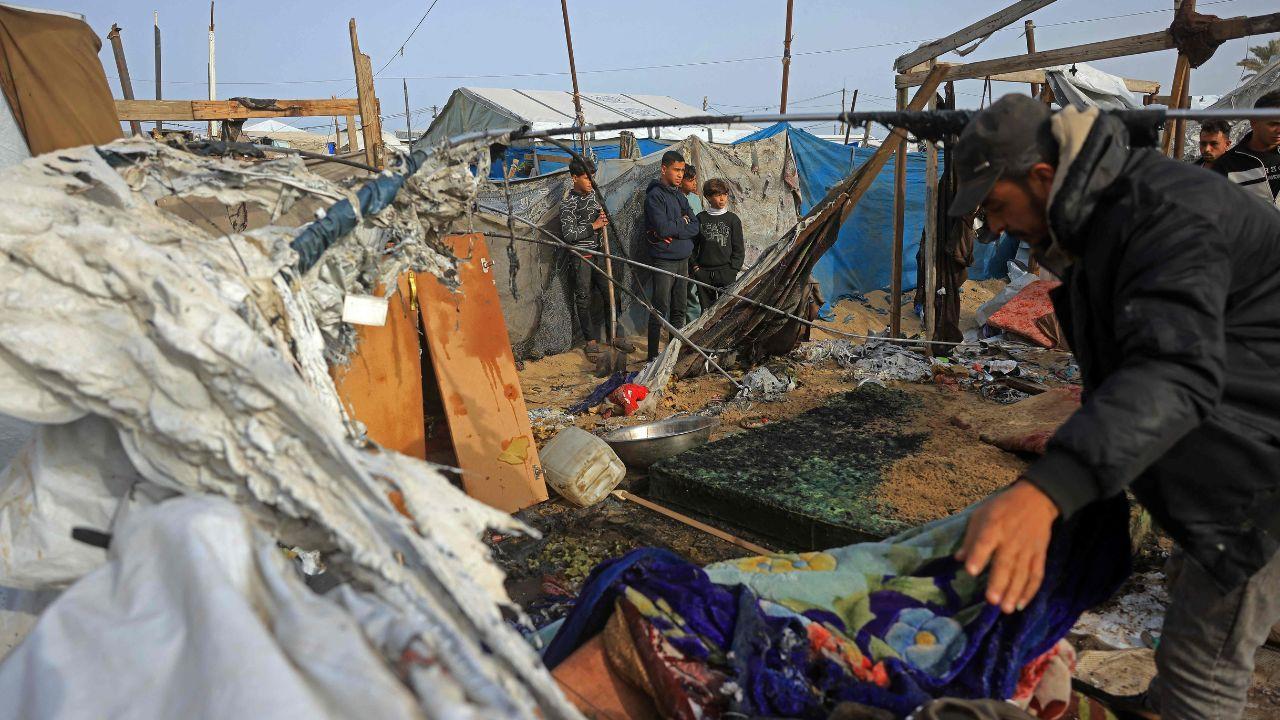
Nasser Hospital said a strike on the Khan Younis tent camp sparked a fire that killed seven people. Multiple outlets described the violence as one of the deadliest days since the October ceasefire agreement. Israel's military did not immediately comment or respond to requests for comment.

Civilian casualties in Gaza
Hospitals provided specific, harrowing details: Shifa said the Gaza City strike killed a mother, three children and a relative; Nasser said the Khan Younis tent fire killed seven people — a father, his three children and three grandchildren.
Reports described the victims as including two women and six children from two families, underscoring that Israel's strikes killed civilians, including entire family groups.
Gaza casualty reporting
Outlets cite Gaza’s Health Ministry as counting more than 500 Palestinians killed by Israeli fire since the October ceasefire began.
“Gaza’s Health Ministry, part of the Hamas-led government but whose records are regarded as generally reliable by UN agencies and experts, says more than 500 Palestinians have been killed by Israeli fire since the ceasefire began.”
One report cited a broader tally of casualties and alleged violations since Oct. 11.
These figures are presented alongside hospital statements and are framed as official Gaza Health Ministry counts.
Mid-day explicitly notes the ministry is part of the Hamas-led government, but UN agencies and experts regard its records as generally reliable.
No immediate military comment
Reports say Israel's military did not immediately respond to requests for comment, leaving hospital accounts and ministry tallies as the primary sources attributing the killings to Israeli strikes. Mid-day states bluntly that 'Israel's military did not immediately comment.'
The Hindu similarly reports that 'Israel's military did not immediately respond to requests for comment.' Siasat also reports no immediate response from Israeli forces.

Siasat's humanitarian context
Siasat adds further context about continued humanitarian strain, noting that the casualties came as a southern border crossing was due to open while crossings largely remain closed, underscoring urgent needs on the ground beyond the immediate strikes.
“The casualties came as a southern border crossing is due to open, underscoring continuing humanitarian needs while crossings largely remain closed.”
That detail is present in Siasat's coverage but not in the Mid-day or The Hindu snippets, indicating Siasat included broader humanitarian and operational context in its report.