Gaza Genocide04 February, 20263 min read
Israel Kills at Least 21 Palestinians in Gaza in One of Deadliest Days Since Ceasefire
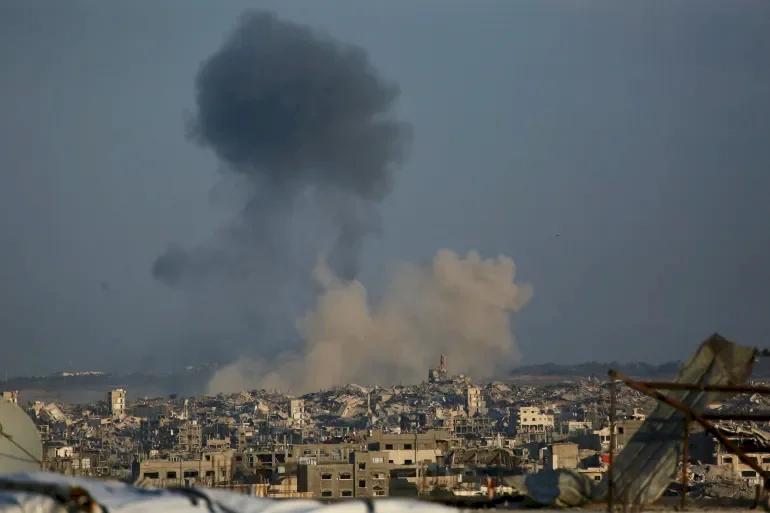
Israeli airstrikes and shelling killed at least 21 Palestinians, including six children and a medic. Patient evacuations through Rafah crossing were halted after briefly reopening.
24 outlets told this the same way.
Outlets did split on Israel Marks Oct. 7 Anniversary With Strikes on Gaza, Netanyahu Faces Election After Nova Tribute →
Al Jazeera was read line by line by the Watchdog: 3.2. See the score →
Deadly Gaza strikes
At least 21 Palestinians were killed across Gaza on Wednesday in strikes and shootings, medical sources and local hospitals said. Sources described the day as one of the deadliest since a U.S.-brokered ceasefire began nearly four months ago. Al Jazeera reported that at least 21 Palestinians were killed across the Gaza Strip on Wednesday, citing medical sources.
“At least 21 Palestinians were killed across the Gaza Strip on Wednesday, one of the deadliest days since a U.S.-brokered ceasefire began nearly four months ago, medical sources told Al Jazeera.”
Middle East Eye said the strikes and shootings killed at least 21 Palestinians, including three children. El País reported that Israeli strikes since early Wednesday killed at least 21 Palestinians, including six minors, one a five-month-old.

Israeli outlets gave slightly lower counts; Haaretz said strikes killed about 20 people, including several children. Reports consistently say homes and tent camps were hit and that civilians, including paramedics and children, were among the dead.
Israeli strikes and casualties
Reports describe Israeli tank shells and airstrikes hitting residential neighbourhoods and tents sheltering displaced people. Al Jazeera named the Tuffah and Zeitoun neighbourhoods and tent camps in Qizan Abu Rashwan and al-Mawasi as among the sites hit. Witnesses and medical sources said several children and a paramedic were among the dead.
Al Jazeera said the shelling killed at least 14 people, including several children, and struck tents sheltering displaced people in Qizan Abu Rashwan and al-Mawasi. Middle East Eye and The Guardian described tents in al-Mawasi and other displaced-persons encampments shredded by strikes and said homes were hit without warning. Siasat and Daijiworld reported large family losses and paramedic deaths in Tuffah.

Rafah evacuation coordination
The Palestinian Red Crescent, medical authorities and multiple outlets reported that Israel cancelled coordination for patient evacuations through the Rafah crossing after the attacks, leaving sick and wounded Palestinians waiting in ambulances and hospitals. Al Jazeera said the Palestine Red Crescent reported Israel cancelled coordination for a third group of sick and wounded Palestinians to be evacuated through Rafah, while Israel's COGAT said the WHO had not provided the required coordination details.
“The Palestinian Red Crescent said coordination to move patients and the wounded through the Rafah crossing was cancelled after Wednesday’s attacks.”
Middle East Eye and RTE similarly reported cancellations and confusion. Al-Monitor said Palestinian health officials reported halted evacuations, while COGAT insisted the Rafah crossing remained open but lacked WHO coordination details.
Gaza casualties coverage
Coverage diverges sharply on the broader scale of killing since the October 2023 hostilities and the characterization of Israel’s conduct.
Palestinian health authorities and several West Asian outlets describe a massive toll and use the term genocide for the two‑year campaign they say the ceasefire aimed to halt.

Tehran Times said the ceasefire paused a two‑year genocide in Gaza that it said had killed roughly 71,000 Palestinians.
Al‑Jazeera Net reported about 72,000 Palestinians killed and more than 171,000 wounded, and described the war as initiated by Israel.
Middle East Eye and ARN News Centre cited Gaza health ministry figures of at least 529 killed since the ceasefire and about 1,500 wounded.
Western mainstream outlets such as The Guardian and El País reported hospital tallies of more than 556 fatalities since the ceasefire and noted unresolved political issues tied to the truce.
Israeli and some Western-alternative sources also note Israeli casualties from militant attacks, with Israeli tallies putting the Oct. 7 attack deaths at roughly 1,200 and reporting several soldiers killed since the ceasefire began.
Media coverage contrasts
Different outlets place emphasis on legal and political consequences in contrasting ways. Al Jazeera notes that rights groups and a UN inquiry have described Israeli actions in Gaza as genocide and that a case is pending against Israel at the International Court of Justice. The Tehran Times accuses Israel of repeatedly violating the ceasefire with dozens of air strikes and calls that conduct part of a two‑year genocide.
“Rights groups and a UN inquiry have described Israeli actions in Gaza as genocide, and a case is pending against Israel at the International Court of Justice.”
Haaretz, an Israeli source, focuses on internal Israeli developments, reporting an IDF reserve officer was wounded, arrests and smuggling charges. Haaretz also quotes Defense Minister Israel Katz saying Israel will dismantle Hamas and fully demilitarize Gaza if Hamas refuses to disarm. Western mainstream outlets, including The Guardian and El País, stress the fragile truce's disputed second phase and the halted evacuations at Rafah.

These differences show divergent priorities. West Asian outlets emphasize humanitarian catastrophe and genocide allegations; Israeli media highlight security and domestic legal actions; and Western mainstream coverage centers on the fragile politics of the truce and operational developments.