Full Analysis Summary
Ceasefire impact in Gaza
During the two-month ceasefire, Israeli strikes killed hundreds of Gazans.
The ceasefire's supposed protections and reconstruction promises failed to materialize, leaving many residents displaced and exposed to winter conditions.
Displaced resident Abu Ahmad told reporters the ceasefire "has brought few real improvements" and said he and many others remain in tents exposed to winter weather, illustrating that life-saving reconstruction and shelter have not arrived even as deaths continued.
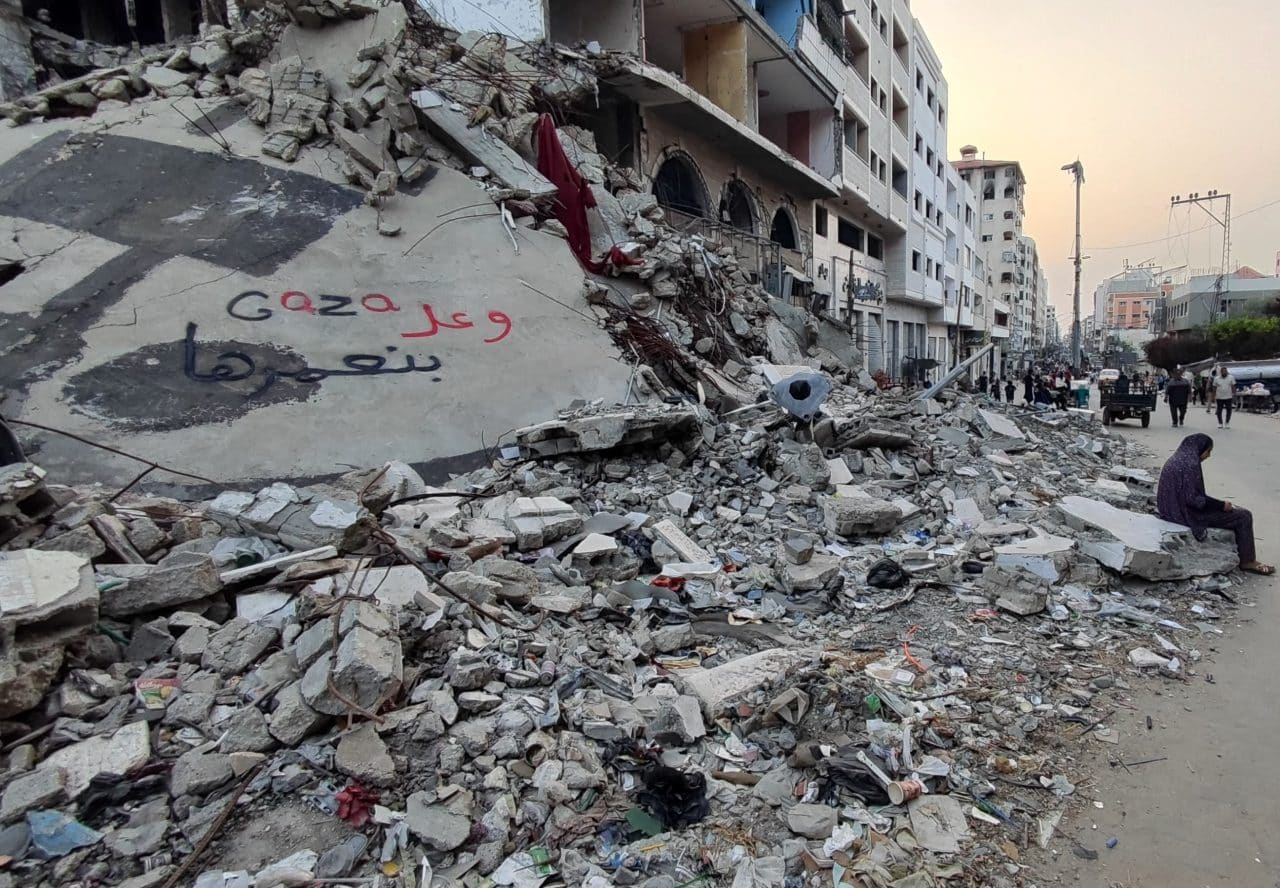
UN estimates and local reports highlight massive destruction across Gaza: about 70% of housing partly or fully destroyed, 95% of schools in rubble, 85% of water and sewage facilities damaged, and 25 hospitals out of service.
Residents and organizers described the insufficient flow of aid and materials as a "new form of genocide," directly accusing Israeli actions and policies of producing systematic civilian suffering during the ceasefire.
Coverage Differences
Missing comparative sources
Only Mondoweiss (Western Alternative) is provided here, so no direct comparison with other source types (e.g., Western Mainstream or West Asian) can be made. Therefore, differences in narrative, tone, or omission across source types cannot be validated from the available materials. The text below therefore reports Mondoweiss’s own framing and quotes rather than contrasting it with other outlets.
Aid shortfall in Gaza
Humanitarian aid and reconstruction materials arrived far below the amounts agreed in the ceasefire.
International pledges, including U.S. proposals to reshape Gaza and an Egyptian-led conference estimating $70 billion in needs, have not translated into on-the-ground rebuilding.
These commitments have produced little rebuilding and no clear mechanisms or timelines.
The shortfall left civilians exposed and reliant on sparse assistance while Israeli actions and blockade-like restrictions limited meaningful recovery.
Residents characterize this combination of shortages and restrictions as part of systematic harm amounting to "a new form of genocide."
Coverage Differences
Missing comparative sources
Because only Mondoweiss material is available, it is not possible to contrast how other outlets portray the effectiveness of international pledges or attribute responsibility for aid shortfalls. Mondoweiss attributes continued civilian suffering to the gap between pledges and reality and highlights residents’ characterization of these conditions as genocidal.
Gaza rebuilding efforts
Local civic and municipal efforts have risen to confront the devastation, while Israeli military actions left heavy machinery and public capacity crippled.
Mondoweiss reports that Gaza's Municipality launched a grassroots "We'll Rebuild It Again" (or "Let's Rebuild") campaign on Nov. 15 to mobilize youth, civil organizations, and diaspora groups for sanitation, rubble clearing, road repairs, and small-scale home fixes, signaling community attempts to respond to killings and destruction.
Organizers report volunteers are working with basic tools because about 85% of municipal heavy and medium machinery was damaged during the war, limiting the scope of local rescue and rebuilding efforts.
This limited equipment has constrained rebuilding even as civilians continued to die and suffer.
These grassroots efforts underscore that, while international pledges stagnated, local actors have been forced to respond to destruction that Mondoweiss attributes to Israeli military operations.
Coverage Differences
Missing comparative sources
With only Mondoweiss available, we cannot compare how different source types represent grassroots rebuilding or the extent to which local initiatives are credited versus international actors. Mondoweiss emphasizes local municipal action in the face of damaged machinery and insufficient international rebuilding.
Coverage of civilian harm
Mondoweiss frames the civilian toll and infrastructure devastation during the ceasefire as evidence of a systematic campaign of harm.
The piece cites residents who call the combined effect of continued killings, blocked aid, and stalled reconstruction a 'new form of genocide'.
It links those descriptions to United Nations humanitarian statistics that document widespread destruction and nonfunctioning hospitals.
By reporting residents' claims and United Nations figures, Mondoweiss frames Israeli military conduct and policy during the ceasefire as responsible for mass civilian suffering.
Coverage Differences
Missing comparative sources
Because no other outlets are provided, we cannot contrast Mondoweiss’s use of strong language like 'genocide' with how other source types describe the same events. The current material explicitly reports residents’ characterization and UN data but comparison with mainstream or regional outlets is not possible from the available dataset.
Gaza recovery and accountability
The reporting underscores uncertainty and constrained agency for Gazans despite ceasefire declarations.
Residents have faced sustained civilian deaths, destroyed services, and limited access to reconstruction.
Local organizing has arisen to address immediate needs while international pledges have not cleared the path to recovery.
Mondoweiss documents that international pledges, including an Egyptian-led $70 billion rebuild estimate and donor commitments, have not translated into clear timelines or sufficient materials.
Volunteers have been left to clear rubble and repair basic services while many residents remain displaced.
Given the single-source reporting, the article's tone is firm and accusatory toward Israeli responsibility for the scale of civilian suffering and frames the situation in terms of potential or actual genocide as described by residents.
Coverage Differences
Missing comparative sources
Only Mondoweiss coverage is available for analysis, so the extent to which other outlets might characterize the same facts differently (e.g., attributing deaths differently, using softer language, or emphasizing different actors) cannot be assessed. The current source assigns direct responsibility to Israeli actions and reports residents’ description of genocidal conditions.