Israel Kills Iran's Intelligence Minister
Key Takeaways
- Israel killed Iran's Intelligence Minister Esmaeil Khatib in an airstrike.
- Iranian President Masoud Pezeshkian confirmed the killing and condemned it as cowardly.
- Third high-ranking Iranian official killed in two days.
Assassination Confirmation
Israeli forces assassinated Iran's Intelligence Minister Esmail Khatib overnight, marking the third elimination of a high-ranking Iranian official in two days.
“Iranian President Masoud Pezeshkian has confirmed that Israel killed Intelligence Minister Esmail Khatib in an overnight attack, marking the third assassination of a high-ranking Iranian official in two days”
The assassination represents a significant escalation in the ongoing conflict between Israel and Iran.

Iranian President Masoud Pezeshkian confirmed the killing in a public statement.
Pezeshkian condemned what he called the 'cowardly assassination of my dear colleagues' and expressed that their deaths left the nation 'heartbroken.'
The Israeli military, through Defense Minister Israel Katz and IDF spokesperson Effi Defrin, publicly claimed responsibility for the operation.
Israel framed the killing as part of their campaign to degrade Iran's military capabilities and leadership structure.
Khatib was described as a top cleric with the title 'Proof of Islam' and one of Iran's most influential intelligence figures.
He was considered a trusted advisor close to Iran's new supreme leader Mojtaba Khamenei.
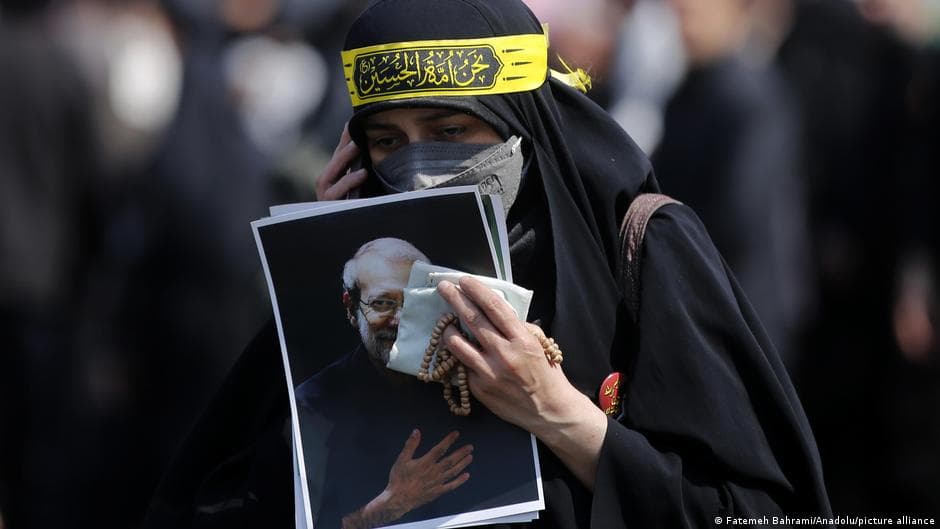
The assassination follows the killings of security chief Ali Larijani and Basij paramilitary leader Gholamreza Soleimani.
These killings indicate a systematic Israeli strategy to target Iran's top echelon.
Systematic Elimination Strategy
The assassination of Khatib occurs within a broader Israeli strategy of systematically eliminating Iranian leadership.
Israeli Defense Minister Israel Katz announced that he and Prime Minister Benjamin Netanyahu had given the military standing authorization to eliminate other senior Iranian officials without case-by-case approval.
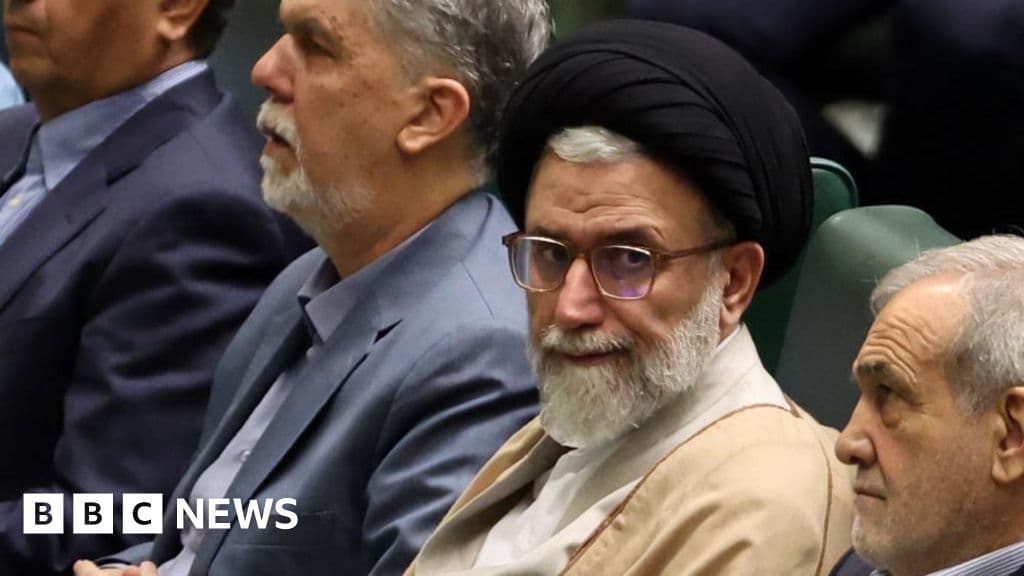
Israeli military analysts regard Khatib as having been a central figure in Iran's intelligence apparatus.
Khatib's capabilities were described as 'advanced intelligence capabilities' that served as 'a central arm in supervising, spying, and executing covert operations worldwide.'
According to Israeli officials, Khatib's network 'targeted current and former US officials, including President Donald Trump,'
An Israeli official claimed 'This man had American blood on his hands.'
The coordinated nature of these assassinations, targeting Larijani, Soleimani, and now Khatib within a 48-hour period, demonstrates Israel's determination to weaken Iran's governance structures.
These killings represent Israel's strategy to significantly weaken Iran's security structures at the highest levels.
Energy Infrastructure Attacks
In response to Khatib's assassination, Iran has vowed revenge and warned of potentially 'uncontrollable consequences' for attacks on its critical infrastructure.
“Sonam Wangchuk strikes conciliatory note, opens door to ‘give and take’ on Ladakh 'Cannot support Iran war': Joseph Kent resigns as head of US National Counterterrorism Center IAS stands for 'I Am Sorry': LoP Ashoka in Karnataka Assembly First spell of pre-monsoon showers across Karnataka; hailstorm in Bengaluru Father-son duo held for Rs 80-lakh computer shop theft in Bengaluru; wore burqas to conceal identity Karnataka High Court grants bail to woman arrested for raising ‘Jai Bangla’ slogan War, weak footfall hit festive sales in Bengaluru Ugadi special trains from Bengaluru to Belagavi, Hubballi, Vijayapura, Hosapete & Goa Follow Us : 🔴ELIMINATED: Esmaeil Khatib, the Iranian terrorist regime Minister of Intelligence, in a targeted strike in Tehran”
Iranian President Masoud Pezeshkian issued stark warnings after Israeli airstrikes targeted the South Pars gas field.
Pezeshkian stated 'This will complicate the situation and could have uncontrollable consequences, the scope of which could engulf the entire world.'
The attacks on energy infrastructure represent a significant escalation in the conflict.
Iran retaliated by listing prominent regional oil and gas sites belonging to Saudi Arabia, the UAE and Qatar as 'direct and legitimate targets.'
These sites were warned to be evacuated before potential strikes.
The conflict has already impacted global energy markets, with Brent crude futures surging to nearly $110 a barrel.
Qatar condemned missile strikes on its Ras Laffan liquefied natural gas facility as a 'direct threat to its national security.'
German Chancellor Friedrich Merz expressed concerns about the lack of consultation and planning behind the U.S.-Israeli war on Iran.
Multi-Front Escalation
The assassination of Khatib has further escalated military operations across multiple fronts.
Israel has conducted extensive strikes against Iranian targets and expanded ground operations in Lebanon.
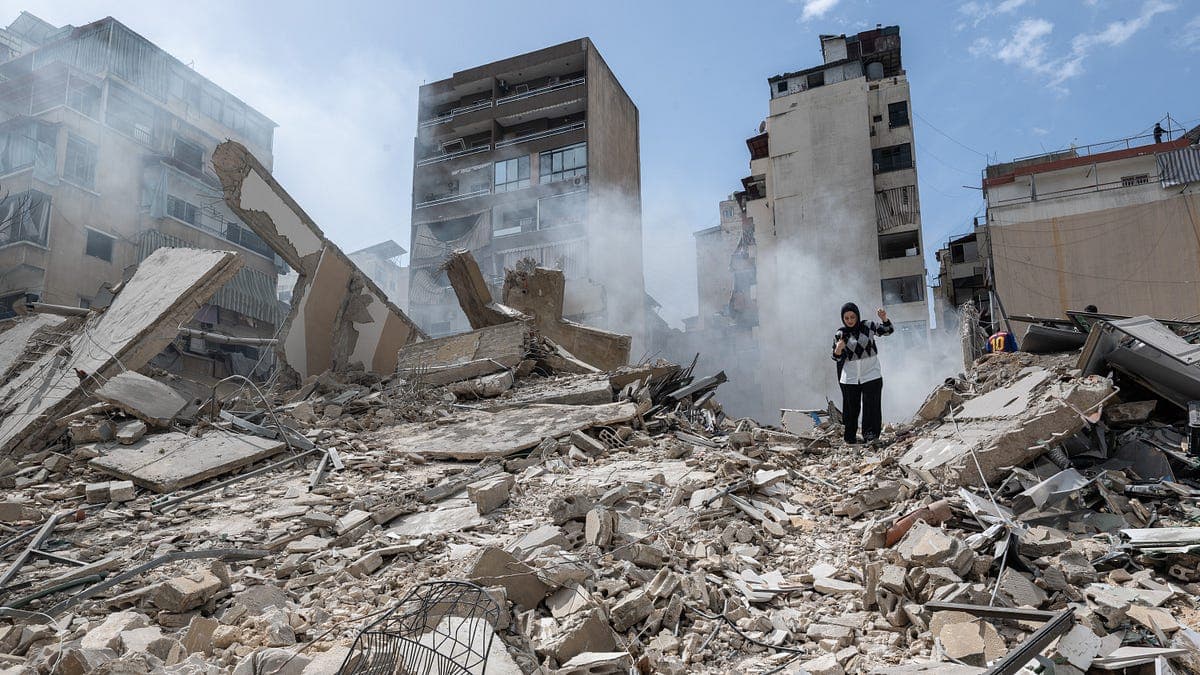
The Israeli military reported striking more than 200 targets in Iran over the past day.
These targets included sites tied to ballistic missiles, drone operations, air defense systems, and weapons production facilities.
In Lebanon, Israeli troops have expanded ground operations targeting Hezbollah positions.
Forces from the 36th Division are conducting 'limited, targeted ground activity toward additional objectives in southern Lebanon.'
The conflict has resulted in significant casualties, with Lebanon's Health Ministry reporting at least 912 deaths since March 2.
This includes 111 children, with over 2,221 wounded.
On Wednesday alone, at least 27 people were killed in Israeli airstrikes across Lebanon.
Hezbollah has responded with rocket attacks, including firing a projectile more than 200 kilometers into Israel's south.
International Response
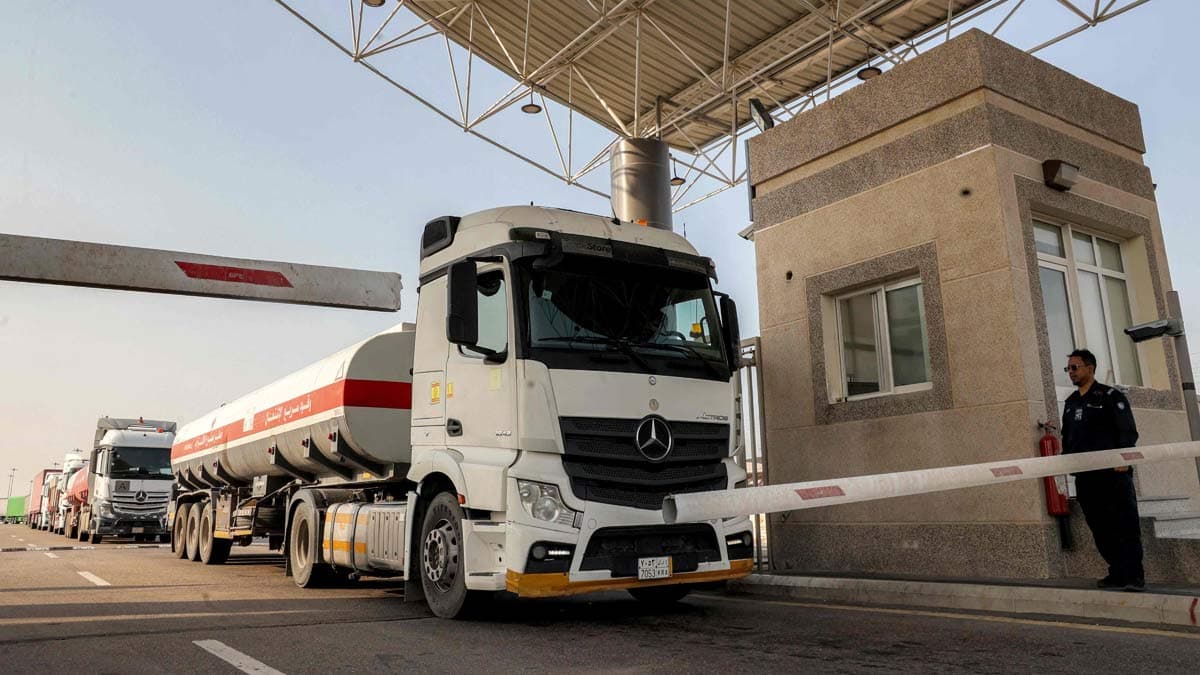
The European Union's top diplomat, Kaja Kallas, urged Iran to guarantee safe passage through the Strait of Hormuz.
Kallas 'called on Iran to cease all attacks on critical infrastructure in the region,' while stressing that 'the EU supports de-escalation and a diplomatic solution to the war.'
In contrast, the United States has significantly increased its involvement in the conflict.
Ukrainian President Volodymyr Zelensky announced that Kyiv has deployed military experts to the Middle East to help U.S. allies defend against Iranian drones.
Zelensky stated that 201 Ukrainians are already in the Middle East and Gulf region, with additional teams ready to deploy.
The United Nations has expressed grave concerns about the conflict's potential consequences.
International Atomic Energy Agency (IAEA) head Rafael Grossi warned that a projectile strike near Iran's Bushehr nuclear power plant risked crossing the 'reddest line' of nuclear safety.
Grossi noted that 'an accident on an operating nuclear power plant would be something very, very serious.'
More on Iran

Israel strikes Iran's Pars gas field as Tehran vows revenge
14 sources compared
Trump threatens to blow up South Pars gas field if Iran attacks Qatar again
10 sources compared
UAE Halts Habshan Gas Facility Operations After Debris From Intercepted Missiles
10 sources compared

Iran Threatens Gulf Energy Facilities After Israel Strikes South Pars Gas Field
11 sources compared