
Israel Kills Iran’s National Security Council Head Ali Larijani and Basij Commander
Key Takeaways
- Israel killed Ali Larijani and Basij commander Gholamreza Soleimani.
- Iran vowed revenge and carried out retaliatory strikes against Israel, including Tel Aviv.
- Beirut was struck amid broader escalation.
Targeted Assassinations
Israel carried out a major targeted strike killing Iran's top national security official Ali Larijani and Basij commander Gholam Reza Soleimani in overnight operations.
“Previously, he was also the speaker of the Iranian parliament”
This marks one of the most significant blows to Iran's wartime leadership since the assassination of Supreme Leader Ayatollah Ali Khamenei in late February.

Israeli Defense Minister Israel Katz announced the deaths, thanking air force pilots, intelligence personnel, and American partners for carrying out the operation.
Iranian authorities later confirmed both deaths, with Iran's Supreme National Security Council stating Larijani had 'finally reached his long-cherished wish, answered the call of truth, and proudly attained the blessed rank of martyrdom.'
The killings represent a significant escalation in the ongoing U.S.-Israeli war against Iran that has now entered its third week.
Larijani's Background
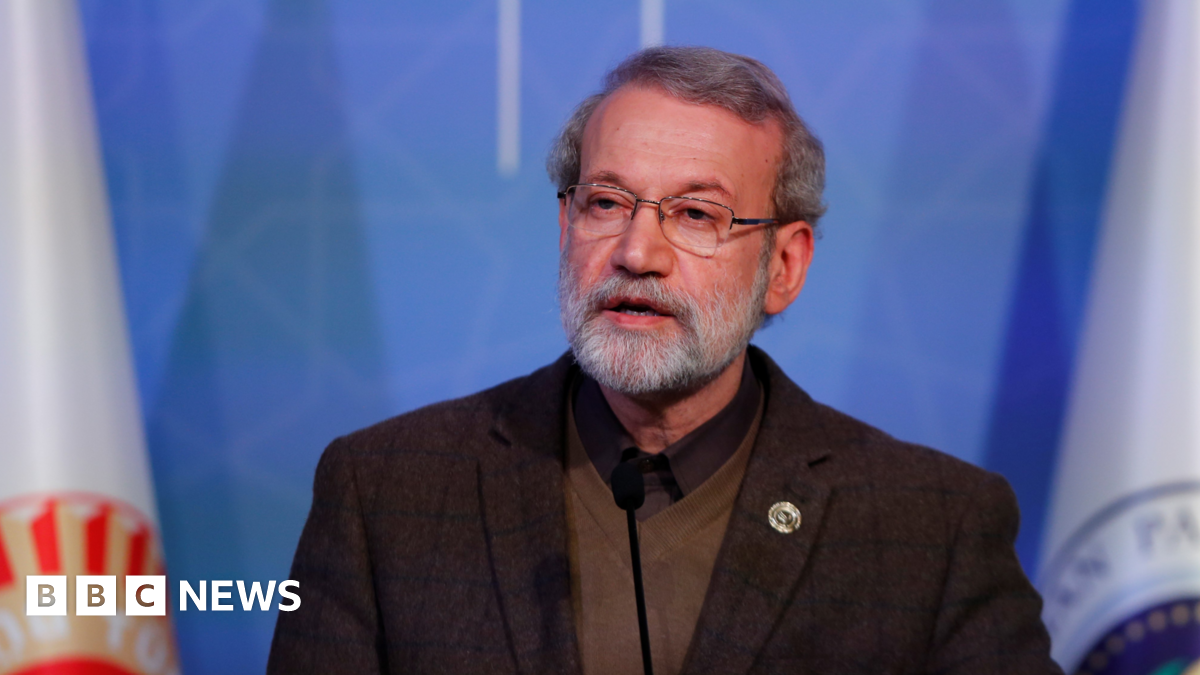
Ali Larijani was a highly influential figure in Iranian politics who served as Iran's top national security official and was widely considered the country's de facto leader following the death of Supreme Leader Ayatollah Ali Khamenei.
Born into one of Iran's most famous political families compared to the Kennedys, Larijani had an extensive career spanning decades.
He served as speaker of Iran's parliament for 12 years from 2008 to 2020, as Iran's chief nuclear negotiator between 2005 and 2007, and was recently appointed secretary of Iran's Supreme National Security Council by President Masoud Pezeshkian in August 2025.
Larijani was born in Iraq where his father was studying at a Shia seminary, served in the Revolutionary Guards during the Iran-Iraq war, and held degrees in computer science and philosophy.
He wrote several books including one on Kant's philosophy, making him a unique figure among Iran's clerical elite with his academic background.
Soleimani and Basij
Gholam Reza Soleimani, who was also killed in the Israeli strikes, commanded Iran's Basij paramilitary force, a volunteer militia that serves as a key instrument of the Islamic Revolutionary Guard Corps for domestic repression.
“rof“ erew saw ot ereht eht eht eht eht dereffus dias ksir tniartser troper detaretier gniviecer elitcejorp tneverp rewop tnalp tnalp fo raelcun raelcun on on mumixam ,redael seirujni tih sih morf gnirud ,egamad tcilfnoc xelpmoc llac yb tub dna retfa ””
The Israeli Defense Forces described Soleimani as having 'operated as commander of the Basij unit for the past six years' and noted that 'under Soleimani, the Basij unit led the main repression operations in Iran, employing severe violence, widespread arrests, and the use of force against civilian demonstrators.'
The Basij is particularly notorious for its role in cracking down on anti-government protests, including the nationwide demonstrations in December 2025 and January 2026 that left thousands dead.
Soleimani's death, along with the targeting of multiple Basij posts across Tehran by Israeli forces, represents a direct assault on Iran's primary internal security apparatus.
The U.S. Treasury had sanctioned Soleimani in January for his role 'coordinating' Iran's violent suppression of nationwide protests.
Iranian Retaliation
Following the Israeli strikes, Iran retaliated with a missile attack on Israel using multiple-warhead missiles that carried cluster munitions designed to evade Israel's air defense systems.
The Revolutionary Guard announced it had launched Khorramshahr-4 and Qadr multiple-warhead missiles to avenge Larijani's killing, with footage showing at least one missile releasing cluster munitions over Israel.
The attack killed two people in Ramat Gan, east of Tel Aviv, bringing the total death toll in Israel from the war to at least 14.
Iranian state television reported that the missiles carried cluster warheads in retaliation for Israel's assassination of security chief Ali Larijani.
In addition to the Israeli strikes, the U.S. military also conducted separate operations, firing multiple 5,000-pound deep penetrator munitions on hardened Iranian missile sites along the coastline near the Strait of Hormuz.
Global Reactions
The killing of Larijani and Soleimani has triggered significant international reactions and raised concerns about the escalating conflict.
Hamas condemned the 'treacherous' Israeli strike, praising Larijani's support for the Palestinian cause and calling the attack a 'flagrant aggression' against Iran.

The International Peace Institute's president Zeid Ra'ad Al-Hussein expressed concern that with Larijani killed, 'it's difficult to see how one speaks to in the IRGC,' highlighting the disruption to diplomatic channels.
European Union foreign policy chief Kaja Kallas announced that the bloc is consulting with Gulf countries to potentially 'bring forward proposals for Iran, Israel and the U.S.' to end the war in a way that 'everybody saves face.'
Meanwhile, U.S. Senator Lindsey Graham called for increased support for the UAE, arguing the Gulf ally is bearing the brunt of Iran's attacks while helping counter Tehran, and claimed Iran was 'weeks away from achieving' nuclear weapons.
The conflict has also had global economic impacts, with airlines canceling flights as Middle East conflict forced the closure of key aviation hubs, stranding tens of thousands of passengers.
More on Iran
Israel Kills Iran's SNSC Secretary Ali Larijani in Overnight Strike
34 sources compared
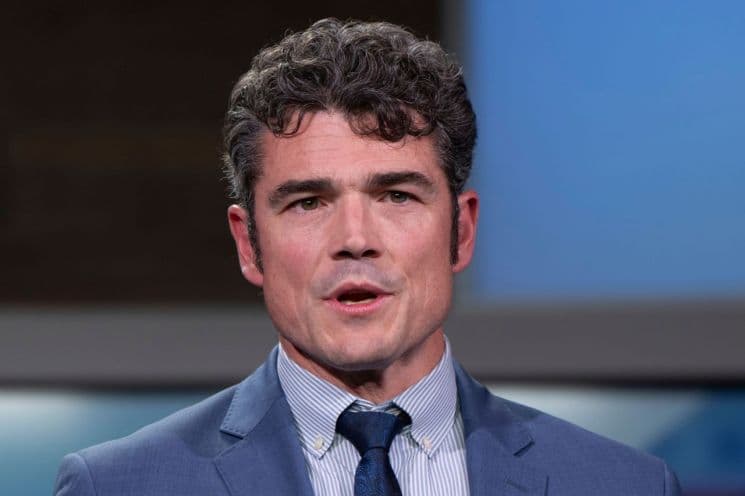
Joe Kent resigns as NCTC director over Iran war, says Iran posed no imminent threat
31 sources compared

Joe Kent resigns as head of the National Counterterrorism Center amid controversy over Iran war.
39 sources compared

Israel Says It Killed Iran’s Basij Commander Gholamreza Soleimani and Security Chief Ali Larijani
21 sources compared