
Israel Kills Iran's SNSC Secretary Ali Larijani in Overnight Strike
Key Takeaways
- Ali Larijani, secretary of Iran's Supreme National Security Council, killed in Israeli airstrike.
- Gholamreza Soleimani, Basij commander, also killed in the same strike.
- Iran vowed retaliation and launched missiles, deepening leadership crisis.
Assassination Confirmed
Israel killed Iran's top security official Ali Larijani, Secretary of the Supreme National Security Council (SNSC), in an overnight airstrike on March 16-17, 2026.
“Top Iranian security official Ali Larijani and the commander of Iran’s internal Basij militia, Gholamreza Soleimani, have been killed, Iran’s state media confirmed hours after Israel claimed to have killed the two”
The strike also eliminated Gholamreza Soleimani, commander of Iran's Basij militia, according to Israeli Defense Minister Israel Katz.

Iranian state media confirmed Larijani's death hours after Israel's announcement, with Iran's Supreme National Security Council releasing a statement describing him as a martyr.
The attack targeted Larijani near Tehran, coming just weeks after the assassination of Iran's Supreme Leader Ayatollah Ali Khamenei on February 28.
This made Larijani the highest-ranking Iranian official killed since the war began.
Power Figure Eliminated
Larijani emerged as Iran's de facto leader following the death of Supreme Leader Khamenei, wielding greater influence than President Masoud Pezeshkian or the new supreme leader Mojtaba.
As secretary of the SNSC, he effectively oversaw Iran's military response in the current Middle East war.

Israeli military officials described him as 'one of the oldest and most prominent figures at the top of the pyramid of the Iranian terrorism regime'.
Larijani had been appointed to the SNSC post in August 2025 after previous US-Israeli attacks on Iran.
He had recently issued statements challenging Gulf leaders about allowing US bases in their countries to be used against Iran.
Iran's Retaliation
Iran responded to Larijani's assassination with immediate military retaliation, launching missiles at Israeli territory including Tel Aviv.
“Ali Larijani, believed to be running Iran since the beginning of the war, is killed in a strike Ali Larijani, believed to be running Iran since the beginning of the war, is killed in a strike DUBAI, United Arab Emirates (AP) — Ali Larijani, a top Iranian security official and a conservative force within Iran’s theocracy, was killed in an Israeli strike, Iranian authorities confirmed Tuesday”
Some reports indicated the use of cluster munitions designed to spread maximum damage.
Iranian state television reported that the attack was revenge for Larijani's killing.
The strikes resulted in civilian casualties, with Israeli authorities reporting at least two deaths.
Iran also effectively maintained its closure of the strategically vital Strait of Hormuz.
This move has contributed to soaring oil prices and heightened global energy concerns.
International Response
The international community reacted with concern over the escalating tensions.
Turkey's Foreign Minister Hakan Fidan called the assassinations 'truly illegal.'
U.S. President Donald Trump expressed frustration with allies who rebuffed his calls to help secure the Strait of Hormuz.
Iranian authorities confirmed that Larijani's son Morteza and his deputy Alireza Bayat were also killed in the Israeli strike.
The incident has deepened concerns about regional stability and the potential for further escalation.
Larijani's Background
Larijani came from one of Iran's most prominent political families, often compared to the Kennedys in the United States.
““There was an Iranian projectile (that) hit near that base”
Born in 1958 in Najaf, Iraq, to a prominent clerical family, he built a remarkable career spanning decades.

He served as Iran's parliament speaker from 2008 to 2020, the longest-serving leader in that role in Iranian history.
He previously headed Iran's state broadcaster and served as Iran's chief nuclear negotiator from 2005 to 2007.
Despite being described as a pragmatist, he remained deeply skeptical of Western engagement.
He was sanctioned by the U.S. Treasury Department in January 2026 for his role in Iran's violent crackdown on protests.
More on Iran
Israel assassinated Iran's intelligence minister Esmaeil Khatib in overnight strike
10 sources compared

Israel and U.S. Kill SNSC Secretary Ali Larijani; Iran Vows Severe Revenge
24 sources compared
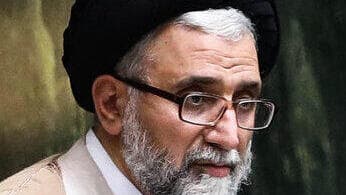
Israel Assassinated Iran's Intelligence Minister Esmail Khatib
18 sources compared
Israel Kills Iran’s National Security Council Head Ali Larijani and Basij Commander
25 sources compared