
Israel Kills Iran's Intelligence Minister Esmaeil Khatib in Tehran Strike
Key Takeaways
- Israel claimed it killed Iran's intelligence minister Esmaeil Khatib in an overnight Tehran strike.
- The operation followed Israel's earlier killings of Ali Larijani and Gholamreza Soleimani in separate strikes.
- Iran has not immediately confirmed or commented on the attack.
Assassination Confirmed
Israel assassinated Iranian Intelligence Minister Esmaeil Khatib in a precision airstrike on Tehran.
“The report identified him as Kourosh Keyvani and alleged he “provided images and information on sensitive locations” to Israel”
The strike marked the third high-ranking Iranian official killed in just two days.
The Israel Defense Forces confirmed Khatib's death as a targeted strike carried out by the Air Force guided by Military Intelligence.
Israeli Defense Minister Israel Katz announced the assassination during a briefing with military officials.
Katz promised 'significant surprises are expected throughout this day on all fronts' and warned of escalating operations.
Despite Israeli claims, Iran did not immediately confirm Khatib's death.
This pattern of non-confirmation has been common throughout the conflict since the US-Israeli war began on February 28.
Khatib's Background
Khatib had served as Iran's intelligence minister since August 2021.
He was positioned as a hardliner close to late Supreme Leader Ayatollah Ali Khamenei.

Khatib's unusual retention in the position after President Masoud Pezeshkian took power made him important in maintaining hardline control.
The US Treasury had sanctioned Khatib in 2022 over cyber activities against the US and allies.
He was accused of directing 'several networks of cyber threat actors involved in cyber espionage and ransomware attacks.'
The IDF accused Khatib of playing 'a significant role in directing arrests and killings of protesters.'
Israeli forces also claimed he was responsible for ordering attacks against Israeli and American targets.
Leadership Decapitation
Khatib's assassination occurred within a broader campaign of decapitation strikes.
“Israel says Iran’s intelligence minister killed in Tehran strike Iran’s Intelligence Minister, Esmaeil Khatib, was killed in an overnight airstrike in the Iranian capital, Tehran, Israel’s Defense Minister Israel Katz announced on Wednesday, one day after eliminating the country’s top security chief, Ali Larijani, and the commander of the Basij paramilitary force, Gholamreza Soleimani, in separate attacks in Iran”
These strikes have systematically removed much of Iran's top tier of military and political leadership.
His killing followed the deaths of Ali Larijani and Gholamreza Soleimani, both killed in Israeli air strikes on Tuesday.
Larijani was described as 'the most senior figure to be killed since Ali Khamenei' and was considered 'a linchpin of the system.'
Israeli intelligence officials revealed that Soleimani was killed while hiding in a tent.
This demonstrated Israel's strategy of sending the message that Iranian leaders 'have no safe place.'
The coordinated assassinations represent an intensification of Israel's policy.
Defense Minister Katz confirmed Netanyahu had authorized eliminating any senior Iranian official without additional political approval.
Iranian Retaliation
The assassination triggered immediate Iranian retaliation and heightened regional tensions.
Iran launched missile attacks on Wednesday that killed two people near Tel Aviv's commercial hub.

Falling munitions hit multiple sites in central Israel overnight.
A cluster bomb reportedly hit a residential building in Ramat Gan, collapsing the roof on an elderly couple.
In response to the assassination campaign, Iran has been targeting Gulf Arab neighbors' energy infrastructure.
Iran has also disrupted shipping through the strategically vital Strait of Hormuz.
This strategy has driven up oil prices, with Brent crude remaining over $100 per barrel.
The price is up more than 40% from the start of the war.
The IAEA reported Iran's Bushehr nuclear power plant complex was hit by a projectile, but there were no injuries.
International Response
The international community responded to the escalating crisis with mixed reactions.
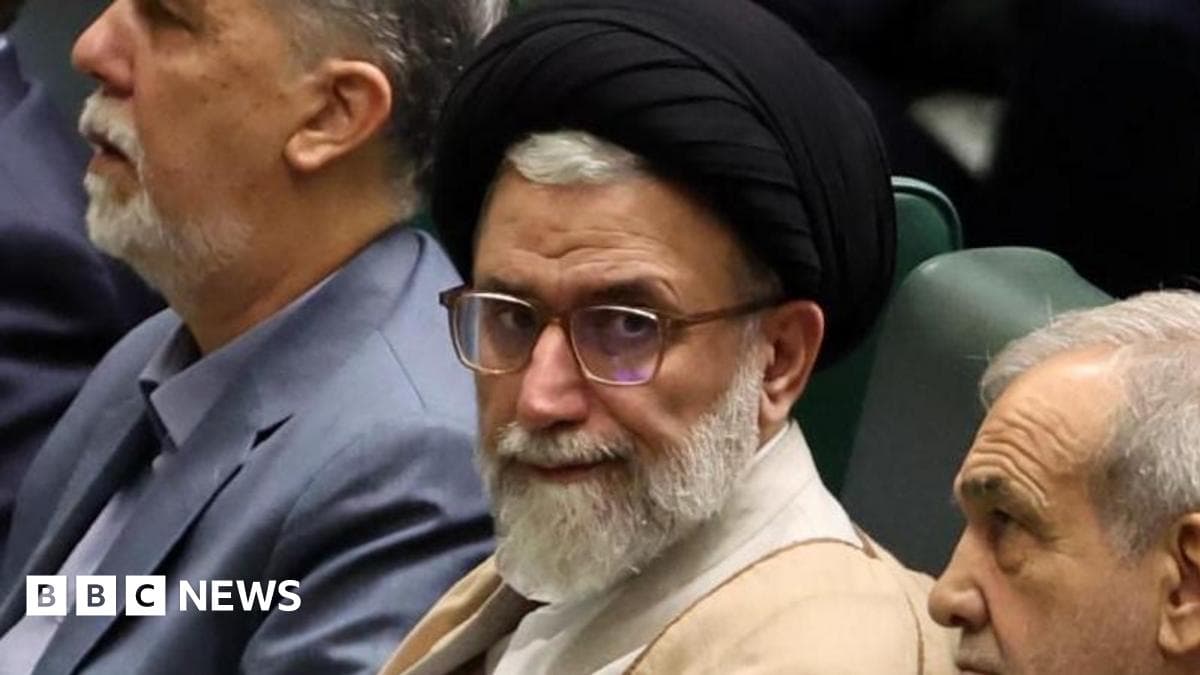
“Iran's Intelligence Minister Esmail Khatib (center) sits with President Masoud Pezeshkian (center right) before a parliamentary session in Tehran on Aug”
Turkey's Foreign Minister Hakan Fidan labeled Israel's political assassinations as 'truly illegal activities outside the normal laws of war.'
Russia's Kremlin spokesman Dmitry Peskov stated they 'unequivocally condemn any actions aimed at harming the health of, or indeed murdering or eliminating, members of the leadership of sovereign and independent Iran.'
Germany's Foreign Minister Johann Wadephul suggested that while regime change in Iran is 'desirable,' it 'has to develop from within the country.'
NATO deployed another US Patriot missile defense system to Turkey's southern province of Adana.
This deployment came after Iranian ballistic missiles were shot down in Turkish airspace.
The International Atomic Energy Agency's director general Rafael Grossi reiterated his call 'for maximum restraint during the conflict to prevent risk of a nuclear accident'.
This call came as the crisis continued to escalate across the region.
More on Iran

Israel Kills Iran's Intelligence Minister Esmail Khatib
51 sources compared

Trump Seeks Japan's Military Aid for the Middle East
14 sources compared

Israel Kills Iran's SNSC Secretary Ali Larijani in Overnight Strike
34 sources compared
Intelligence community's top counterterrorism official resigns over U.S.-Israel war on Iran
46 sources compared