
Israel Kills Iran's Intelligence Minister Esmail Khatib
Key Takeaways
- Esmail Khatib was killed in an overnight Israeli strike.
- Khatib's killing followed Ali Larijani and Gholam Reza Soleimani's killings.
- Third Iranian official killed in two days, according to reports.
Assassination Confirmed
Israel Defense Minister Israel Katz announced on Wednesday that Israeli forces had killed Iranian Intelligence Minister Esmail Khatib in an overnight strike in Tehran, marking the third high-ranking Iranian official eliminated in just two days.
“Katz also stated that "significant surprises" are expected in the Iran and Lebanon arenas throughout the day, which "will escalate the war we are waging against Iran and Hezbollah in Lebanon," and that "the war has reached its final, decisive phase”
The IDF confirmed the assassination in a statement posted on social media platform X, describing Khatib as "eliminated overnight" and labeling Iran's Intelligence Ministry as the "terror regime's primary intelligence organization."

The announcement came a day after Israel killed top Iranian security official Ali Larijani, secretary of Iran's Supreme National Security Council, and Basij paramilitary commander Gholamreza Soleimani in separate strikes.
Iran did not immediately confirm Khatib's death, though Israeli sources indicated they had intelligence confirming the successful strike.
Defense Minister Katz warned that "significant surprises are expected throughout this day on all fronts," suggesting further escalation in the ongoing conflict.
Khatib's Background
Esmail Khatib, a 65-year-old Shiite cleric and intelligence veteran, served as Iran's Intelligence Minister since August 2021 under both ultra-hardliner Ebrahim Raisi and current President Masoud Pezeshkian.
Born in Ghayenat, Iran's South Khorasan Province, Khatib had deep roots in Iran's security apparatus, having served in the Islamic Revolutionary Guard Corps during the Iran-Iraq War in the 1980s where he was wounded in combat.

He was regarded as a hardliner close to Supreme Leader Ayatollah Ali Khamenei, with Israeli military analysts describing him as a "trusted figure" close to Iran's new supreme leader Mojtaba Khamenei.
The U.S. Treasury Department sanctioned Khatib in 2022 for his role in leading Iran's Ministry of Intelligence and Security, accusing him of overseeing "cyber-enabled activities against the United States and its allies" and "serious human rights abuses."
Leadership Targeting Campaign
Khatib's assassination followed a systematic Israeli campaign to decapitate Iran's leadership structure, which began with the killing of Supreme Leader Ayatollah Ali Khamenei on February 28, 2026, the first day of the U.S.-Israeli military operation.
“- Ukrainian anti-drone experts: More than 200 Ukrainian anti-drone military experts are in several Middle East countries to help defend against Iranian-designed drones, President Volodymyr Zelenskyy said”
A senior Israeli military intelligence official told CNN that the campaign was designed to send a clear message that Iranian leaders "have no safe place," with officials appearing in public providing intelligence opportunities for targeting.
The State Department's Rewards for Justice program had offered up to $10 million for information on senior Iranian security figures, including Khatib, who was one of 10 Iranian officials with a price on his head.
Israeli forces have reportedly killed "dozens of senior commanders" throughout the operation, with the IDF stating that Khatib was "one of dozens" of Iranian officials eliminated.
Iranian Response
Iran responded to the killings with fresh missile attacks targeting Israel and neighboring Gulf countries, using advanced weapons to evade air defenses and killing at least two people near Tel Aviv.
Iranian Foreign Minister Abbas Araghchi dismissed the significance of the leadership killings, insisting that Iran's government does not rely on single individuals and has "a strong political structure with established political, economic and social institutions."
Iran has increasingly turned toward large, pro-government events and displays of strength, such as the funeral procession for Ali Larijani and other slain officials that drew thousands of mourners in Tehran waving Iranian flags.
The Iranian military warned of "decisive" retaliation, with army chief Amir Hatami vowing to respond forcefully to the assassination campaign that has severely damaged Iran's leadership structure.
International Reactions
French Special Envoy for Lebanon Jean-Yves Le Drian criticized both Hezbollah and Israel, stating that Hezbollah "bears full responsibility for the resumption of fighting in Lebanon" but "Israel's response has been disproportionate and counterproductive, as it unites various actors against Israel."
“It is the ultimate blessedness and the aspiration of all fighters on the path of truth”
German Foreign Minister Johann Wadephul went further, declaring that regime change in Iran is "desirable" given "the brutality and ruthlessness of this regime," though he acknowledged it must come from within.

President Donald Trump accused NATO members of making a "foolish mistake" by refusing to help secure the Strait of Hormuz, through which about one-fifth of the world's oil normally passes, and dismissed their reluctance as "unfair."
The International Atomic Energy Agency expressed concern about the conflict's potential to trigger a nuclear accident, particularly after the Bushehr nuclear power plant complex was hit by a projectile, though officials reported no damage.
Humanitarian & Strategic Impact
The ongoing conflict has resulted in significant civilian casualties, with at least 1,348 civilians killed in Iran, more than 900 in Lebanon, and 16 in Israel since the war began on February 28, according to officials in those countries.
The displacement crisis has worsened dramatically, with Israeli strikes on Lebanon forcing over 1 million people to flee their homes, while the Lebanese Health Ministry reported at least 12 people killed in recent Beirut strikes.
Iran's strategy of targeting energy infrastructure and maintaining control of the Strait of Hormuz has driven up oil prices by more than 40% since the start of the war, with Brent crude remaining stubbornly over $100 per barrel, creating global economic concerns.
The escalation has raised fears of broader regional conflict, with Iranian missiles equipped with multiple warheads and cluster munitions being increasingly deployed, while Israel continues its ground invasion in southern Lebanon targeting Hezbollah militants.
More on Lebanon
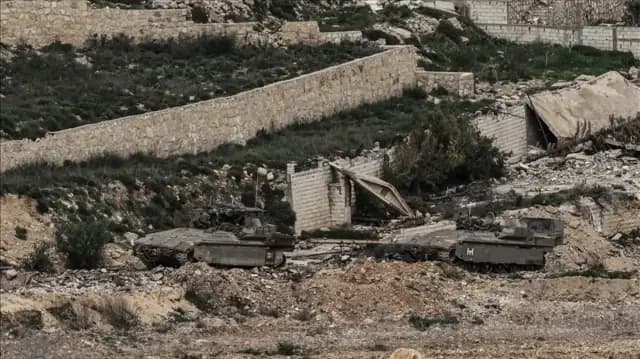
Israel Expands Ground Offensive in Southern Lebanon, Kills Hezbollah Operatives
10 sources compared

Hezbollah Fires 200 Rockets at Israel From Lebanon
17 sources compared

Israel bombs Beirut residential building after evacuation warning
15 sources compared
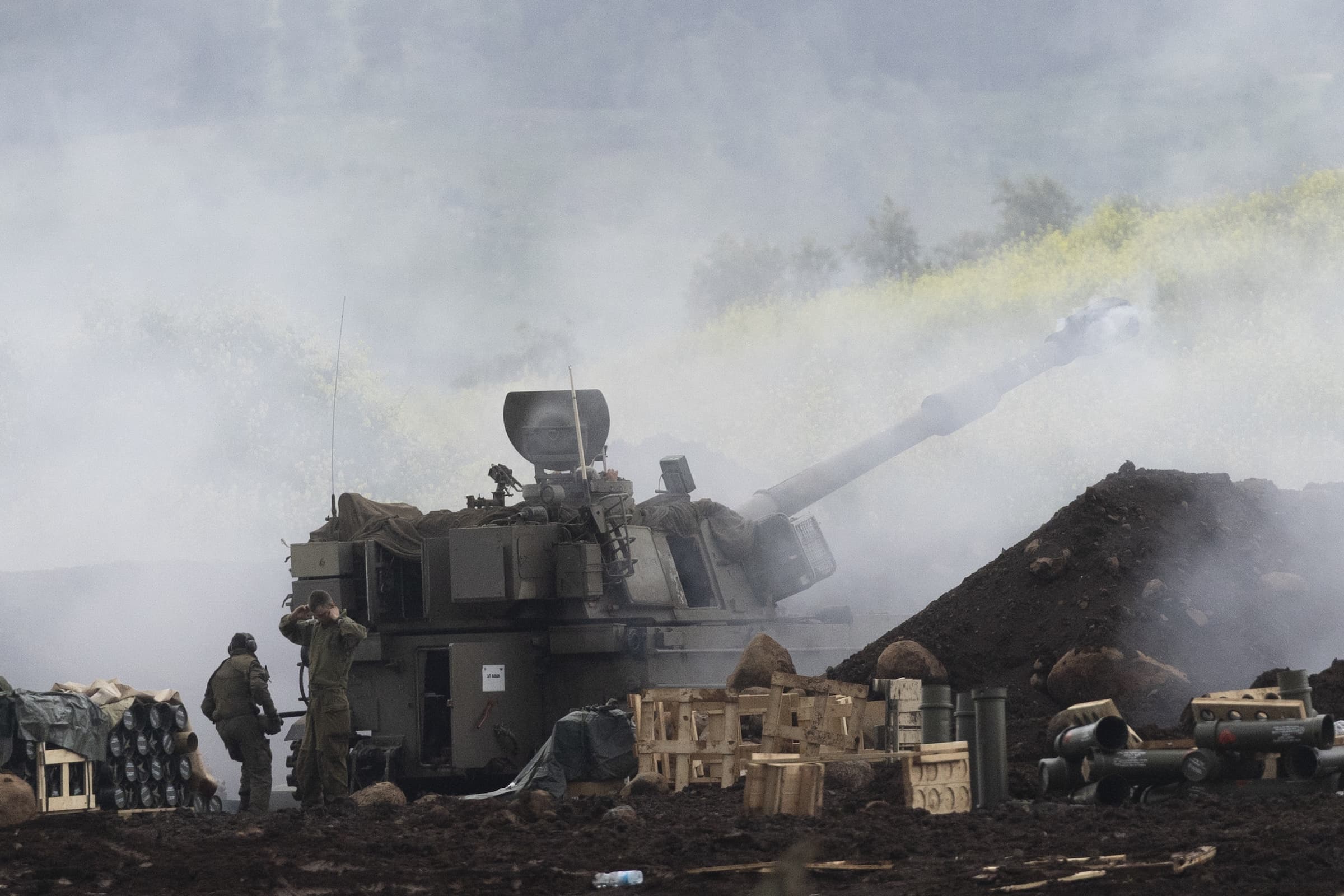
Israel Launches Ground Operation in Southern Lebanon to Target Hezbollah
10 sources compared