Gaza Genocide20 December, 20252 min read
Israel Kills Six, Including Children, in Attack on Gaza School Shelter During Wedding
This article is an automated aggregation of coverage from news outlets. Our editorials offer in-depth analysis curated by the NewsCord team.
Israeli tank shelled a school-shelter in al-Tuffah during a wedding, witnesses said. Six Palestinians, including children and an infant, were killed; several others wounded.

14 outlets told this the same way.
Outlets did split on Israel Marks Oct. 7 Anniversary With Strikes on Gaza, Netanyahu Faces Election After Nova Tribute →
Gaza shelter strike
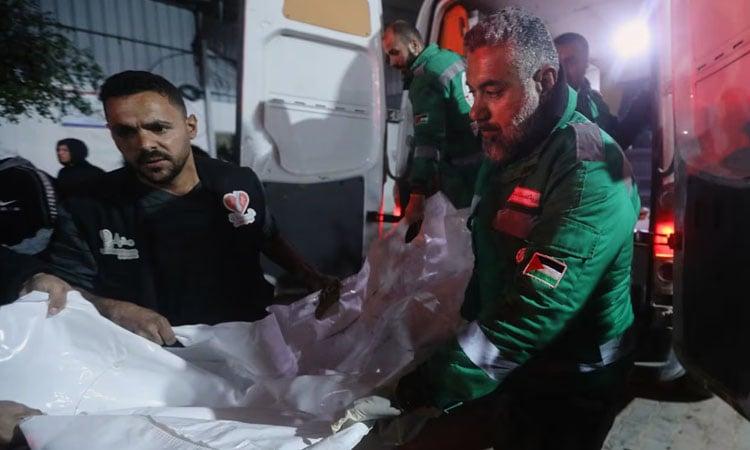
Israeli forces struck a school-turned-shelter in the al-Tuffah (Tuffah) neighbourhood of Gaza City during a wedding gathering, killing multiple civilians including infants and children. Multiple local and regional reports say the site, referred to by some outlets as the Gaza Martyrs School, was hit on its second floor while displaced families were gathered.
“An Israeli tank shelled the Gaza Martyrs School in the Tuffah neighborhood east of Gaza City on Friday, killing at least six people — including a five-month-old baby — and wounding others.”
Ambulances and civil defence teams were reportedly blocked from reaching the scene for hours. Sources differ on the exact death toll, with several outlets reporting six killed and at least one reporting five.

Shelter attack and aftermath
Witnesses and local emergency services reported that Israeli tanks fired on the shelter and then impeded rescue operations. Multiple outlets cited witnesses or civil defence saying ambulances and rescue crews were prevented from reaching the site for more than two hours, and that bodies were taken to Al-Ahli/Al-Ahli Baptist Hospital. One report claimed footage and witnesses showed severe mutilation of bodies, but that claim was reported by some outlets and was not corroborated across all coverage.
Shelter location dispute
Sources disagree on whether the shelter lay inside an area under Israeli control. Countercurrents cites witnesses who say the school was inside the 'yellow line' and not under Israeli military control.
“Under the October deal Israel withdrew to a marked ‘yellow line’ but still controls roughly 53% of Gaza and continues airstrikes in areas it does not occupy.”
Other reports note that under the October ceasefire Israel had withdrawn to a marked 'yellow line' but still controls large parts of Gaza and continues strikes in areas it does not occupy. The Israeli military told at least one outlet it had fired on 'suspicious individuals' near the yellow line and said it was reviewing the incident.
Strike fallout and diplomacy
Gaza civil defence, local hospital sources and Palestinian officials condemned the strike as a breach of the ceasefire and a violation of international humanitarian law. Israeli forces said they were targeting suspicious actors and expressed regret for harm to uninvolved people as they review the strike.
Reports tie the incident to broader diplomatic activity. Some coverage notes U.S.-brokered ceasefire talks and mediators warning that delays on the next phase could endanger the process.

Post-ceasefire casualty report
The incident is reported alongside mounting post-ceasefire casualties and urgent warnings about the fragile truce.
“Gaza hospital sources saying more than 400 Palestinians have been killed by Israeli actions since an October ceasefire.”
Hospital officials and Gaza health sources are quoted with figures putting the post-October ceasefire death toll at roughly 400–401 Palestinians, while The Guardian also cites Gaza’s health ministry figure for total deaths since Oct. 7, 2023.
Coverage varies in tone: Western mainstream outlets situate the strike in ceasefire politics and international mediation, while regional and alternative outlets foreground immediate civilian suffering and graphic witness claims.