Full Analysis Summary
Southern Lebanon strikes
Two civilians were killed in separate Israeli airstrikes in southern Lebanon on Monday, authorities said.
Anadolu Ajansı reported the strikes occurred less than 12 hours apart and that the first hit a van in Hanine, killing Mohammad Tahsin Hussein Qashqash as he prepared to transport students.
Anadolu Ajansı said the second strike struck a car in Tallouseh.
AnewZ summarized the incident, noting that the Lebanese Health Ministry reported that Israeli airstrikes in southern Lebanon killed two people.
PressTV likewise identified the Hanine victim and reported that an Israeli drone strike in Hanin, Bint Jbeil, killed Mohammad Tahsin Hussein Qashqash, a variation in place-name from Anadolu Ajansı.
Coverage Differences
Detail emphasis
Sources differ in how much identifying detail they provide: Anadolu Ajansı and PressTV give the victim's full name and locations (Hanine/Hanin and Tallouseh) and describe the vehicle types; AnewZ provides only a brief summary that two people were killed and attributes the figure to the Lebanese Health Ministry. The two regional (West Asian) outlets include specific locality names and casualty identification, while the aggregated/other outlet offers a concise bullet-point report.
Israeli claims on Hanine strike
Israel provided an operational justification for at least one of the strikes, as both Anadolu Ajansı and PressTV report Israeli statements linking the Hanine/Hanin strike to efforts to rebuild Hezbollah infrastructure.
Anadolu Ajansı wrote that the Israeli military said it had killed a man it accused of trying to rebuild Hezbollah military infrastructure.
PressTV recorded that Israel said the target was linked to attempts to rebuild Hezbollah infrastructure.
AnewZ does not include Israel's public claim in its brief summary of casualties.
Coverage Differences
Attribution
Anadolu Ajansı and PressTV report Israel's stated rationale for the strike (accusations of rebuilding Hezbollah infrastructure), presenting the military's claim as Israel's statement; AnewZ omits that attribution and focuses on the casualty report. This creates a difference in attribution and context: regional West Asian outlets include Israel's operational claim, while the aggregated brief from AnewZ does not.
Emergency and political reactions
Anadolu Ajansı reported that Civil Defense crews extinguished resulting fires and moved the body to Salah Ghandour Hospital in Bint Jbeil.
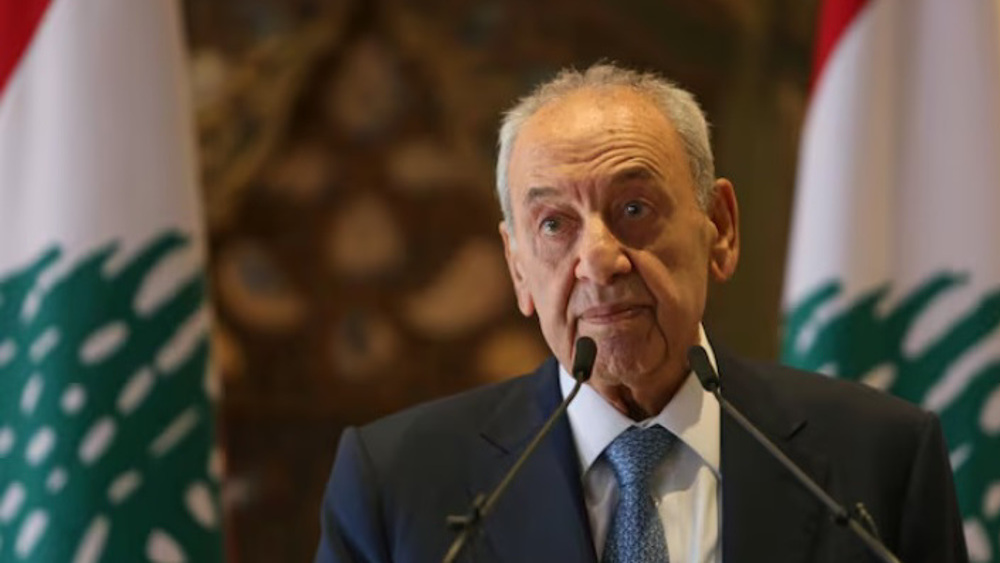
PressTV framed the incident within political and diplomatic reactions in Beirut, quoting Lebanese Parliament Speaker Nabih Berri calling on the international community to pressure Israel to stop violating the November 2024 ceasefire and noting German President Frank-Walter Steinmeier's visit and support.
AnewZ's short summary does not describe emergency response or political reactions.
Coverage Differences
Tone
Anadolu Ajansı emphasizes operational and emergency-response details (fires extinguished, body moved to hospital), PressTV emphasizes political reaction and diplomatic context (quotes from Nabih Berri and Steinmeier), while AnewZ provides a headline-style casualty summary without response details. This yields different tones: factual incident reporting (Anadolu), political framing and calls for pressure (PressTV), and concise aggregation (AnewZ).
Israel-Lebanon strikes coverage
Anadolu Ajansı and PressTV place the strikes within the wider, longer-running Israel‑Lebanon conflict and repeated breaches of the November 2024 ceasefire, noting high casualty figures in Lebanon since October 2023.
Anadolu said the conflict 'that began in October 2023 has killed over 4,000 and wounded some 17,000 people in Lebanon.'
PressTV wrote the conflict has 'more than 4,000 dead and about 17,000 injured.'
AnewZ's item is concise and does not expand on conflict-wide casualty totals in that bullet.
Coverage Differences
Narrative Framing
Anadolu Ajansı and PressTV embed the strikes in the broader conflict narrative and ceasefire breaches, supplying casualty totals and timeline; AnewZ restricts coverage to a brief casualty mention without broader conflict figures. The West Asian sources therefore provide context and scale, while the aggregated source keeps the note compact.
Reporting gaps and reactions
Reporting gaps and immediate uncertainties remain: Anadolu Ajansı noted "Lebanon’s government and Hezbollah had no immediate comment" on the Israeli military's claim, and PressTV recorded Lebanese political calls for international pressure and German diplomatic engagement, indicating ongoing political repercussions.
AnewZ's brief item omits these responses and wider context, illustrating how different source types (West Asian vs. Other/aggregated) can leave readers with varying levels of detail about accountability, reaction, and next steps.
Coverage Differences
Missed Information
Anadolu Ajansı and PressTV include follow-up details (no immediate comment from Lebanon’s government and Hezbollah; calls by Nabih Berri; Steinmeier's visit), while AnewZ omits those follow-up reactions. This is a clear example of the aggregated/other outlet providing a concise bulletin where regional outlets supply ongoing political context and reported statements.