Gaza Genocide14 November, 20252 min read
Israel Kills Two Palestinian Teens in Occupied West Bank
This article is an automated aggregation of coverage from news outlets. Our editorials offer in-depth analysis curated by the NewsCord team.
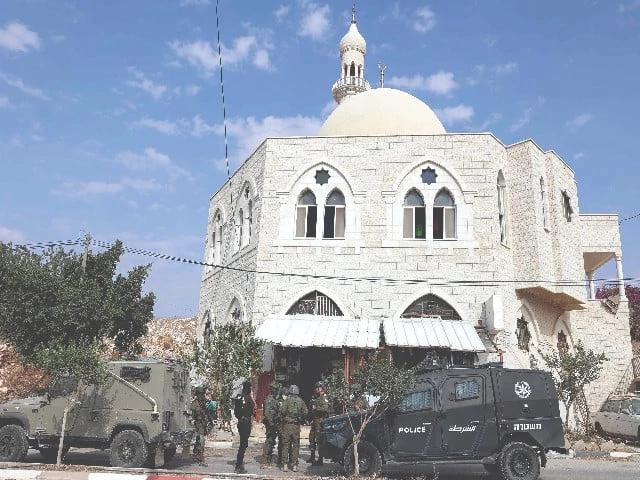
Israeli forces shot and killed two Palestinian 15-year-old boys in the West Bank Israeli settlers set fire to Hajja Hamida Mosque in Deir Istiya, Salfit governorate
10 outlets told this the same way.
Outlets did split on Israel Marks Oct. 7 Anniversary With Strikes on Gaza, Netanyahu Faces Election After Nova Tribute →
Recent West Bank violence
Israeli forces killed two Palestinian 15-year-olds in the occupied West Bank near the community of Karmei Zur, officials reported. Israel characterized the youths as "terrorists" who were allegedly attempting an attack, and the IDF said it "eliminated two terrorists." Palestinian authorities and local sources provided limited additional details.
“The Palestinian Authority said Thursday that Israeli soldiers killed two 15-year-olds in the occupied West Bank; Israel described the youths as ‘terrorists’ who were attempting to carry out an attack.”
Media coverage places the incident amid a wider spike in deadly operations and settler attacks across the West Bank. Separately, Al Jazeera reported two Palestinian children were shot dead by Israeli forces during a raid in Beit Ummar, near Hebron. The reports underscore multiple lethal incidents involving Israeli troops in recent days.

Violence during olive harvest
The killings occurred against a backdrop of a sharp rise in settler attacks and damage to Palestinian property during the olive-harvest season, with multiple outlets citing UN and NGO data documenting record numbers of incidents.
Al Jazeera cited UN OCHA saying at least 167 settler attacks tied to the harvest since Oct. 1.

India Today and AL-Monitor reported that October 2025 was the worst month on record, with UN OCHA listing 264 incidents and Palestinian and Israeli figures showing thousands of related incidents since the Gaza war began.
Israeli military response
Senior Israeli military officials have publicly condemned settler attacks and vowed action.
“Israeli military chief Lt. Gen. Eyal Zamir condemned recent violent incidents ... calling them ‘contrary to our values,’ a red line, and saying the army will act decisively to stop them and bring perpetrators to justice.”
Israel's military chief, Lt. Gen. Eyal Zamir, called recent civilian-on-civilian assaults 'contrary to our values,' labeled them a red line, and said the army would act decisively to stop perpetrators and bring them to justice.
AL-Monitor reported that military commanders including Zamir and Central Command chief Maj. Gen. Avi Bluth denounced the violence, some brigade commanders called the escalation 'grave,' and the Netanyahu government had not publicly commented.
Mosque arson and responses
Settler extremists carried out a high-profile arson attack on the Hajja Hamida Mosque in Deir Istiya, leaving burnt Qurans, racist graffiti and smoke-blackened walls that were photographed by AFP and reported by news outlets. Palestinian authorities and the United Nations condemned the desecration and described it as part of a rising pattern of extremist attacks. The IDF said it deployed troops after footage surfaced and handed the case to police and security services, but reported that no suspects have been identified.
Outlets' framing of conflict
Coverage differs strongly by outlet type: Western mainstream sources often foreground Israeli security statements and short incident reports, West Asian outlets foreground Palestinian casualties and link attacks to the Gaza war, and Western alternative outlets add broader data and political critique.
“Experts link the uptick to Israel’s war in Gaza and pressure from Israel’s far‑right government to annex parts of the West Bank.”
These divergent emphases shape whether the narrative centers Israeli security claims or Palestinian rights and accountability, and they influence whether coverage highlights government responsibility, military dissent, or cyclical settler escalation.
