Full Analysis Summary
Israeli raids in Quneitra
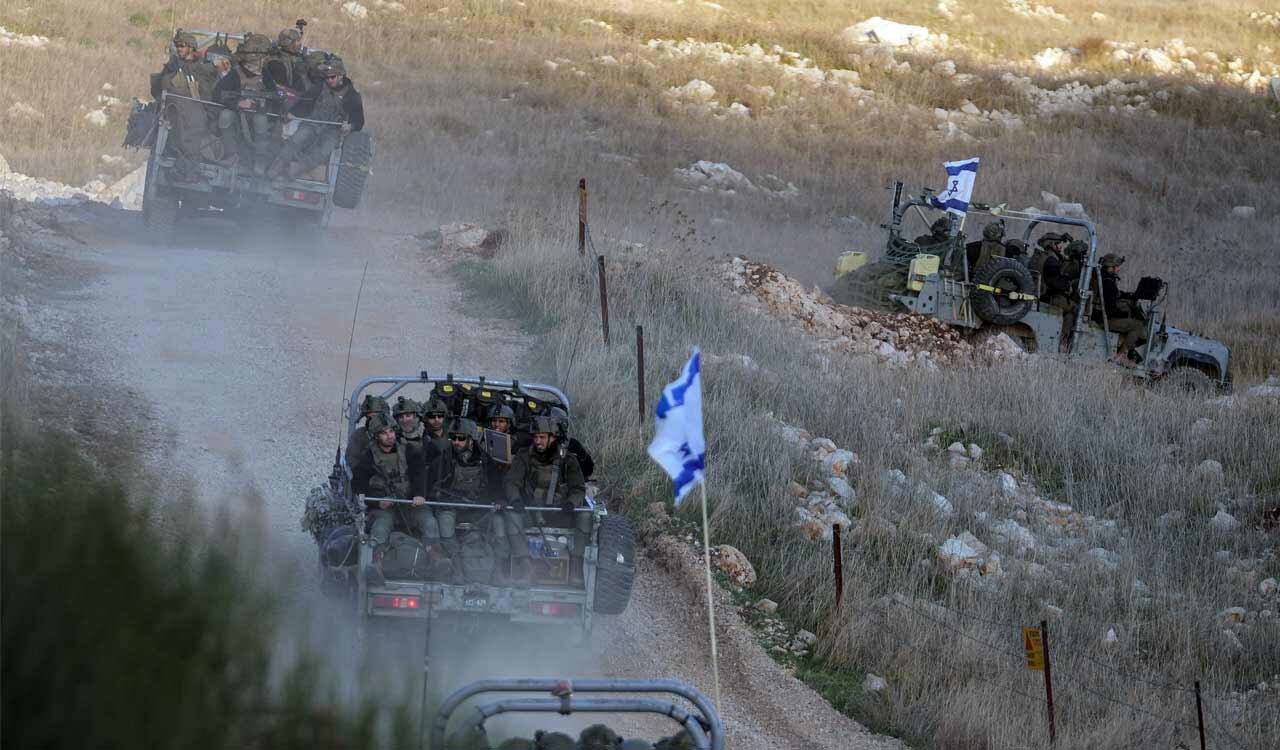
Israel has launched a renewed series of raids and ground movements in Syria’s southwestern Quneitra province, prompting local alarm and diplomatic activity.
Syrian and regional reporting describe stepped-up Israeli operations that include air strikes, drone and artillery attacks as well as ground incursions into villages near the Golan Heights buffer zone.
Al Jazeera reports that Syria has not replied militarily and quotes President Ahmed al-Sharaa saying Israel has carried out over 1,000 air strikes and more than 400 ground incursions, while Tehran Times cites ACLED data of more than 600 air, drone or artillery strikes across Syria in the past year.
Press TV details repeated entries into villages and temporary checkpoints, describing the movements as part of a widened Israeli presence in the buffer zone.
Coverage Differences
Emphasis and framing
Al Jazeera (West Asian) frames the story with both operational counts and diplomatic moves — noting Syria hasn’t replied militarily and that talks are underway — while Press TV (West Asian) focuses on detailed ground-incursion reports and alleged orders from Israeli leaders. Tehran Times (West Asian) emphasizes public protests and third‑party data (ACLED). Each source is reporting different aspects: Al Jazeera reports diplomatic talks and US pressure; Press TV reports named raids and quotes orders; Tehran Times reports demonstrations and ACLED figures.
Source claims vs. reportage
Press TV frequently attributes details to Syrian state media and pro-government outlets (i.e., reporting what those outlets say), while Al Jazeera quotes Syrian officials and notes US diplomatic involvement; Tehran Times reports demonstrators’ claims and cites ACLED as an external dataset. This distinction matters for how assertions are sourced.
Incursions in southern Syria
Local residents and activists describe fear, alleged abductions and economic damage in southern Syria as a result of the incursions.
Al Jazeera's reporting from Quneitra highlighted local fears after Israeli incursions and alleged abductions, citing Syrians who say the continuing violations impede regional stability and damage the economy in southern Syria.
Press TV lists specific villages reportedly raided — including Ain Ziwan, al-Ajraf, Bir Ajam, Briqa, al-Asha and others — and says Israeli patrols used Humvees, pickups and other vehicles.
Tehran Times records public demonstrations by groups such as Syrians with Palestine denouncing repeated violations of Syrian territory.
Coverage Differences
Level of incident detail
Press TV provides granular location-level detail (naming specific villages and vehicles used), which it attributes to Syrian state media and pro-government outlets; Al Jazeera focuses more on the human impact and local fears, and Tehran Times spotlights demonstrators and public reaction. This means readers get tactical details from Press TV and socio-political context from Al Jazeera and Tehran Times.
Tone regarding civilian impact
Al Jazeera uses language stressing civilian fear and economic damage (reporting Syrians’ views), whereas Press TV’s account — while reporting protests — places heavier emphasis on military movements and alleged orders; Tehran Times foregrounds protest slogans and data that underline frequency of strikes. Each source’s tone steers readers toward different aspects of harm and culpability.
Conflicting strike reports in Syria
Numbers cited across outlets diverge, reflecting different sources and measurement windows.
Al Jazeera relays a Syrian official's claim of over 1,000 air strikes and more than 400 ground incursions since President al-Assad was overthrown.
Tehran Times, citing ACLED, reports more than 600 air, drone, or artillery strikes across Syria in the past year.
Press TV does not provide a single aggregate figure but catalogs recent incursions and named locations, suggesting an intensified operational tempo on the ground.
Coverage Differences
Contradiction (numerical counts)
There is an apparent numerical discrepancy: Al Jazeera reports a Syrian official’s tally of “over 1,000 air strikes and more than 400 ground incursions” since the overthrow of al-Assad, whereas Tehran Times (quoting ACLED) reports “more than 600 air, drone or artillery strikes across Syria in the past year.” Press TV does not present a comparable aggregate total but lists multiple recent incidents. Readers should note differences in timeframes and sources: an official claim versus ACLED’s dataset versus incident reports.
Source provenance
Al Jazeera attributes the larger counts to a Syrian official (President Ahmed al-Sharaa), Tehran Times attributes its figure to ACLED (an external dataset), and Press TV relies on Syrian state/pro-government outlets for incident details. The difference in provenance affects credibility and comparability of the figures.
Syria-Israel media coverage
Al Jazeera reports that Damascus and Israel are in talks to stop air raids and secure the withdrawal of Israeli forces pushed into southern Syria.
Al Jazeera also says the United States is pressing diplomatic efforts to restore the 1974 agreement.
Press TV frames the incursions as violations of the 1974 disengagement agreement and quotes orders from Prime Minister Benjamin Netanyahu to seize strategic positions.
Tehran Times links public demonstrations to broader concerns about Israel's expanded occupation in southern Syria after political changes in Damascus.
Coverage Differences
Diplomatic vs. operational framing
Al Jazeera foregrounds diplomacy and US mediation (reporting talks and US pressure), Press TV foregrounds operational violations and reports alleged Israeli intent (quoting orders), and Tehran Times highlights grassroots protest and occupation concerns. The sources thus present diplomacy, military action, and public protest as separate but connected facets.
Attribution of cause
Press TV’s reporting includes analysts’ views blaming perceived inaction or rapprochement of local armed actors for encouraging Israeli expansion, while Al Jazeera and Tehran Times emphasize state-level dynamics (talks, occupation expansion) and public backlash. The outlets therefore attribute drivers of the raids differently: tactical openings versus political-occupational shifts.
Media coverage discrepancies
Across the coverage there remain open questions and points of ambiguity that the sources themselves reflect.
Exact tallies of strikes and incursions differ by source and timeframe.
Specific accountability claims are variously attributed to Syrian officials, state media, analysts, or demonstrators.
There is no consistent independent verification presented in these reports.
Al Jazeera explicitly notes Syria has not replied militarily.
Press TV highlights state and pro-government claims and analysts' interpretations.
Tehran Times foregrounds demonstrations and ACLED's dataset.
These outlets leave readers with multiple, sometimes conflicting, lenses on the same escalation.
Coverage Differences
Ambiguity and source limitations
All three outlets acknowledge strong claims but differ in provenance and verification. Al Jazeera reports official Syrian claims and diplomatic talks, Press TV reports state media and pro-government accounts and analyst opinion, and Tehran Times reports protests and cites ACLED statistics. Because each uses different source types (official statements, state media, third‑party datasets), the picture of the raids is coherent in outline but ambiguous in precise scale and direct attribution.
Reporting focus affecting perceived severity
Because Al Jazeera highlights diplomatic efforts and local economic impact, Press TV lists tactical incursions and alleged orders, and Tehran Times emphasizes protests and dataset counts, readers may come away with differing impressions of whether the story is primarily a diplomatic crisis, a series of military violations, or a pattern of occupation and public mobilization.