Full Analysis Summary
Aid registration and Gaza access
Israeli authorities issued a December 2024 government resolution (No. 2542) that requires all international organizations providing humanitarian aid to "Palestinian residents" to register with the Ministry of Diaspora Affairs and Combating Antisemitism by 31 December 2025 or cease operations by 1 March 2026.
The law explicitly allows authorities to deny or cancel registrations or bar staff deemed a "public safety or state security" risk.
International groups warned the rule conditions INGO registration on political and ideological alignment and undermines humanitarian neutrality, impartiality and independence.
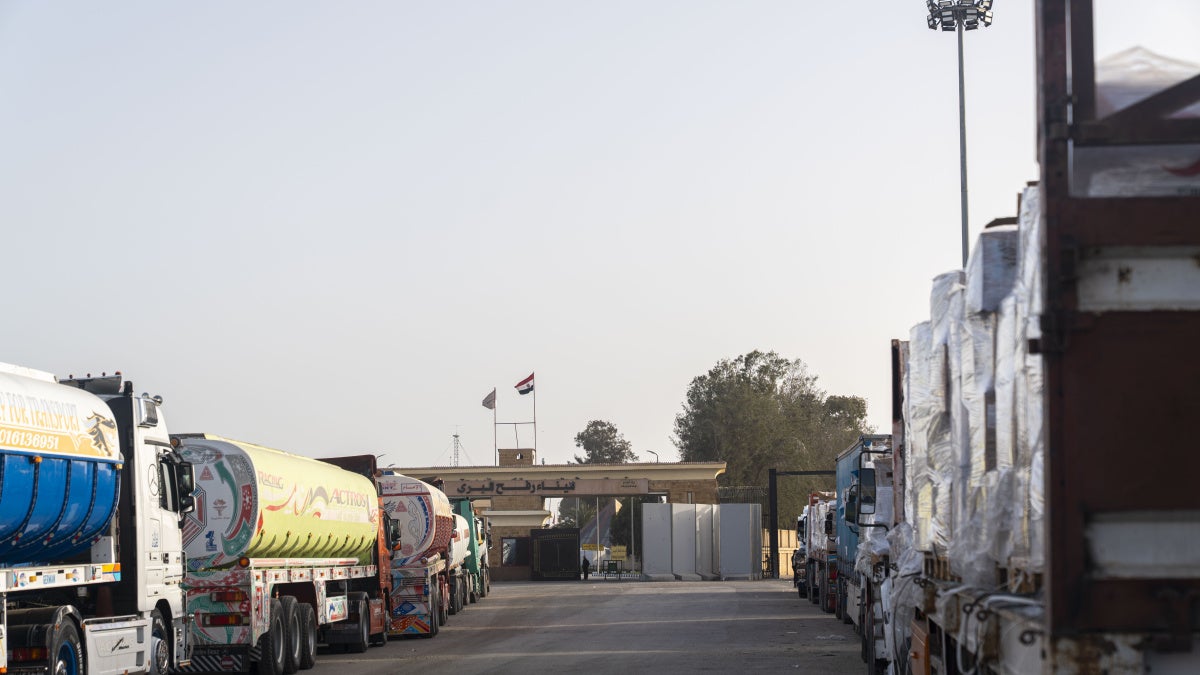
Separately, a decision to close Gaza’s crossings has halted movement of people and goods and risks cutting off food, medicine and fuel to a population that depends almost entirely on those entry points.
Coverage Differences
Primary Focus/Framing
Human Rights Watch (Western Alternative): Frames the story as an Israeli administrative and legal move to bar 37 international aid groups via registration/biodata demands, stressing politicization of registration and its impact on humanitarian operations. | Al-Jazeera Net (West Asian): Frames the story as an immediate closure of all crossings (including Rafah) tied to the U.S.-Israeli operation against Iran, emphasizing the direct, imminent risk of famine and blockade-driven suffering in Gaza.
Gaza humanitarian crisis
The humanitarian situation in Gaza is described as catastrophic: by mid‑October 2025 the UN Satellite Center reported roughly 81% of structures damaged, all 36 hospitals and most primary health centers damaged or destroyed, and by November more than 97% of schools damaged or destroyed.
Between mid‑October and the end of November, roughly 1.6 million people — about 77% of Gaza’s population — faced crisis‑level hunger or worse.
Gaza residents and aid providers report shortages, rising prices and interrupted aid deliveries that, combined with crossing closures and registration barriers, threaten to cut off lifesaving supplies.
Coverage Differences
Use of Data/Specifics
Human Rights Watch (Western Alternative): Provides concrete, quantified humanitarian impact estimates and names affected organizations and institutional sources (OCHA, IFRC, specific NGOs), linking the registration ban to specific service gaps and malnutrition statistics. | Al-Jazeera Net (West Asian): Relies mainly on descriptive warnings, social media reactions, activist claims and general statements about shortages and famine risk rather than listing specific figures or named institutional impact assessments.
Gaza humanitarian situation
Humanitarian organizations and UN agencies are providing most lifesaving services inside Gaza.
International organizations run or support 60% of field hospitals, all stabilization centers for severely malnourished children, and deliver 42% of water, sanitation and hygiene services.
Israel’s restrictions on aid entry and administrative controls have caused shortages of medicines, food, water and reconstruction materials.
UN and humanitarian actors have warned that deliberate restrictions that cause starvation would violate obligations of an occupying power and can amount to war crimes.
Aid workers have been killed amid what Human Rights Watch describes as widespread violence and allegations of indiscriminate attacks.
Coverage Differences
Attribution of Motive/Severity
Human Rights Watch (Western Alternative): Attributes the registration requirements to Israeli politicization of aid and describes restrictions as part of an unlawful blockade that can amount to war crimes when used to cause starvation. | Al-Jazeera Net (West Asian): Portrays the crossings closure as a deliberate policy tool to reimpose starvation and deepen humanitarian crisis, explicitly describing Israel’s campaign as a 'genocidal war' and suggesting the timing exploits international distraction over Iran.
Aid access and restrictions
Palestinian residents and activists describe Israel’s measures—crossing closures, import refusals, and administrative controls over aid staff—as pressure that risks renewed starvation and collective suffering.
Some activists characterize the conduct as "genocidal."
Human Rights Watch and UN sources document repeated refusals of relief requests at crossings and large stockpiles of INGO goods stuck at crossings and warehouses.
Many NGOs warn that registration and biodata demands will curtail independent humanitarian operations.
The available excerpts do not mention a specific figure of "37" aid groups; Human Rights Watch notes 55 organizations warned the rule and other groups have publicly raised alarm about the registration regime and its operational effects.
Coverage Differences
Legal Response Mention
Human Rights Watch (Western Alternative): Reports on explicit legal pushback: more than 15 groups appealed and the Israeli High Court issued a temporary injunction freezing the cease-operations order. | Al-Jazeera Net (West Asian): Does not report on legal appeals or court intervention; focuses instead on the immediate humanitarian implications, public reactions, and activists' claims about motive and timing.