Gaza Genocide18 February, 20263 min read
Israel Moves to De Facto Annex West Bank by Declaring Palestinian Land ‘State Property,’ UN Warns It Will Dispossess Palestinians
This article is an automated aggregation of coverage from news outlets. Our editorials offer in-depth analysis curated by the NewsCord team.
Israel registers large West Bank areas as 'state property,' shifting burden of proof onto Palestinians Over 80 countries and the UN call the measures de facto annexation violating international law
9 outlets told this the same way.
Outlets did split on Israel Marks Oct. 7 Anniversary With Strikes on Gaza, Netanyahu Faces Election After Nova Tribute →
West Bank land registration
Israel has moved to begin registering large tracts of West Bank land—particularly Area C—as 'state property.' Multiple sources described this as the first such registration since the 1967 occupation and as part of measures to expand Israeli control over occupied territory.
“Israel has moved to begin land registration in Area C of the occupied West Bank—the first such step since the 1967 occupation.”
UN Secretary‑General António Guterres warned the registration plan could 'lead to Palestinians being dispossessed of property and to an expansion of Israeli control,' called the process potentially 'destabilising' and unlawful, and cited the 2024 International Court of Justice ruling that found Israel’s occupation of the West Bank and Gaza unlawful. Several international statements said the move accelerates a long campaign of land confiscation and would facilitate the removal of Palestinians from their homes and land.

Settlement expansion measures
The measures reported include accelerated registration of Area C land, new land‑registry laws, relaxed rules for settlers, authorization of direct settler land purchases, legalization of outposts, and expanded Israeli military and civil authority in territories administered by the Palestinian Authority. PressTV says hard‑line Israeli ministers Bezalel Smotrich and Israel Katz have advanced a package of steps intended to formalize and speed settlement expansion and limit Palestinian Authority functions.
The Conversation specifically lists Knesset bills and security‑cabinet measures to ease settler land purchases, boost immunity for Israelis, seize control of sites, and curtail Palestinian Authority functions. Critics say these moves amount to de facto or formal annexation and violate the Oslo Accords and international law.

International condemnation of registration
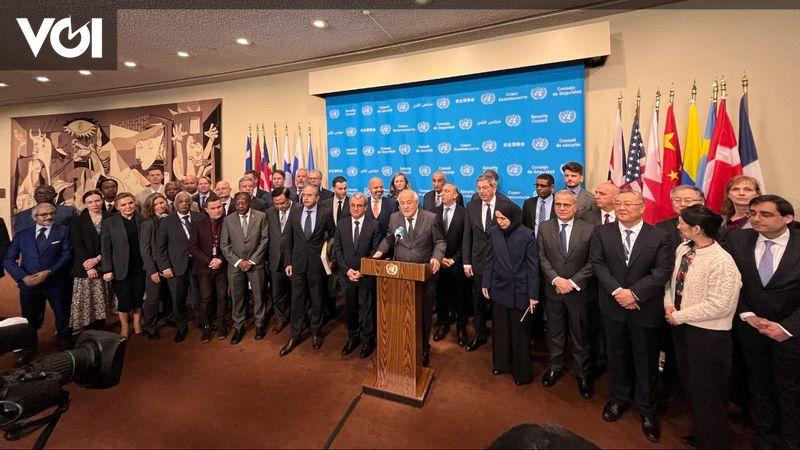
International diplomatic reaction has been swift and strongly worded: UN officials, a coalition of roughly 80–85 countries and organizations, and Palestinian representatives condemned the registration as unlawful and tantamount to de facto annexation. Palestinian UN Ambassador Riyad Mansour and a joint statement delivered in New York said the steps change the demographic, legal and territorial status of areas occupied since 1967 and must be reversed.
“The UN and a coalition of about 80 countries and organizations condemned Israel’s decision to register large tracts of West Bank land as 'state property,' saying it is part of a long campaign of land confiscation aimed at imposing sovereignty and rejecting any unilateral annexation.”
UN spokesperson Stéphane Dujarric and others warned the measures would facilitate removing Palestinians from their land. They also warned the measures risk undermining stability in the occupied territories.
Palestinian displacement concerns
Human rights groups, commentators and some regional voices warn the registration and related measures will cause dispossession, accelerate settler violence, and deepen displacement of Palestinians. Al Jazeera reported a separate incident in which the Palestinian Wafa agency said a 13‑year‑old was killed and two other children were seriously injured after contact with ammunition discarded by the Israeli military, underscoring immediate humanitarian harm in the occupied territories.
The Conversation and Middle East Monitor highlight settler‑driven displacement. PressTV and commentators warn the moves form part of a broader strategy—citing signs such as a new 'Gilead Brigade'—that could crystallize an 'alternative homeland' and push Palestinians toward Jordan.

Annexation and legal risks
Analysts and UN officials say the registrations, together with legislation and ministerial moves, risk making a negotiated two‑state solution 'increasingly unworkable' and edging toward de facto annexation. Critics point to the 2024 ICJ finding on the occupation as a legal backdrop.
“Netanyahu has used frequent trips to Washington to align Trump with a 'Greater Israel' agenda stretching from the Jordan River to the Mediterranean.”
The Conversation links the annexation trajectory to Prime Minister Benjamin Netanyahu's broader regional agenda and US diplomacy, arguing that without decisive external action the legislative and administrative steps will be difficult to reverse. Middle East Monitor and other observers cite settlement population figures to argue these policies are entrenching permanent Israeli control over Palestinian land.
