Full Analysis Summary
Israeli death-penalty debate
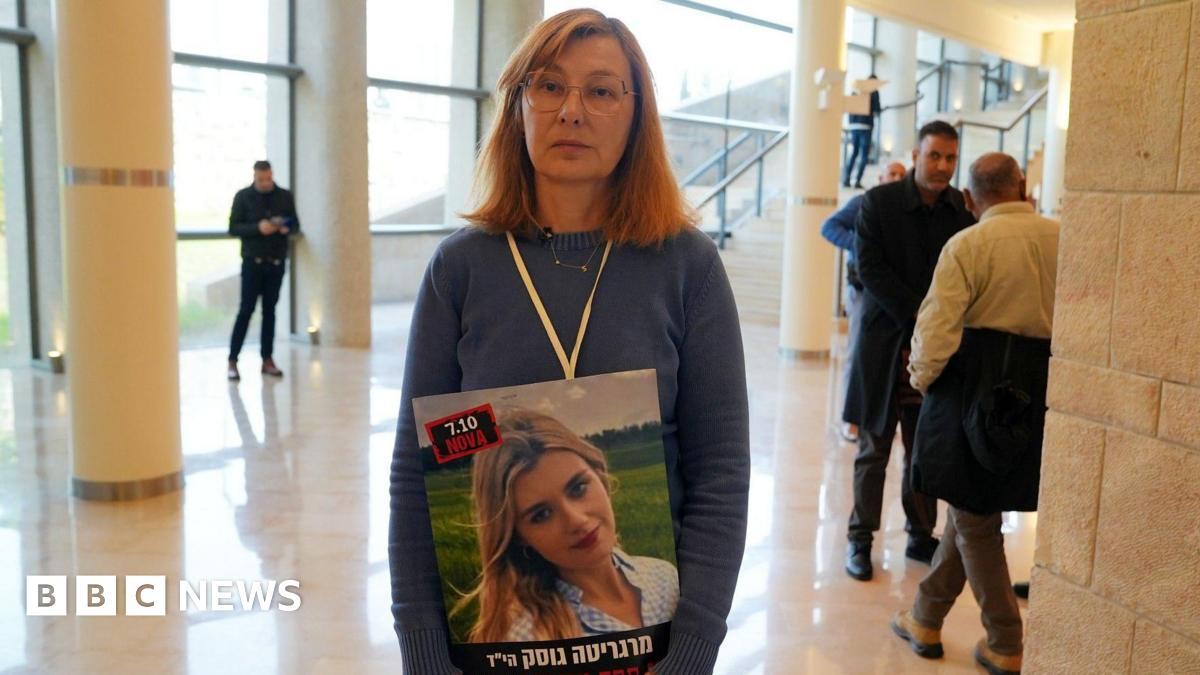
Israel is pressing to reinstate the death penalty in direct response to the 7 October 2023 Hamas attacks that killed many Israelis, including Dr Valentina Gusak's 21-year-old daughter.
Bereaved families and some lawmakers are demanding capital punishment for Palestinians convicted by Israeli courts of fatal terrorist attacks.
The BBC reports there is a renewed push to introduce a controversial law to impose capital punishment on Palestinians convicted by Israeli courts for those attacks.
The proposal comes in a country that has almost no modern use of capital punishment: Israel has imposed the death penalty only twice, most notably on Nazi war criminal Adolf Eichmann more than sixty years ago, and other military court death sentences have typically been commuted to life.
Coverage Differences
Within-source perspective split (supporters vs opponents)
BBC presents sharply contrasting viewpoints within Israel: supporters (including far-right lawmakers and bereaved families) demand execution as a deterrent and justice, while human rights groups call the same bill extreme and discriminatory. This is a contrast reported within a single source rather than across multiple publications; I cannot identify differences across different media outlets because only BBC content was provided.
Israel death penalty debate
Supporters of the bill — voiced in parliamentary hearings by far-right politicians and grieving relatives — frame capital punishment as moral retribution and a deterrent to future mass-casualty attacks.
The BBC names national security committee chair Zvika Fogel among the backers and describes bereaved families testifying for the measure, saying supporters argue the death penalty would be a moral deterrent and a way to prevent future atrocities.
The proposal has been taken up in intense parliamentary hearings where rabbis, medical professionals, lawyers, security officials and victims' families have all testified, reflecting the bill’s broad and emotional public salience inside Israel.
Coverage Differences
Tone and framing within reporting
The BBC excerpt balances emotional testimony from victims’ families and political pushers against institutional and ethical concerns. Because only BBC is available here, I cannot compare how other media types (West Asian, Western Alternative) might emphasize either the victims’ perspective or human-rights critiques; that comparison is thus missing and should be noted as a gap.
Opposition to proposed death penalty
Human rights organizations strongly oppose the bill, describing it as among the most extreme proposals in Israel's history and effectively racialized because it is written to apply only to Palestinians convicted in Israeli courts.
The BBC reports human rights groups call the bill unethical and say it amounts to racialized capital punishment because it is designed to apply only to Palestinians.
Critics warn that reviving capital punishment would overturn decades of Israeli legal practice—capital sentences have historically been commuted to life—and would institutionalize a punishment targeted at a specific ethnic-national group.
Coverage Differences
Contradiction within national debate
BBC conveys a direct contradiction between supporters’ framing (deterrence and justice) and human rights groups’ framing (unethical, racialized punishment). This is not a contradiction between outlets but between actors quoted in the same BBC report; because no other sources were provided, I cannot demonstrate how international or regional outlets characterise the proposal differently.
BBC report limitations
The provided material is a single BBC report, so cross-source contrasts (for example West Asian outlets, Western alternative media, or Palestinian voices) are absent and cannot be reliably reconstructed here.
BBC’s piece highlights the internal split between bereaved families and human-rights bodies, but it does not include extensive direct Palestinian testimony or alternative regional framing in the supplied excerpt.
Because this summary must be based strictly on the given material, I do not ascribe labels such as 'genocide' unless the supplied source explicitly uses them, and BBC does not do so in this excerpt.
The BBC snippet reports intense emotions and high stakes in Israel’s parliamentary debate over a law designed to impose execution exclusively on Palestinians convicted of fatal attacks.
Coverage Differences
Missed information and source-coverage limitation
Because only BBC (Western Mainstream) material is available, I cannot show how West Asian, Western Alternative, or Palestinian sources portray the bill — whether they emphasise systemic aspects, allegations of collective punishment, or describe the broader Israeli military operations in Gaza using terms like 'genocide.' That comparison is therefore explicitly missing and noted as a limitation.