Full Analysis Summary
UNIFIL near-miss in Lebanon
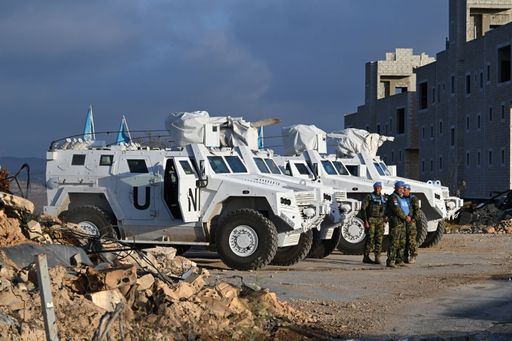
Heavy machine-gun rounds from an Israeli Merkava tank landed about five meters from UNIFIL peacekeepers in southern Lebanon, nearly striking the personnel.
UNIFIL urged Israel to stop attacks on or near peacekeepers after the incident.
The Israeli army acknowledged it had fired, saying poor weather led troops to mistake the UN patrol for suspects.
The incident occurred amid rising tensions and near-daily Israeli strikes in the area, which Israeli authorities say target Hezbollah sites.
Coverage Differences
Narrative emphasis
ABNA (West Asian) foregrounds the immediate danger to UNIFIL and the Lebanese army’s condemnation—quoting UNIFIL that "heavy machine‑gun rounds ... landed about five meters" and the army calling it a "dangerous escalation." Al Jazeera (West Asian) places the incident within a pattern of earlier violations — "including a September episode when Israeli drones dropped grenades near peacekeepers" — and highlights broader legal claims about violations of the Blue Line. TRT World (West Asian) frames the episode in a wider timeline of intensifying strikes, noting that "Israel has increased near-daily strikes" and situating the incident amid elevated tensions. Each source reports the same core facts but chooses different framings: immediate military danger (ABNA), legal/sovereignty context (Al Jazeera), and the campaign timeline (TRT World).
Source-reported Israeli explanation
ABNA quotes the Israeli army’s explanation directly—"The Israeli army acknowledged firing but said poor weather led troops to mistake the UN patrol for suspects." Al Jazeera and TRT World report the incident and Israeli claims but place more emphasis on the surrounding pattern of strikes and legal complaints rather than focusing on the weather excuse. This produces slight variation in how readers perceive the credibility and sufficiency of Israel’s explanation.
Lebanon's response to strikes
Lebanon's army publicly condemned the attack as a "dangerous escalation," saying such strikes violate Lebanese sovereignty, destabilize the south and hamper army deployment.
The army said it is coordinating with friendly countries to halt the incidents.
UNIFIL also voiced concern and urged restraint.
Lebanon plans to take the matter to the UN Security Council amid broader accusations that Israeli actions, like construction north of the UN-drawn Blue Line, breach UNSC Resolution 1701 and Lebanese sovereignty.
Coverage Differences
Focus on legal/sovereignty response vs. military coordination
ABNA (West Asian) highlights the Lebanese army’s condemnation and its practical response—"coordinating with friendly countries to halt the incidents." Al Jazeera (West Asian) stresses legal and diplomatic steps, reporting that "Lebanon plans to file a complaint with the UN Security Council" and citing UNIFIL’s view that Israeli construction violates UNSC Resolution 1701. TRT World (West Asian) emphasizes the security context and timeline of the offensive rather than detailing diplomatic filings. The distinction shows ABNA centers national military posture, Al Jazeera foregrounds international legal steps, and TRT situates the event within the conflict’s evolution.
Campaign timeline and risks
The episode is set against a longer campaign of strikes and a fraught truce history.
Sources report that Israel's campaign began in October 2023 and expanded in September 2024.
A November 2024 ceasefire called for Israeli withdrawal by January, but sources say that pullback has been only partial.
Both Al Jazeera and TRT World emphasize that near-daily strikes have continued and that the October 2023 to September 2024 timeline increased risks to UN personnel and civilians.
Coverage Differences
Timeline detail vs. truce framing
TRT World (West Asian) gives a specific timeline—"launched in October 2023 and expanded in September 2024"—and notes the November 2024 ceasefire’s withdrawal clause and partial Israeli pullback. Al Jazeera (West Asian) focuses on how near‑daily strikes have "violated a year‑old truce with Hezbollah reached in November 2024" and links recent incidents to broader ongoing violations. ABNA (West Asian) concentrates more on the immediate operational impact on Lebanese forces and less on the multi-stage timeline. The sources therefore differ in temporal detail and the element they highlight: TRT offers chronology, Al Jazeera underscores truce violation, ABNA emphasizes operational consequences.
Casualties and disputed targeting
Al Jazeera reports the recent fighting has killed more than 4,000 people, mostly civilians, displaced over a million, razed dozens of villages, and left Israeli forces occupying several points inside Lebanon.
Al Jazeera also notes Israel has not provided evidence that its strikes hit Hezbollah fighters.
TRT World gives comparable figures, saying the offensive has killed more than 4,000 people and wounded nearly 17,000.
ABNA focuses less on civilian casualty totals in the snippet and stresses how violations hamper the Lebanese army's deployment and stability in the south.
Coverage Differences
Casualty and humanitarian emphasis
Al Jazeera (West Asian) provides a detailed humanitarian toll—"killed more than 4,000 people (mostly civilians), displaced over a million, razed dozens of villages"—and stresses an absence of provided evidence for Israel’s stated targets. TRT World (West Asian) corroborates casualty figures but adds wounded totals—"wounded nearly 17,000." ABNA (West Asian) prioritizes the Lebanese army’s operational concerns, noting violations are "destabilizing the south and hampering the army’s deployment." The sources differ in emphasis: Al Jazeera foregrounds civilian humanitarian impact, TRT provides casualty+injury statistics, and ABNA highlights sovereignty and military readiness.
Dispute over strike accountability
UNIFIL urged Israel to stop attacks on or near peacekeepers and flagged construction and presence north of the Blue Line as violations of UNSC Resolution 1701.
Lebanese officials said they will complain to the UN Security Council and are seeking international recourse.
Israel says its strikes target Hezbollah but, according to Al Jazeera, has not provided evidence, and ABNA relays the Israeli army's claim that poor weather caused a misidentification.
Reporting across sources leaves ambiguity about intent and accountability and highlights a clear divergence between Lebanese/UNIFIL calls for withdrawal and Israel's operational justifications.
Coverage Differences
Accountability and evidence
Al Jazeera (West Asian) explicitly notes that "Israel says its strikes target Hezbollah sites and fighters but has not provided evidence," and reports UNIFIL’s statements that Israel’s actions violate UNSC Resolution 1701. ABNA (West Asian) reproduces the Israeli army’s immediate explanation that poor weather caused misidentification. TRT World (West Asian) stresses the partial withdrawal and persistent occupation of border outposts after the ceasefire, underlining ongoing friction. Together these show divergence on whether Israeli actions are being justified with sufficient evidence and whether Israeli forces have met ceasefire obligations.