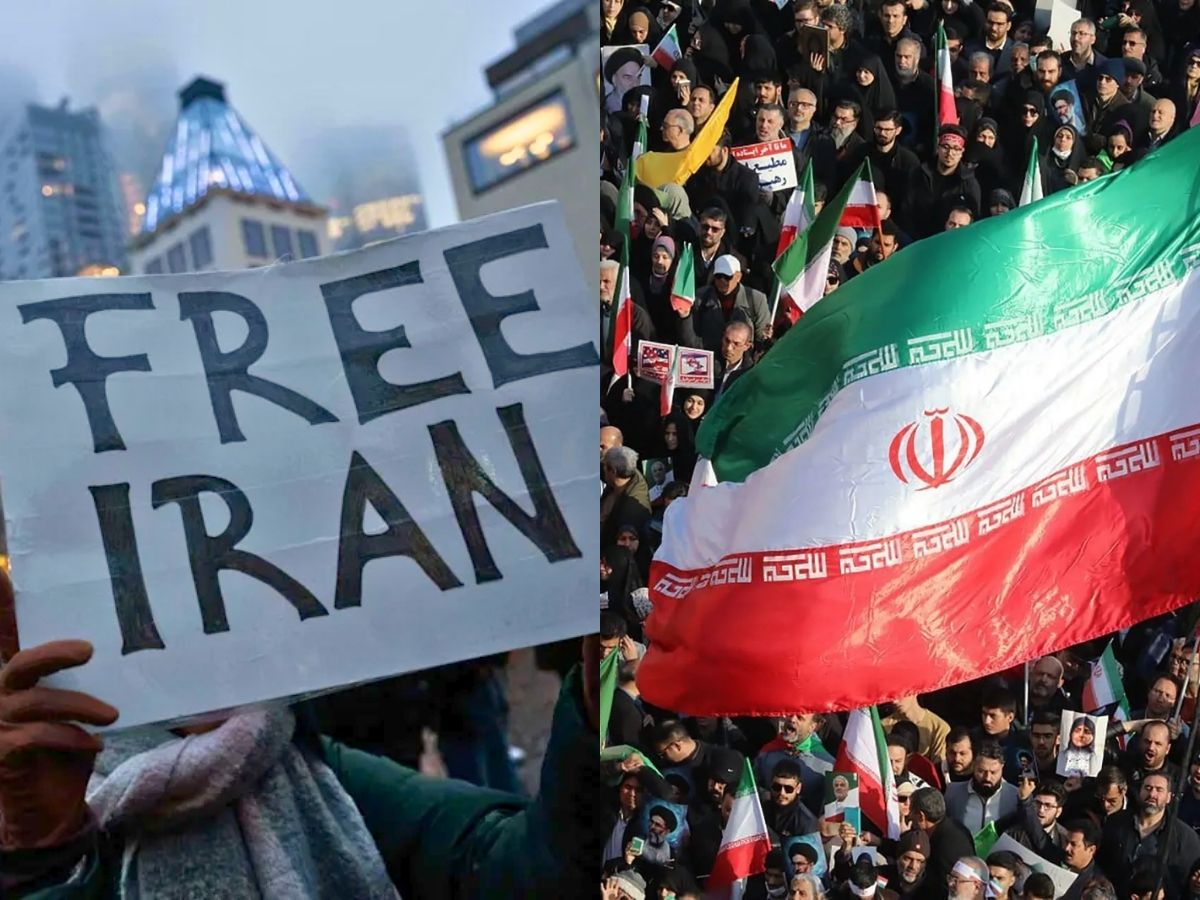
Full Analysis Summary
Iran unrest: competing narratives
Iranian officials have publicly accused Israel and the United States of orchestrating a covert campaign to inflame recent unrest in Tehran, alleging foreign training, insertion of 'terrorists' and operational support that transformed economic protests into violent incidents.
Tehran’s leadership has shifted blame from domestic economic grievances toward external actors, while Iran’s Intelligence Ministry says it has identified and arrested ringleaders and participants linked to these disruptions.
Western reporting, however, places stronger emphasis on the deep economic drivers behind the unrest, noting that protests began in Tehran’s Grand Bazaar amid a severe, long-running economic crisis and immediate policy shocks.
Coverage Differences
Contradiction
Al Jazeera and PressTV present the unrest predominantly as influenced or orchestrated by foreign powers (Israel and the US), emphasizing accusations and arrests tied to external intelligence services; El País instead foregrounds domestic economic causes and policy triggers, treating foreign interference as less central.
Tone / Attribution
PressTV uses state-centric, law-and-order language (e.g., 'terrorists', arrests, funerals), reinforcing official security narratives, while El País uses socioeconomic data and human-impact language to attribute causes to economic collapse rather than external plots.
Allegations and media coverage
Tehran and its security organs point to concrete allegations, including arrests, seized weapons, forensic accounts of attacks on mosques and roads, and legal cases alleging links to Israeli intelligence.
PressTV details numbers and operations, naming arrests, two killed Basij members, 297 people identified for property destruction, and the seizure of firearms and explosives, and describes planned public funerals for those killed.
Al Jazeera supplements this with reporting on statements by international figures and suggestions of Mossad activity amid internet shutdowns, while Western mainstream coverage centers on the economic and political context that sparked the protests.
Coverage Differences
Narrative detail
PressTV gives granular security figures and portrays events as criminal/terrorist activity handled by authorities; Al Jazeera reports those allegations and also cites foreign leaders’ signals (Trump, Eliyahu, Pompeo) implying foreign involvement, whereas El País emphasizes domestic policy triggers and the state’s repressive measures rather than presenting extensive security-operation statistics.
Source role vs. reported claims
Al Jazeera reports that Iranian officials and foreign figures have made claims about covert operations (it 'notes' and 'cites analysts'), PressTV presents the state's claims as direct official assertions with operational details, and El País reports structural causes and governmental repression with less reliance on official claims of external orchestration.
Media framing of unrest
State media frames the unrest as a security threat amplified by foreign interference and uses charged language and public events to consolidate that narrative.
PressTV describes attacks on public and religious sites, burned mosques, the killing of security personnel, and says authorities plan a funeral for '100 martyrs'.
Al Jazeera reports Tehran's pivot toward blaming external actors and highlights analysts' concerns that internal erosion has made Iran vulnerable to infiltration.
El País, while documenting state repression, emphasizes the social realities of collapsed purchasing power, surging costs, and youth unemployment that protesters cite as the impetus for demonstrations.
Coverage Differences
Tone
PressTV adopts an explicitly state-supportive, securitized tone (using words like 'terrorists' and 'martyrs'), Al Jazeera balances reportage of official accusations with analyst context about vulnerability to infiltration, and El País uses a socio-economic, critical tone about state policy and elite hypocrisy.
Missed information / emphasis
El País foregrounds the economic data and lived hardship that other sources mention but do not detail; PressTV focuses on operational claims and arrests and does not center the granular economic statistics El País provides, while Al Jazeera occupies a middle ground by noting both external accusations and internal strains.
Media perspectives on protests
El País says protesters tie economic survival to political demands, calling for greater freedoms, rejection of political Islam and an end to costly regional policies, and warns the regime lacks the resources to meet those demands without undermining its ideological foundations.
Al Jazeera reports Tehran blames foreign actors and warns that the combination of protests, sanctions and corruption has eroded cohesion, increasing vulnerability to infiltration and heightening regional tensions.
PressTV says authorities are responding with legal and security measures—arrests, prosecutions and public memorials—while asserting foreign operational responsibility for escalation.
Coverage Differences
Narrative vs. proposed solution
El País frames the issue as primarily domestic and structural (economics and governance) and implies political reform/redistribution as the only durable answer; Al Jazeera frames external actors as an accelerating factor that interacts with internal weaknesses, and PressTV foregrounds security enforcement and legal action against alleged foreign-linked actors as the government’s remedy.
Emphasis and omission
El País provides detailed economic metrics and critical analysis of policy choices, which are largely absent from PressTV’s security-focused reporting; Al Jazeera includes both the state’s external-blame narrative and analysts’ contextualization, occupying an intermediary role between the two.
Media frames comparison
The three outlets present complementary but sometimes conflicting frames.
PressTV offers a West Asian state-focused narrative emphasizing arrests and alleged foreign plots.
Al Jazeera provides a West Asian and international-angle account that points to external interference amid internal weakness and regional risk.
El País presents a Western mainstream analysis that centers socio-economic collapse, policy missteps, and popular demands.
Tehran's claims of an Israeli-orchestrated covert campaign are consistently reported across outlets, but their weight and the suggested remedies vary sharply.
Coverage Differences
Synthesis / framing contrast
PressTV (West Asian) emphasizes state security measures and explicit accusations against foreign intelligence; Al Jazeera (West Asian) reports those accusations while contextualizing Iran’s vulnerability and analysts’ assessments of covert operations; El País (Western Mainstream) treats the unrest primarily as an outgrowth of domestic economic collapse and policy failures, with less focus on foreign orchestration.